3 Days in Marrakech: The Ultimate Itinerary
Introduction
Marrakech is overwhelming in the best possible way. The noise, color, and energy hit you the moment you land. Many travelers arrive with no plan and leave feeling they missed everything. Knowing how to spend 3 days in Marrakech transforms that chaos into a deeply rewarding experience. This guide gives you a structured, practical itinerary. You will discover the medina’s hidden corners, iconic landmarks, unforgettable food, and day trips worth taking. Whether this is your first visit or a return trip, this plan maximizes every hour. Expect honest advice, real costs, and insider tips you won’t find on generic travel sites.
—
Key Takeaways
– ✅ Day 1 focuses on the medina, souks, and Djemaa el-Fna square.
– ✅ Day 2 covers palaces, gardens, and cultural institutions.
– ✅ Day 3 is best used for a day trip or hammam experience.
– ✅ Budget travelers can manage on $60–$80/day; mid-range averages $120–$180/day.
– ✅ The best time to visit is March–May or September–November.
– ✅ Always negotiate prices in souks; initial quotes are rarely final prices.
—
Day 1: Dive Into the Medina
Morning — Arrival and First Steps
Start your first morning with a riad breakfast. Most riads in Marrakech serve fresh msemen flatbread, honey, argan oil, and mint tea. This ritual sets the tone perfectly. After breakfast, head directly to the Djemaa el-Fna, the heartbeat of Marrakech. Arrive before 10:00 AM to avoid the midday heat. The square holds UNESCO Intangible Cultural Heritage status, awarded in 2001. From there, enter the Ben Youssef Madrasa, one of the finest examples of Moroccan Islamic architecture. Built in the 14th century, it housed over 900 students. Entry costs approximately 70 MAD (~$7 USD) in 2025.
Afternoon — Souks and Spice Markets
After lunch at a local café — budget around 60–80 MAD ($6–8) for a tagine — explore the souks. The medina’s souks are divided by trade. You will find leather in the Chouara Tanneries area, textiles near Souk el Khemis, and ceramics in Souk Cherratine. Bring cash; most vendors do not accept cards. Negotiate firmly but respectfully. According to travel expert Samantha Brown, *”Marrakech rewards those who slow down and engage authentically with artisans.”* First prices in souks are typically 2–3 times the fair value. Be patient and walk away if needed — vendors often call you back.
Evening — Djemaa el-Fna at Night
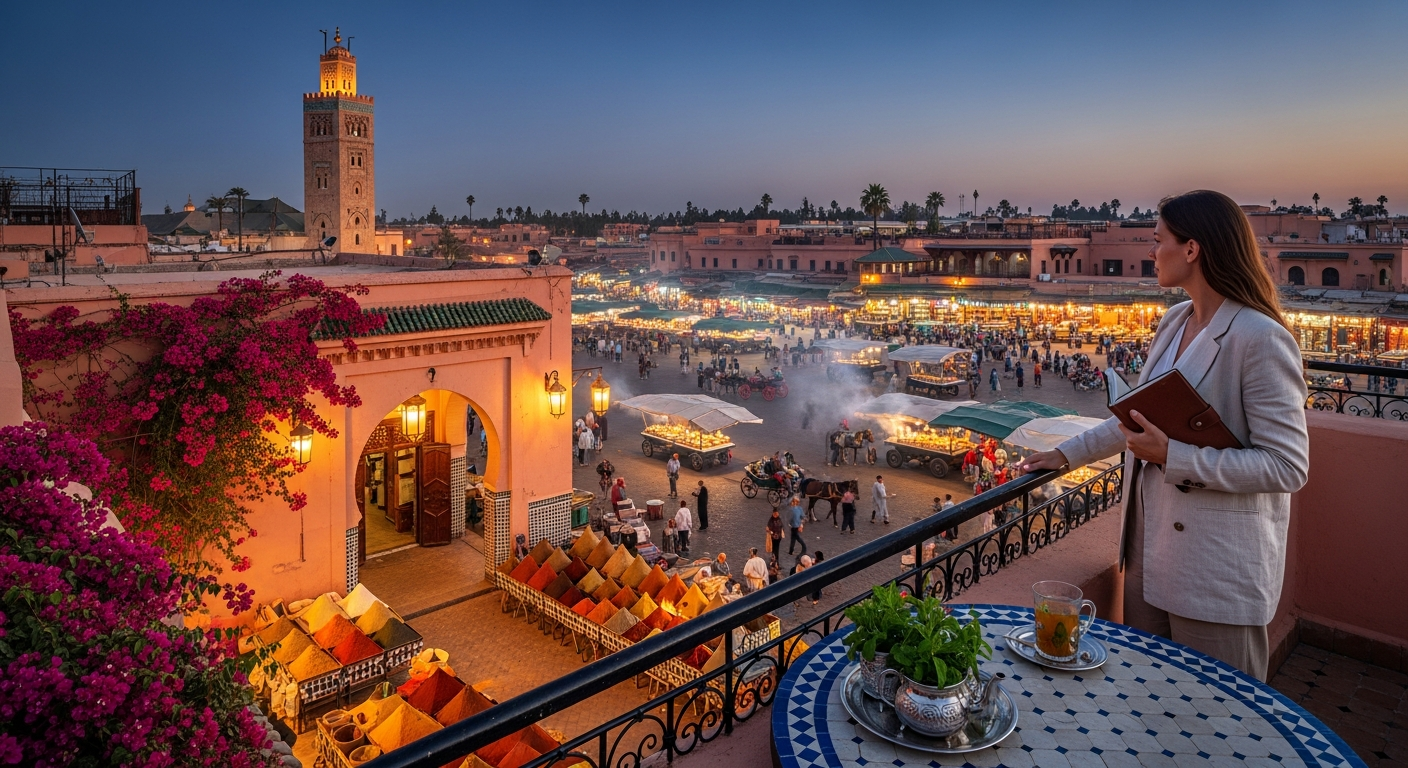
No first day ends without returning to Djemaa el-Fna at dusk. The square transforms dramatically after sunset. Snake charmers, storytellers, and Gnawa musicians fill every corner. Food stalls numbered 1 through 100 offer everything from harira soup to grilled merguez. A full dinner here costs between 80–120 MAD ($8–12). Watch for stalls with the longest local queues — those indicate quality. Afterward, climb any rooftop terrace nearby for a panoramic view. The Café de France terrace on the square’s edge is a popular and reliable choice.
—
Day 2: Palaces, Gardens, and Cultural Depth
Morning — Bahia Palace and El Badi Palace
Day two begins with Marrakech’s most impressive historical sites. Arrive at Bahia Palace by 9:00 AM before tour groups arrive. This 19th-century palace features over 150 rooms and covers 8,000 square meters. Entry is 70 MAD (~$7). Next, walk 10 minutes to El Badi Palace, built by Sultan Ahmed al-Mansour in 1578. It once held 360 rooms and a pool spanning 90 meters. Today its ruins remain hauntingly beautiful. Entry is also 70 MAD. Together, these two sites take about two and a half hours. Bring water, as the sun reflects strongly off the stone surfaces.
Afternoon — Majorelle Garden and Yves Saint Laurent Museum
After a light lunch, take a short taxi to Majorelle Garden. Designed by French painter Jacques Majorelle in 1923, it was later restored by Yves Saint Laurent and Pierre Bergé. Entry to the garden is 150 MAD (~$15); the YSL Museum nearby costs 100 MAD (~$10). The museum opened in 2017 and receives over 300,000 visitors annually. The cobalt blue pavilion surrounded by bamboo, cactus, and water features is instantly iconic. Photography inside the YSL Museum is restricted. Combine both in one afternoon visit. Budget two hours for the full experience and allow time for the excellent museum café.
Evening — Hammam and Traditional Dinner
By evening, your body will appreciate a traditional hammam. The Hammam de la Rose near the medina offers authentic experiences from 250 MAD (~$25). Alternatively, the Royal Mansour Spa provides a luxury version starting at 800 MAD (~$80). After the hammam, dine at a traditional Moroccan restaurant. Dar Yacout or Le Foundouk near Djemaa el-Fna are well-regarded options. Expect a three-course dinner with pastilla, couscous, and bastilla pastry for 250–450 MAD ($25–$45). Reserve in advance for both restaurants, especially on weekends.
—
Day 3: Escape the City or Go Deeper
Option A — Atlas Mountains Day Trip
The High Atlas Mountains are only 60 kilometers from Marrakech. A guided day trip to Imlil village costs approximately 400–600 MAD ($40–$60) per person. You will encounter traditional Berber villages, walnut groves, and spectacular valley views. The Toubkal National Park — home to North Africa’s highest peak at 4,167 meters — surrounds this region. Many operators depart from Djemaa el-Fna by 8:00 AM. Bring layers; temperatures drop sharply above 2,000 meters even in summer. This option suits active travelers who want contrast between urban intensity and mountain calm.
Option B — Ouzoud Waterfalls
For a more relaxed day trip, the Ouzoud Waterfalls sit 150 kilometers northeast of Marrakech. These are the tallest waterfalls in North Africa at 110 meters high. Shared grand taxis depart from Bab Doukkala for approximately 80–120 MAD ($8–$12) each way. Barbary macaque monkeys roam freely near the falls. Local guides can be hired on-site for 50–100 MAD. The surrounding landscape features olive groves and a small canyon river. This trip suits families and nature lovers. Return travel takes about 2.5 hours each way, so an early start is essential.
Option C — Deeper Medina Exploration
Alternatively, spend Day 3 exploring what Day 1 missed. Visit the Saadian Tombs, rediscovered in 1917 and dating to the 16th century. Entry costs 70 MAD. Then explore the Mellah, Marrakech’s historic Jewish quarter. The Lazama Synagogue inside the Mellah is free to enter. Finish at the Musée de Marrakech, housed inside a restored 19th-century palace. Entry is 50 MAD. This option suits travelers who prefer immersive city exploration over excursions. By afternoon, return to your riad for a final mint tea before departure.
—
Practical Information Table
| Category | Budget Option | Mid-Range | Luxury |
|—|—|—|—|
| Accommodation/night | $25–$50 (hostel/basic riad) | $80–$150 (boutique riad) | $300+ (luxury riad/hotel) |
| Meals/day | $15–$25 | $35–$60 | $80–$150+ |
| Transport/day | $5–$10 (taxis/walking) | $15–$25 | $50+ (private driver) |
| Activities/day | $10–$20 | $30–$50 | $80–$200+ |
| Total 3-day estimate | ~$165–$315 | ~$480–$855 | $1,560+ |
—
Expert Insight
> *”Marrakech is a city that reveals itself slowly. Visitors who rush through it miss its soul entirely. Spend time in neighborhoods like Mouassine or Bab Doukkala, away from the tourist trail.”*
> — Fatima Zahra Alaoui, Moroccan cultural heritage consultant, 2024
—
Traveler Testimonial
> *”I visited Marrakech in October 2024. The Atlas Mountains day trip from Day 3 was the highlight of my entire trip — completely unexpected beauty just an hour from the city.”*
> — James T., verified TripAdvisor reviewer, Edinburgh, Scotland
—
Best Time to Visit Marrakech
| Season | Months | Temperature | Notes |
|—|—|—|—|
| Best | March–May | 18°C–28°C | Mild weather, active festivals |
| Best | Sept–Nov | 20°C–30°C | Warm, fewer crowds |
| Hot | June–Aug | 35°C–45°C | Intense heat, low crowds |
| Cool | Dec–Feb | 8°C–18°C | Quiet, cold nights, affordable |
—
FAQs
Q: Is 3 days in Marrakech enough?
Yes. Three days cover the key landmarks, culture, food, and one day trip comfortably. It is an ideal length for a first visit.
Q: Is Marrakech safe for solo travelers?
Generally yes. Stay alert in crowded souks and avoid unofficial guides. Solo female travelers should dress modestly and use licensed taxis.
Q: What currency is used in Marrakech?
The Moroccan Dirham (MAD). ATMs are widely available. Exchange rates in 2025: approximately 10 MAD = $1 USD.
Q: Do I need a visa to visit Morocco?
Citizens of the US, EU, UK, and Canada do not need a visa for stays under 90 days. Always verify current requirements before travel.
Q: What should I pack for Marrakech?
Lightweight, modest clothing. Sunscreen, a reusable water bottle, comfortable walking shoes, and a small daypack are essentials.
Q: When does Ramadan affect tourism?
During Ramadan, many restaurants close during daylight hours. Evenings become more vibrant. Check the Ramadan calendar before booking.
—
Conclusion
Marrakech rewards travelers who come prepared. Three days is a meaningful window — enough to absorb the medina’s energy, appreciate its art and history, and venture into the surrounding landscape. Start with the souks and Djemaa el-Fna. Build depth on Day 2 with palaces and the Majorelle Garden. Use Day 3 to escape or explore further. Budget carefully, negotiate respectfully, and move at the pace the city demands. Marrakech is not a destination you simply visit — it is one you experience. Follow this itinerary and you will leave with memories that last far beyond three days.
—
References
1. UNESCO Intangible Cultural Heritage list, Djemaa el-Fna. [https://ich.unesco.org](https://ich.unesco.org)
2. Lonely Planet Morocco, 2024 Edition — Marrakech chapter overview.
3. Toubkal National Park official data — Moroccan Ministry of Tourism. [https://www.visitmorocco.com](https://www.visitmorocco.com)
4. Majorelle Garden and YSL Museum official visitor statistics, 2023. [https://www.jardinmajorelle.com](https://www.jardinmajorelle.com)
5. TripAdvisor Marrakech traveler reviews, aggregate data, 2024. [https://www.tripadvisor.com](https://www.tripadvisor.com)
6. Moroccan Dirham exchange rates — XE Currency, 2025. [https://www.xe.com](https://www.xe.com)