Morocco on a Budget: Your Complete 2026 Travel Guide
Introduction
Planning a trip to Morocco without overspending is absolutely possible. However, many travelers arrive unprepared and overpay at every turn. Hidden fees, poor exchange rates, and tourist pricing can silently drain your funds. This Morocco travel budget guide breaks down exactly what things cost, where your money goes furthest, and how to travel smartly across this extraordinary country. Whether you are backpacking through Fes or exploring the Sahara on a mid-range budget, this guide gives you real numbers, expert insights, and practical strategies. By the end, you will know how to plan a rewarding Moroccan trip without financial surprises.
—
Key Takeaways
– 🪙 Budget travelers can manage on $30–$45/day; mid-range travelers spend $70–$120/day
– 🏨 Riads in Marrakech start from $15/night for basic rooms
– 🍽️ A full local meal costs as little as $2–$4 at street stalls
– 🚌 Intercity buses (CTM) are the most cost-effective transport option
– 💱 Always exchange currency at official bureaux de change for the best rate
– 📅 Travel during shoulder season (April–May or September–October) for better deals
—
Understanding Morocco’s Daily Budget Tiers
Morocco accommodates nearly every budget level effectively. Travelers fall into three main spending categories. Budget travelers prioritize hostels, local food, and public transport. Mid-range travelers enjoy private riads, restaurant dining, and guided day trips. Finally, luxury travelers indulge in five-star riads, private transfers, and exclusive desert camps. According to 2025 tourism data from Morocco’s Ministry of Tourism, the country welcomed over 14.5 million international visitors, with average spending near $85/day. Understanding your tier helps you allocate money wisely before departure.
| Budget Tier | Daily Estimate (USD) | Accommodation | Food Style |
|—|—|—|—|
| Budget | $30–$45 | Hostels, cheap riads | Street food, local cafés |
| Mid-Range | $70–$120 | Private riads, guesthouses | Restaurants, mixed |
| Luxury | $200–$400+ | 5-star riads, resorts | Fine dining, private tours |
—
Accommodation Costs Across Morocco
Accommodation prices vary significantly by city and season. Marrakech and Chefchaouen typically charge more than Fes or Meknes. A dorm bed in a reputable Marrakech hostel runs $8–$14/night. Private rooms in a budget riad average $20–$35/night. Mid-range riads with breakfast included cost $55–$90/night. Notably, booking directly with properties often saves 10–15% compared to booking platforms. Traveler Sarah M., who visited Morocco in early 2025, shared: *”We stayed in a gorgeous Fes riad for just $28 a night — it had a rooftop terrace and included breakfast.”*
> Expert Tip: Book accommodation at least 3 weeks in advance during Ramadan and Eid periods, as availability drops sharply and prices spike by up to 40%.
—
Food and Drink: Eating Well on a Small Budget
Moroccan cuisine is both incredibly flavorful and remarkably affordable. Street food remains the best value for budget-conscious travelers. A bowl of harira soup costs about $0.50, while a kefta sandwich runs roughly $1–$2. A sit-down tagine at a mid-range restaurant averages $7–$12. Fresh-squeezed orange juice in Djemaa el-Fna square sells for just $0.70–$1. Fine dining in Marrakech’s upscale restaurants, however, can reach $30–$60 per person. Local restaurant chains like Snack Chez Driss in Essaouira offer generous portions at very reasonable prices. Alcohol is available but expensive by local standards — a beer costs $3–$6 in licensed restaurants.
| Meal Type | Approximate Cost (USD) |
|—|—|
| Street food (sandwich, soup) | $0.50–$2 |
| Local café meal | $3–$6 |
| Mid-range restaurant tagine | $7–$12 |
| Upscale restaurant dinner | $25–$60 |
| Fresh orange juice | $0.70–$1 |
—
Transportation: Moving Around Morocco Affordably
Getting around Morocco efficiently requires understanding your transport options. The CTM bus network covers most major routes at very affordable prices. For example, a Marrakech-to-Fes CTM bus ticket costs approximately $12–$16. The ONCF rail network connects Casablanca, Rabat, Fes, and Marrakech reliably. A second-class train from Casablanca to Marrakech runs about $11–$14. Grand taxis are faster than buses but cost more, typically $5–$15 for shared intercity rides. In cities, petits taxis charge metered rates, usually $1–$3 per trip. Renting a car offers flexibility for rural areas, starting at $25/day excluding fuel.
> *”The train from Casablanca to Fes was smooth, affordable, and punctual — far better than I expected,”* said travel blogger Marco Delgado after his 2025 Morocco trip.
—
Top Destinations and Their Cost Profiles
Each Moroccan city carries its own price personality. Marrakech is the most expensive city for tourists, especially near Djemaa el-Fna. Chefchaouen, though visually stunning, has seen price increases due to heavy tourism. Fes remains more budget-friendly, especially away from the medina’s tourist core. Essaouira offers a relaxed atmosphere with moderate prices. Merzouga (Sahara gateway) involves higher costs due to desert camp experiences, which range from $40–$150/night. Smaller cities like Meknes and Taza are significantly cheaper and less crowded.
| City | Budget/Day (USD) | Tourism Level | Highlights |
|—|—|—|—|
| Marrakech | $40–$80 | Very High | Souks, Djemaa el-Fna |
| Fes | $30–$60 | High | Medina, tanneries |
| Chefchaouen | $35–$65 | High | Blue streets, hiking |
| Essaouira | $30–$55 | Moderate | Beach, medina walls |
| Merzouga | $50–$150 | Moderate | Sahara dunes, camps |
| Meknes | $25–$45 | Low | Ruins, authenticity |
—
Activities, Attractions, and Entry Fees
Morocco’s attractions range from free to moderately priced. Many medinas, souks, and mosques (exterior viewing) are completely free to explore. The Bahia Palace in Marrakech charges $2–$3 entry. Majorelle Garden admission costs about $10–$12 per person. A guided Sahara tour (2 nights, 3 days) from Marrakech typically costs $150–$250, including transport and camping. Hammam experiences — a must in Morocco — range from $2 at a local hammam to $40+ at a luxury spa. Guided medina walking tours average $15–$25 per person. Free activities include wandering Chefchaouen’s blue alleys, watching sunset from Essaouira’s ramparts, and exploring Volubilis Roman ruins.
—
Currency, Exchange Rates, and Payment Tips
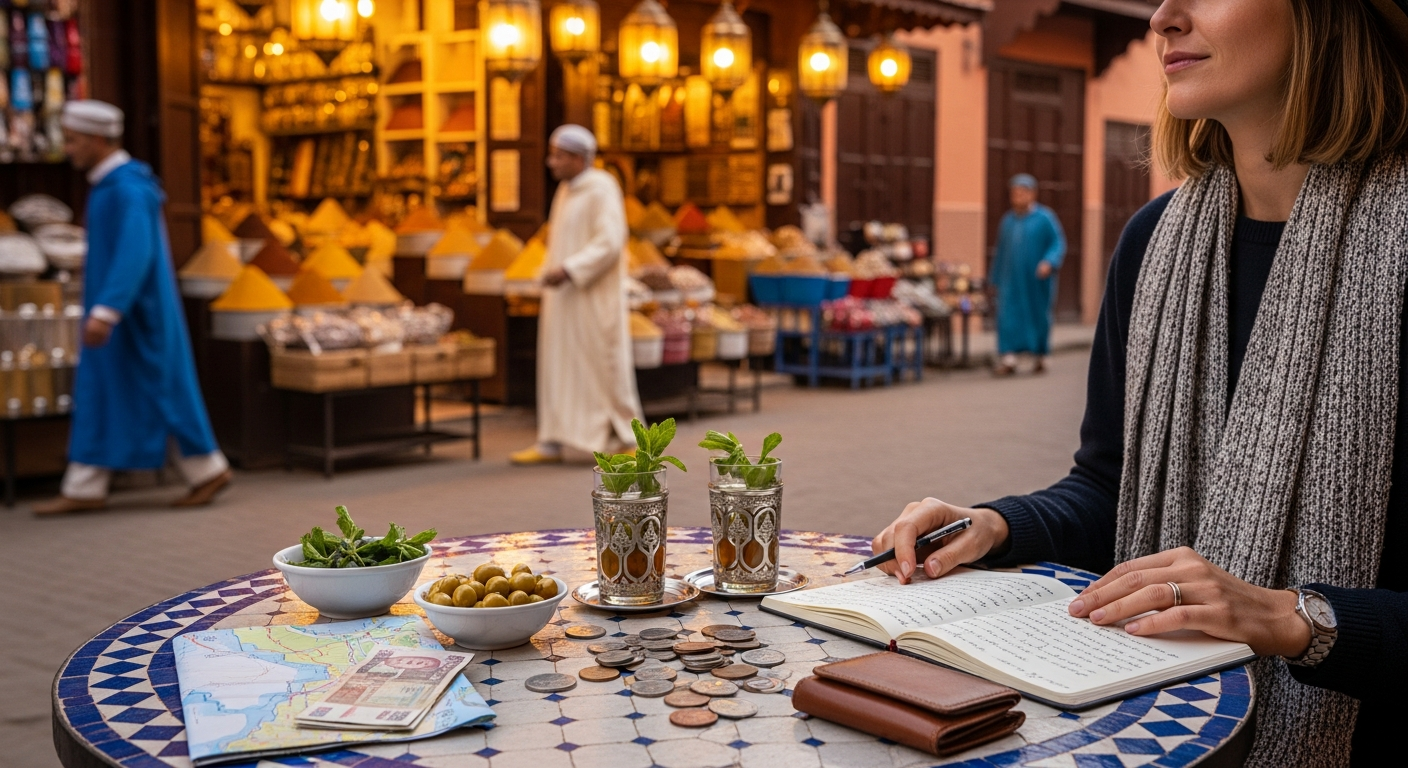
The Moroccan dirham (MAD) is a closed currency, meaning you cannot purchase it outside Morocco. As of early 2026, 1 USD ≈ 10.1 MAD and 1 EUR ≈ 10.9 MAD. Exchange currency at official bureaux de change or bank ATMs for the best rates. Avoid exchanging money at airport kiosks or with unlicensed street changers. Most riads and restaurants in major cities accept credit cards. However, cash remains essential in markets, small cafés, and rural areas. ATM withdrawal fees typically range from $2–$5 per transaction, so withdraw larger amounts less frequently. Always notify your bank before traveling to avoid card blocks.
> Financial Tip: Carry a mix of small bills (20–50 MAD) for tips and market purchases, as vendors rarely have change for large notes.
—
Seasonal Budgeting: When to Travel for Best Value
Timing your Morocco trip smartly can reduce costs meaningfully. Peak season (December–February and July–August) brings higher accommodation and tour prices. The shoulder seasons (April–May and September–October) offer pleasant weather and noticeably lower rates. During shoulder season, riad prices can drop by 20–30%. Summer in the Sahara region can reach 45°C (113°F), making it uncomfortable and sometimes dangerous. Ramadan (dates shift annually) creates a unique cultural experience but affects restaurant hours. Many riads offer special Ramadan pricing. Spring travel offers the best combination of comfortable temperatures, blooming landscapes, and competitive pricing across Morocco.
—
Practical Money-Saving Tips for Morocco
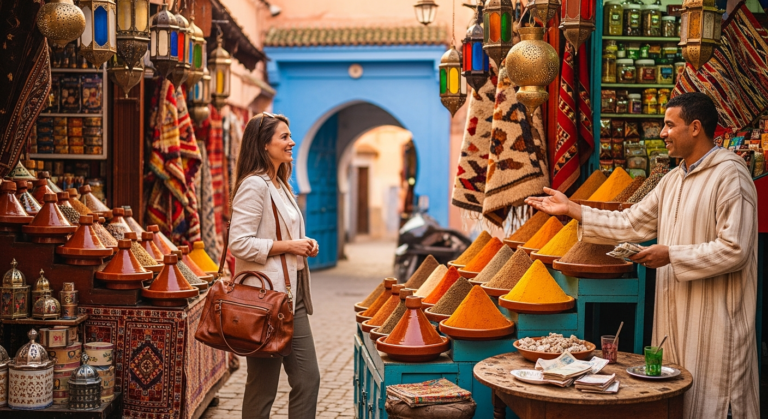
Smart strategies significantly reduce your overall Morocco travel expenses. First, negotiate at souks — initial asking prices are rarely final, and polite bargaining is culturally expected. Second, eat where locals eat — move one or two streets away from main tourist squares for authentic, cheaper meals. Third, use public transport over private taxis wherever possible. Fourth, book tours locally rather than through international platforms to eliminate middlemen markups of 20–40%. Fifth, avoid organized day trips from Marrakech that bundle unnecessary services. Sixth, carry your own water bottle — refilling costs less than buying repeatedly. Lastly, always agree on taxi prices *before* entering the vehicle to avoid inflated fares.
—
FAQs
Q: How much money do I need for 10 days in Morocco?
A: Budget travelers need approximately $350–$450 for 10 days. Mid-range travelers should budget $700–$1,200, excluding international flights.
Q: Is Morocco expensive for tourists?
A: Morocco is generally affordable compared to Europe. However, tourist areas in Marrakech can be pricey if you are not careful.
Q: Can I use credit cards in Morocco?
A: Yes, in most hotels and larger restaurants. However, carry cash for markets, small guesthouses, and rural areas.
Q: Is tipping expected in Morocco?
A: Yes. Tip restaurant staff 5–10%, hotel staff 10–20 MAD/day, and guides 50–100 MAD for day tours.
Q: Is it safe to travel Morocco on a budget?
A: Yes. Morocco is relatively safe. Stay aware in busy medinas, avoid unofficial guides, and keep valuables secured.
Q: What is the cheapest city to visit in Morocco?
A: Meknes and Taza are among the cheapest. They offer authentic experiences with minimal tourist pricing.
—
Conclusion
Morocco rewards budget-conscious travelers generously. With proper planning, you can experience the Sahara, ancient medinas, coastal towns, and world-class cuisine without stretching your finances. The key is knowing your budget tier, using local transport, eating like a local, and timing your visit strategically. Costs have risen moderately since 2023, but Morocco still offers exceptional value compared to most global destinations. Start with a clear daily budget, stay flexible, and embrace the country’s incredible diversity. Morocco does not demand wealth — it demands curiosity.
—
References
– Morocco Ministry of Tourism. (2025). *Annual Tourism Statistics Report*. [tourism.gov.ma](https://www.tourism.gov.ma)
– Numbeo. (2026). *Cost of Living in Morocco*. [numbeo.com](https://www.numbeo.com/cost-of-living/country_result.jsp?country=Morocco)
– Bank Al-Maghrib. (2026). *Exchange Rate Data — Moroccan Dirham*. [bkam.ma](https://www.bkam.ma)
– Lonely Planet. (2025). *Morocco Travel Guide*. [lonelyplanet.com](https://www.lonelyplanet.com/morocco)
– CTM Bus Network. (2025). *Routes and Fares*. [ctm.ma](https://www.ctm.ma)
– ONCF. (2025). *Train Schedules and Ticket Prices*. [oncf.ma](https://www.oncf.ma)