Best Moroccan Markets for Shopping: A Complete Guide
Introduction
Morocco’s medinas are among the most captivating places on earth. Every alley tells a story. Every stall offers a discovery. Whether you seek hand-tooled leather or rare saffron, the best Moroccan markets for shopping deliver an experience unlike anything else. Yet, many travelers arrive unprepared — overwhelmed by the noise, unsure where to start, and often overpaying. This guide cuts through that confusion. You will discover the top souks across Morocco, what to buy in each, how to negotiate like a local, and what insider tips make the difference. By the end, you will shop smarter, spend better, and leave with treasures that truly reflect Morocco’s extraordinary artisan heritage.
—
Key Takeaways
– 🛍️ Morocco’s top shopping markets include Marrakech, Fes, Chefchaouen, Essaouira, and Casablanca.
– 💰 Bargaining is culturally expected — start at 40–50% of the asking price.
– 🏺 Each market specializes in distinct crafts: leather, ceramics, carpets, spices, or jewelry.
– 📍 The Fes el-Bali medina is a UNESCO World Heritage Site and a premier shopping destination.
– 🧭 Early morning visits (before 10 AM) offer quieter, more authentic market experiences.
– 🎁 Budget approximately $50–$300 per day depending on craft purchases and personal taste.
—
Top Moroccan Markets at a Glance
| Market | City | Specialty | Best Time to Visit |
|—|—|—|—|
| Jemaa el-Fna Souk | Marrakech | Spices, leather, textiles | Early morning |
| Fes el-Bali Medina | Fes | Leather, ceramics, brass | Weekday mornings |
| Mellah Market | Fes | Jewelry, silver, antiques | Mid-morning |
| Chefchaouen Souk | Chefchaouen | Woolen crafts, indigo goods | Afternoon |
| Essaouira Medina | Essaouira | Thuya wood art, seafood | Weekend mornings |
| Derb Ghallef | Casablanca | Electronics, fashion, goods | Afternoons |
—
1. Marrakech: The Grand Stage of Moroccan Shopping
Jemaa el-Fna and the Surrounding Souks
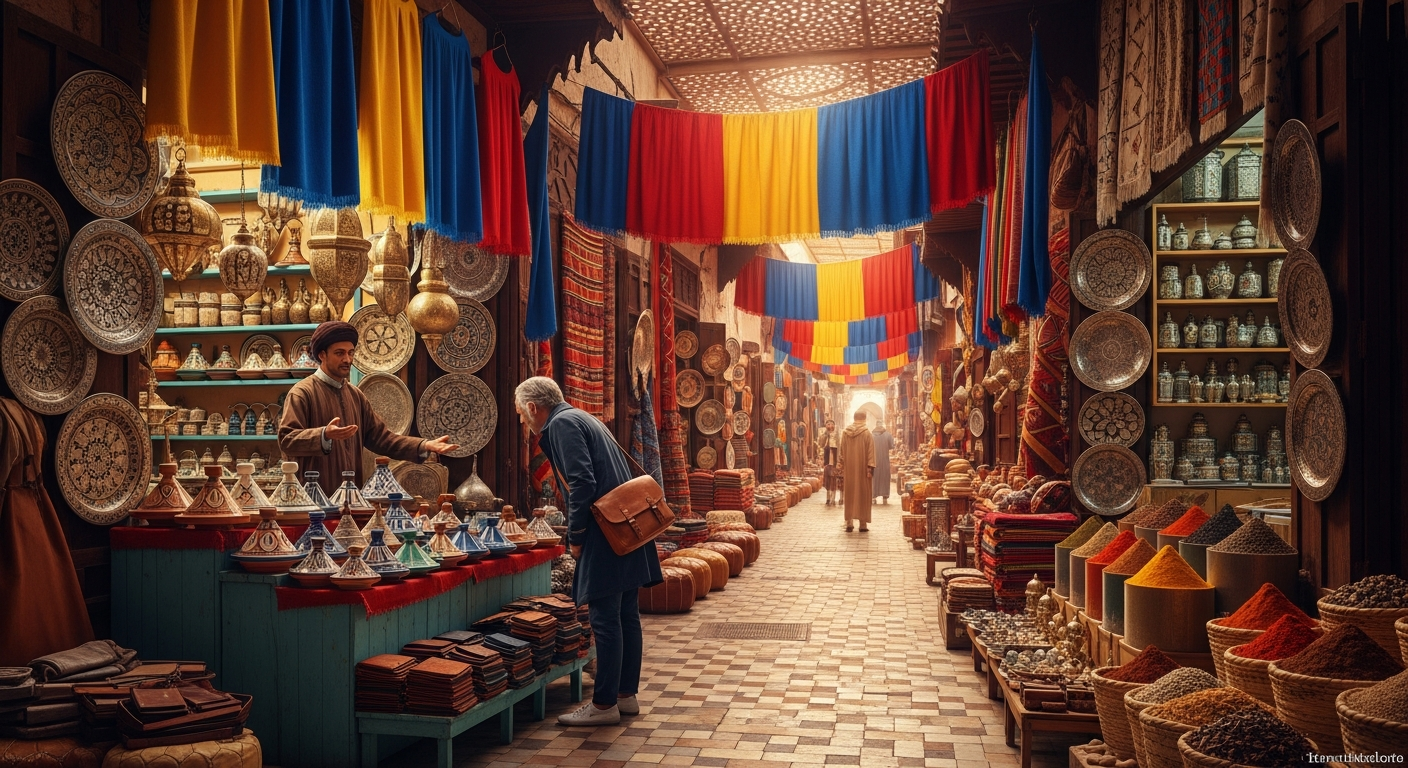
Marrakech is Morocco’s most visited city for good reason. The Jemaa el-Fna square anchors the entire shopping experience. Surrounding it, dozens of specialized souks radiate outward like spokes on a wheel. Each souk focuses on a single trade — metalwork, spices, fabrics, or carpets. The Souk des Teinturiers, or Dyers’ Souk, is a photographer’s dream. The Souk Semmarine is the main artery for textiles. According to Morocco’s Ministry of Tourism (2024), Marrakech attracted over 4.2 million tourists annually, with shopping cited as a primary activity. Expect vibrant chaos, confident merchants, and competitive pricing. A handmade Berber rug can range from $80 to $600 depending on size and knot density.
What to Buy in Marrakech
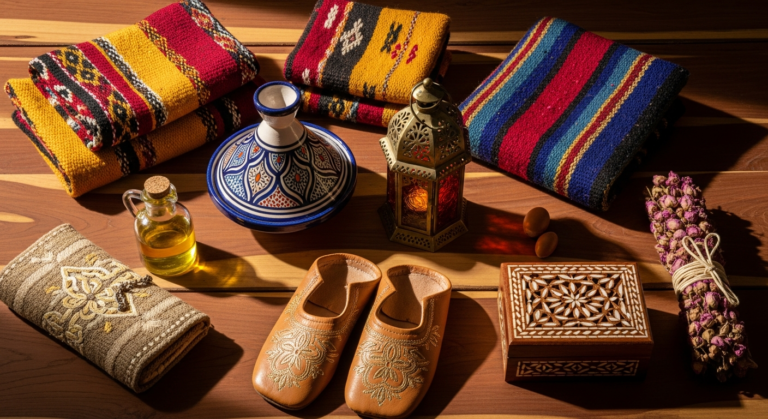
The city’s craft ecosystem is remarkably diverse. Leather babouches (slippers) start from around $10–$30 per pair. Argan oil — Morocco’s liquid gold — sells for $15–$40 for 100ml at reputable stalls. Hand-stamped leather bags are priced between $40 and $150. Moroccan spice blends, known as ras el hanout, cost roughly $3–$8 per 100g. Furthermore, carved cedarwood furniture and inlaid mirror frames are popular larger purchases. Always inspect quality carefully. Authentic hand-stitched leather shows slight irregularities — a mark of genuine craftsmanship. Avoid mass-produced imitations, which are common in tourist-heavy sections near the main square.
—
2. Fes: Morocco’s Spiritual and Artisan Capital
Fes el-Bali — A UNESCO World Heritage Souk
Fes el-Bali is widely regarded as the world’s largest car-free urban area. Shopping here is an immersive historical experience. The medina contains over 9,400 alleyways. Within them, artisans practice crafts passed down across centuries. The famous Chouara Tannery, visible from rooftop terraces above leather shops, has operated since the 11th century. Leather goods here are arguably Morocco’s finest. A medium-sized leather handbag typically costs $60–$180 after negotiation. As travel expert and author Tahir Shah once noted, *”Fes is not a city you visit. It is a city you survive — and fall completely in love with.”* Plan at least a full day to explore properly.
Fes Ceramics and Brass Markets
Beyond leather, Fes is Morocco’s ceramic capital. The blue-and-white Fassi pottery style is internationally recognized. Hand-painted decorative plates sell for $15–$80 depending on complexity. Large decorative ceramic urns can reach $200–$400. Additionally, the brass and copper markets offer intricately engraved lanterns, tea trays, and incense burners. A set of six engraved tea glasses costs approximately $20–$35. Guided tours through the medina cost $15–$30 per person and are strongly recommended for first-time visitors. Without a guide, navigating the labyrinthine alleyways becomes genuinely disorienting. Trustworthy guides are available through riad accommodations or the official tourism office.
—
3. Chefchaouen: The Blue City’s Artisan Souk
Woolen Crafts and Indigo Goods
Chefchaouen is famous for its blue-painted walls and relaxed mountain atmosphere. Its souk, though smaller than Marrakech or Fes, is deeply authentic. Artisans here specialize in woolen crafts — blankets, scarves, and traditional djellabas. Indigo-dyed fabrics dominate the textile offerings. A handwoven wool blanket costs roughly $25–$70. The pace here is slower and far less aggressive. Merchants rarely pursue tourists, making it an ideal shopping environment for those who find Marrakech overwhelming. Chefchaouen’s market also features hemp-woven bags and accessories — a nod to the region’s agricultural traditions. Interestingly, a 2023 survey by TripAdvisor ranked Chefchaouen among Morocco’s top five most authentic travel experiences.
—
4. Essaouira: The Coastal Artisan Haven
Thuya Wood Crafts and Coastal Market Culture
Essaouira sits on Morocco’s Atlantic coast and carries a distinctly relaxed, artistic energy. Its medina is a UNESCO World Heritage Site. The town is particularly celebrated for its thuya wood artisans. Thuya is a fragrant, burled wood found only in Morocco and parts of Algeria. Craftsmen transform it into jewelry boxes, chess sets, picture frames, and decorative bowls. A small thuya jewelry box sells for approximately $15–$40. Additionally, Essaouira’s fish market near the port is a cultural spectacle in itself. Moreover, the town hosts a thriving music scene centered around Gnawa culture, which also appears in artisan goods — painted drums and handmade instruments sell for $30–$120.
—
5. Casablanca: Modern Markets and Urban Shopping
Derb Ghallef and Contemporary Commerce
Casablanca offers a contrasting experience to Morocco’s traditional medinas. Derb Ghallef is one of North Africa’s largest informal markets. It covers several city blocks and sells everything from electronics to designer-brand replicas, fabrics, and household goods. This market appeals more to practical shoppers than craft collectors. However, the Habous Quarter (New Medina) offers a curated, upscale shopping experience. Hand-embroidered caftans and traditional accessories are sold in boutique-style shops at prices ranging from $50–$300. Casablanca also hosts Morocco Mall — Africa’s second-largest shopping center. For travelers seeking international brands alongside Moroccan crafts, this city provides an interesting hybrid shopping environment worth exploring.
—
Negotiation Tips: How to Shop Like a Local
Understanding the Bargaining Culture
Bargaining is not merely acceptable in Moroccan markets — it is expected and respected. Entering a transaction without negotiating actually signals naivety. The standard approach: start your counteroffer at 40–50% of the initial asking price. Then work upward slowly. Do not rush the process. Sharing tea with a merchant before negotiating is common and builds genuine rapport. Never express excessive enthusiasm for an item before discussing price. Body language matters enormously. Walking away calmly often triggers a final, better offer. According to a 2023 report by Morocco’s National Tourist Office, travelers who engage respectfully in bargaining report significantly higher satisfaction with their market experience. Patience, respect, and humor are your most powerful tools.
| Negotiation Stage | Recommended Action |
|—|—|
| Initial asking price | Listen, don’t react visibly |
| First counteroffer | Offer 40–50% of asking price |
| Mid-negotiation | Increase by small increments (5–10%) |
| Final price | Agree at 60–75% of original price |
| Walk-away tactic | Use if stuck — often restarts negotiation |
—
Expert Insight
> *”The souks of Morocco are living museums. Every piece you buy carries the memory of hands that shaped it across generations.”*
> — Hassan Aït Benhaddou, Moroccan craft historian and cultural consultant, 2024.
This perspective captures why authentic Moroccan market shopping transcends simple commerce. It is cultural participation. Travelers consistently report that their most meaningful Moroccan memories revolve around market interactions — not monuments.
—
FAQs
Q1: What is the best time of year to visit Moroccan markets?
Spring (March–May) and autumn (September–November) offer the most comfortable shopping conditions. Summer heat in Marrakech and Fes can exceed 40°C, making long souk visits exhausting.
Q2: Is bargaining mandatory in Moroccan souks?
Yes, in most traditional markets. Fixed prices exist in some artisan cooperatives and government-certified shops. Elsewhere, negotiation is standard and culturally appropriate.
Q3: What currency should I use when shopping?
The Moroccan Dirham (MAD) is the official currency. As of 2025, $1 USD ≈ 10.2 MAD. Cash is preferred in traditional souks, though some larger shops accept cards.
Q4: How do I avoid tourist traps in Moroccan markets?
Shop in artisan cooperatives certified by the government. Avoid sellers who approach aggressively. Research typical price ranges before visiting. Hiring a licensed guide reduces the risk significantly.
Q5: Can I ship large purchases home from Morocco?
Yes. Many carpet and furniture dealers offer international shipping. Verify the service includes proper customs documentation. Shipping costs typically add $80–$300 depending on destination and item size.
Q6: Are Moroccan markets safe for solo travelers?
Generally, yes. Morocco ranks among North Africa’s safer tourist destinations. Standard precautions apply — be aware of pickpockets in crowded souks and keep valuables secured.
—
Conclusion
Morocco’s markets are far more than shopping destinations. They are living ecosystems of culture, craftsmanship, and human connection. From the roaring energy of Marrakech’s Jemaa el-Fna to the quiet artistry of Essaouira’s thuya wood workshops, each market offers something irreplaceable. The key is preparation. Know your budget, understand the bargaining culture, and arrive with curiosity rather than just a shopping list. Fes rewards patience with extraordinary leather and ceramics. Chefchaouen offers calm authenticity. Casablanca bridges tradition and modernity. Whichever route you choose, shopping in Morocco is ultimately an act of cultural appreciation. Spend thoughtfully, negotiate respectfully, and carry home not just objects — but stories.
—
References
– Morocco Ministry of Tourism (2024). *Annual Tourism Statistics Report*. [tourism.gov.ma](https://www.tourism.gov.ma)
– UNESCO World Heritage Centre. *Medina of Fes*. [whc.unesco.org](https://whc.unesco.org/en/list/170)
– UNESCO World Heritage Centre. *Medina of Essaouira*. [whc.unesco.org](https://whc.unesco.org/en/list/753)
– TripAdvisor Traveler Insights (2023). *Top Authentic Experiences in Morocco*.
– Morocco’s National Tourist Office (2023). *Traveler Satisfaction Survey Report*.
– Shah, Tahir (2008). *In Arabian Nights: A Caravan of Moroccan Dreams*. Bantam Books.