Is Marrakech Safe for Tourists? What You Must Know
Introduction
Every year, over 4 million tourists visit Marrakech, Morocco’s most iconic city. Yet many travelers still ask: how safe is Marrakech for tourists, really? The question is fair. Between the winding medina alleys, bustling souks, and a culture vastly different from the West, uncertainty is natural. This guide cuts through the noise. You will learn about actual crime rates, common scams, neighborhood safety, and practical precautions. Whether you are a solo traveler, a family, or a first-time visitor, this article gives you honest, data-driven answers. By the end, you will know exactly what to expect and how to stay safe in the Red City.
—
Key Takeaways
– ✅ Marrakech is generally safe for tourists, with violent crime rates remaining low.
– ⚠️ Petty theft and scams targeting tourists are the most common risks.
– 🗺️ Some neighborhoods are safer than others — know the difference.
– 👩 Solo female travelers face specific challenges but can navigate them with preparation.
– 🚔 Morocco has invested heavily in tourist police and security infrastructure.
– 💡 Most incidents are avoidable with awareness and basic precautions.
—
Overall Safety in Marrakech: The Real Picture
Marrakech consistently ranks as one of North Africa’s most-visited cities. According to the 2024 Global Peace Index, Morocco ranks 83rd out of 163 countries — above several popular European destinations. Violent crime against tourists is genuinely rare. The U.S. State Department currently rates Morocco at Level 1: Exercise Normal Precautions, its lowest risk category. The UK’s Foreign Commonwealth & Development Office echoes a similar assessment. That said, Marrakech is not without its challenges. Petty crime, opportunistic scams, and occasional harassment do occur. Understanding the actual risk landscape — rather than relying on sensationalized headlines — gives travelers a more accurate and useful picture.
—
Common Safety Risks Tourists Actually Face
Petty Theft and Pickpocketing
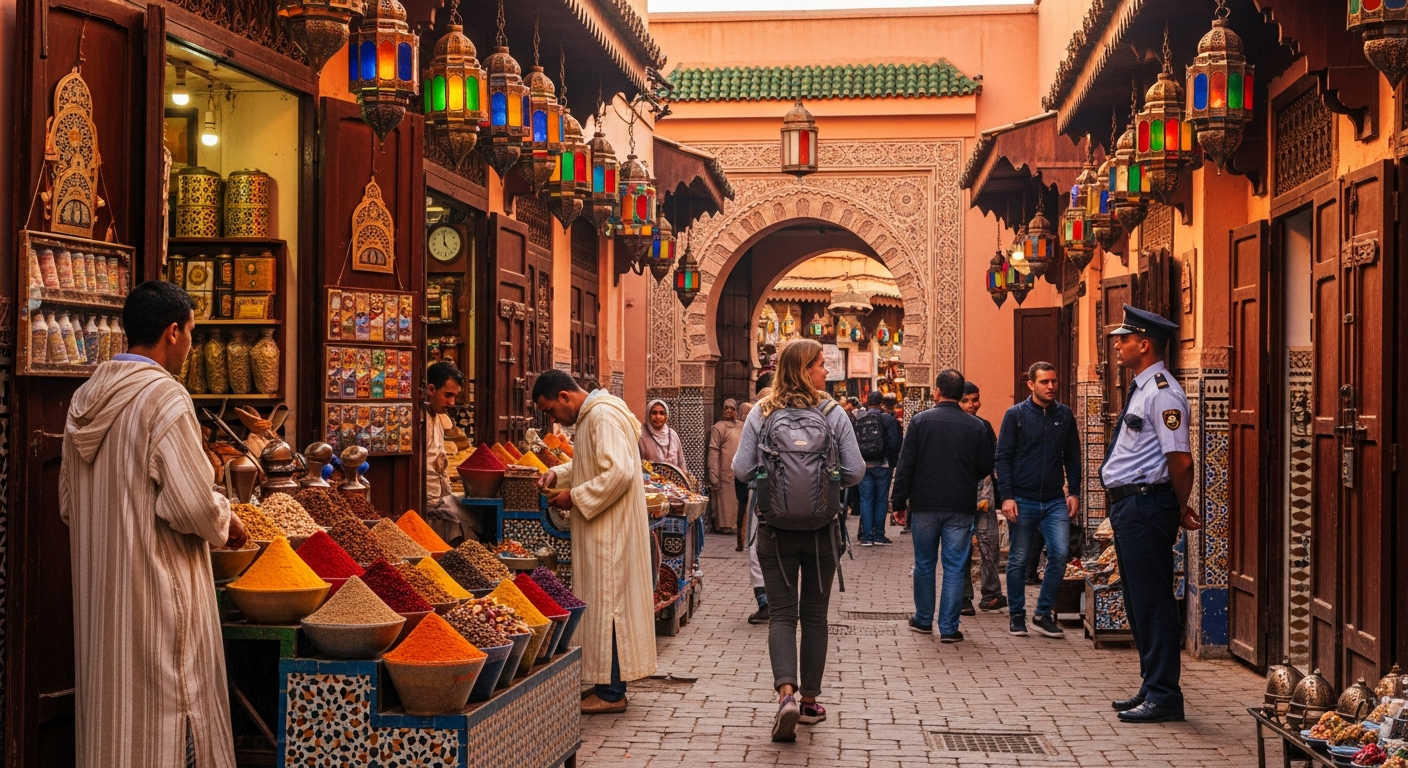
Pickpocketing is the most frequently reported crime in Marrakech. Crowded spaces like Jemaa el-Fna square, the souks, and busy bus stops are hotspots. Tourists carrying exposed cameras, phones, or open bags are primary targets. Furthermore, motorbike bag snatching has been reported along narrower medina streets. The Moroccan Tourist Police (Brigade Touristique) actively patrols these areas. Travelers should use anti-theft bags, keep valuables in hotel safes, and avoid displaying expensive jewelry. According to travel safety platform Bounce, over 60% of tourist complaints in Marrakech relate to minor theft or property offenses — not violent incidents. Awareness is your strongest defense.
Scams and Touts
Scams in Marrakech tend to follow recognizable patterns. Common schemes include fake guides offering “free” directions that end in commission-based shops, overcharging in unlicensed taxis, and the infamous henna trap — where women apply henna without consent and demand large sums. Additionally, carpet sellers may use high-pressure tactics. One traveler, Sophie M. from London, shared: *”A man offered to help us find a riad, led us through the medina for 20 minutes, then demanded 200 dirhams ($20). We had no idea it was a scam.”* Recognizing these patterns in advance dramatically reduces your exposure. Always agree on prices upfront and use licensed petit taxis with meters.
—
Neighborhood Safety Breakdown
Not every part of Marrakech carries the same risk level. Understanding which areas demand more caution helps tourists plan smarter itineraries.
| Area | Safety Level | Notes |
|—|—|—|
| Medina (Old City) | Moderate | Busy, scam-prone; tourist police present |
| Gueliz (New City) | High | Modern, well-lit, lower scam risk |
| Hivernage | High | Upscale hotels, embassies, very safe |
| Mellah (Jewish Quarter) | Moderate | Interesting but quieter; stay alert at night |
| Jemaa el-Fna Square | Moderate | Crowded; pickpocketing risk after dark |
| Palmeraie | High | Luxury resorts; very low crime |
> Expert Tip: Travel security consultant James Thornton advises: *”Tourists should avoid walking alone in the medina after midnight. Stick to well-lit routes and trust your instincts. Most problems happen late at night.”*
—
Safety for Solo Female Travelers
Solo female travelers can absolutely visit Marrakech safely — but they face a distinct set of challenges. Verbal harassment and unwanted attention from men are widely reported, particularly in the medina. However, Morocco has made measurable progress. A 2023 report by Women’s Travel Advisory Network found that 72% of solo female visitors to Morocco rated their experience as “safe” or “very safe.” Dressing modestly — covering shoulders and knees — significantly reduces unwanted attention. Avoiding eye contact with persistent touts is another effective strategy. Booking accommodation in reputable riads with strong reviews adds another layer of security. Traveling with confidence, moving purposefully, and knowing local emergency numbers are all essential habits.
Practical Safety Tips for Women
– Wear loose, modest clothing — a scarf is a versatile tool.
– Avoid walking alone late at night in unlit alleys.
– Pre-book airport and city transfers through verified services.
– Download offline maps to avoid appearing lost.
– Trust local female vendors for guidance and directions.
—
Tourist Police and Emergency Infrastructure
Morocco has significantly strengthened its tourism security framework since the 2011 Arab Spring and the 2018 Atlas Mountains murders — a tragic case that prompted nationwide security reforms. Today, Marrakech maintains a dedicated Tourist Police brigade operating around the clock. Officers are trained to speak French, English, and Spanish. Emergency services are reachable at 19 (police) and 15 (medical emergencies). Moreover, the city installed over 1,200 CCTV cameras across the medina and key tourist zones by 2023. According to Morocco’s Ministry of Tourism, complaints filed by tourists dropped by 34% between 2019 and 2023, reflecting measurable improvements in visitor safety outcomes.
—
Health and Environmental Safety
Beyond crime, travelers should also consider health-related risks. Marrakech’s summer temperatures regularly exceed 40°C (104°F), making heat exhaustion a real danger. Travelers should drink bottled or filtered water exclusively — tap water is technically treated but not always reliable for sensitive stomachs. Street food is generally safe from reputable vendors, though food hygiene standards vary widely. Furthermore, road safety deserves attention. Marrakech traffic is chaotic, and pedestrian crossings are often ignored. A 2022 WHO report noted Morocco’s road fatality rate at 19.5 per 100,000 people — among the highest in North Africa. Cross streets cautiously and avoid renting motorbikes unless you are experienced.
—
Terrorism Risk: Honest Assessment
The risk of terrorism in Morocco is real but must be contextualized accurately. Morocco’s intelligence services are considered among the most capable in the region. The country has successfully disrupted numerous plots since 2003. The U.S. Embassy in Rabat notes that Morocco has a “strong counterterrorism track record.” However, the threat of lone-wolf attacks exists across all major tourist destinations globally — Marrakech is not unique in this respect. Travelers should remain aware of their surroundings, avoid large political demonstrations, and register with their country’s embassy upon arrival. Importantly, no major terrorist attack has occurred in Marrakech since the 2011 Argana café bombing.
—
Cost vs. Safety: The Value Equation
| Safety Feature | Cost to Traveler | Impact |
|—|—|—|
| Licensed taxi (airport) | ~150–200 MAD ($14–19) | Avoids scam drivers |
| Reputable riad accommodation | ~500–1200 MAD/night | Secure, vetted environment |
| Guided medina tour | ~300–600 MAD | Avoids scam guides |
| Travel insurance | ~$30–80/trip | Covers theft, medical emergencies |
| Anti-theft daypack | ~$20–50 (one-time) | Reduces pickpocket risk dramatically |
Investing modestly in verified services pays dividends in safety and peace of mind.
—
FAQs
Q1: Is Marrakech safe for solo travelers in 2025–2026?
Yes. With proper precautions, solo travelers — male and female — visit Marrakech safely every day. Awareness is key.
Q2: What are the most dangerous areas in Marrakech?
The medina’s narrower, unlit alleys late at night carry higher risk. Gueliz and Hivernage are consistently the safest districts.
Q3: Should I be worried about terrorist attacks?
The risk is low. Morocco has a strong security record and no major attack has occurred in Marrakech since 2011.
Q4: Is Marrakech safe for LGBTQ+ travelers?
Homosexuality is technically illegal in Morocco. LGBTQ+ travelers should exercise discretion to avoid legal and social confrontation.
Q5: How do I avoid taxi scams in Marrakech?
Always use petit taxis with the meter running, or agree on a fare beforehand. Licensed taxis are metered and regulated.
Q6: What should I do if I am scammed or robbed?
Report the incident to the Tourist Police immediately. The nearest brigade is located near Jemaa el-Fna. Keep copies of your travel documents.
—
Conclusion
Marrakech is a city of extraordinary beauty, cultural depth, and genuine warmth. It is also a city that demands awareness. The honest answer to the question of safety is this: Marrakech is safe for the prepared traveler. Violent crime is rare. The city’s security infrastructure has improved substantially. Most risks are predictable and therefore avoidable. Dress modestly, use licensed services, stay alert in crowded spaces, and invest in travel insurance. Millions of tourists visit every year and return home with memories they treasure for life. With the right preparation, you will be one of them. The Red City rewards those who respect it — and keeps its most authentic magic for those who come ready.
—
References
– Global Peace Index 2024 — Institute for Economics & Peace: [visionofhumanity.org](https://www.visionofhumanity.org)
– U.S. State Department Travel Advisory — Morocco: [travel.state.gov](https://travel.state.gov)
– UK Foreign Commonwealth & Development Office — Morocco Travel: [gov.uk/foreign-travel-advice/morocco](https://www.gov.uk/foreign-travel-advice/morocco)
– World Health Organization Road Safety Report 2022: [who.int/roadsafety](https://www.who.int/roadsafety)
– Morocco Ministry of Tourism Annual Report 2023: [tourism.gov.ma](http://www.tourism.gov.ma)
– Women’s Travel Advisory Network — Morocco Safety Report 2023: [womenstraveladvisory.org](https://www.womenstraveladvisory.org)