Is Morocco Safe for Tourists in 2026? Complete Travel Safety Guide
Is Morocco Safe for Tourists in 2026? Complete Travel Safety Guide
Introduction
Planning a trip to North Africa’s most visited country raises one essential question: is Morocco safe for tourists? The answer is nuanced, honest, and ultimately encouraging — but only if you travel informed. Morocco welcomed over 14.5 million international tourists in 2023, and 2025–2026 figures continue to climb. Yet many first-time travelers hesitate, unsettled by online horror stories about scams, harassment, or political instability. This guide cuts through the noise. You will learn the real safety situation on the ground, which cities are safest, which areas to avoid, how solo and female travelers navigate Morocco confidently, and what practical steps reduce your risk dramatically. By the end, you will have everything needed to decide whether Morocco belongs on your 2026 travel list.
—
🔑 Key Takeaways
– Morocco is generally safe for tourists, with a Global Peace Index rank of 83rd out of 163 countries (2024).
– Violent crime against tourists is rare; petty crime and scams are the most common concerns.
– Marrakech, Fes, Chefchaouen, and Essaouira are the safest and most tourist-friendly cities.
– Solo female travelers can visit safely with proper precautions and destination awareness.
– Food and water safety require attention — stick to bottled water and cooked street food.
– Travel insurance and registering with your country’s embassy are strongly recommended.
—
The Real Safety Situation in Morocco
Morocco is a stable constitutional monarchy. Unlike several neighboring countries, it has not experienced significant civil unrest or terrorism targeting tourists in recent years. The U.S. Department of State currently assigns Morocco a Level 1: Exercise Normal Precautions rating — the lowest concern tier. The UK Foreign Commonwealth & Development Office echoes a similar assessment.
That said, “safe” does not mean “risk-free.” Petty theft, aggressive touts, and opportunistic scams remain common in high-traffic tourist zones. Understanding the difference between genuine danger and cultural friction is the first step every smart traveler takes. Morocco’s safety profile is broadly comparable to popular destinations like Egypt, Turkey, or parts of Southern Europe.
> *”Morocco felt safer than I expected, but you need street smarts. Once I stopped engaging with persistent touts, everything changed.”* — Sarah M., solo traveler from Canada, 2025.
—
Safe Cities for Tourists in Morocco
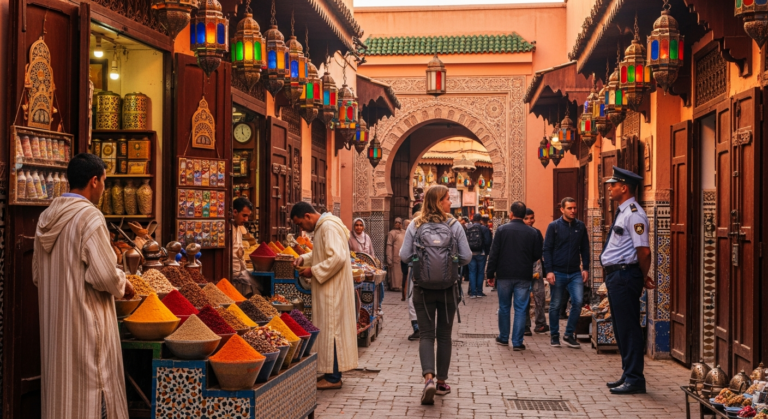
Most major tourist destinations maintain a strong police and tourist brigade presence. The Brigade Touristique (Tourist Police) actively patrols popular medinas and markets. Here is a quick breakdown:
| City | Safety Level | Notes |
|—|—|—|
| Chefchaouen | ⭐⭐⭐⭐⭐ Excellent | Small, calm blue city; very low harassment |
| Essaouira | ⭐⭐⭐⭐⭐ Excellent | Relaxed coastal vibe; tourist-friendly |
| Agadir | ⭐⭐⭐⭐⭐ Excellent | Modern resort city; minimal medina pressure |
| Marrakech | ⭐⭐⭐ Good | High-energy; scams present but manageable |
| Fes | ⭐⭐⭐ Good | Complex medina; use licensed guides |
| Casablanca | ⭐⭐⭐ Good | Modern city; standard urban precautions apply |
| Tangier | ⭐⭐ Fair | Improving rapidly; still requires vigilance |
—
Areas Tourists Should Avoid
While Morocco has no officially declared no-go zones for tourists, some areas warrant extra caution. The Western Sahara region carries a higher advisory from several governments due to unresolved territorial disputes. Remote areas near the Algerian border are advised against by most Western foreign ministries.
Within cities, avoid poorly lit backstreets in medinas after dark, especially in Casablanca’s Derb Sultan neighborhood or Tangier’s older port-adjacent quarters. Additionally, unofficial “guides” who approach you near bus stations often lead travelers into commission-driven carpet shops. Furthermore, the Derb Ghallef market in Casablanca is known for counterfeit goods and petty theft.
—
Common Scams in Morocco (and How to Avoid Them)
Morocco scams are the most-reported issue among tourists. Awareness is your best defense.
🎭 Top 5 Scams to Know
1. The Fake Guide Scam
Someone offers to help you find a location “for free,” then demands payment. Solution: download offline maps via [Maps.me](https://maps.me) or Google Maps before entering medinas.
2. The Carpet Shop Trap
A friendly local invites you for “mint tea” that leads to a high-pressure sales pitch. Politely decline all unsolicited invitations.
3. The Wrong Direction Scam
A stranger tells you the street you want is “closed today” and offers to redirect you. Always verify with hotel staff first.
4. The Photo Fee Scam
After photographing locals or their animals, you face aggressive demands for money. Ask permission and agree on any fee upfront.
5. The Overcharging Taxi Scam
Drivers quote inflated fares to tourists. Always insist on the meter or negotiate the price before entering any petit taxi.
> 💡 *Pro tip:* Install the Careem or inDriver app for transparent ride pricing in Morocco’s major cities.
—
Morocco Safety at Night
Nighttime safety varies significantly by city and district. Marrakech’s Jemaa el-Fna square stays lively and relatively safe until midnight due to heavy police presence. Riads within medinas are generally secure. However, wandering unfamiliar medina alleyways after 10 PM increases risk substantially.
In contrast, Agadir and Essaouira have beachfront promenades that remain safe and active well into the evening. Casablanca has a thriving nightlife district but apply standard metropolitan nightlife precautions. Overall, staying in well-lit areas, avoiding isolated streets, and returning to your accommodation by taxi after midnight eliminates most nighttime risks.
—
Solo Travel Safety in Morocco
Solo travel in Morocco is absolutely feasible and increasingly popular. The key is deliberate preparation. Book your first night’s accommodation in advance and arrange airport transfers directly through your hotel. Join day tours for desert or mountain excursions rather than hiring random drivers.
Solo male travelers face primarily scam-related risks. Solo female travelers navigate a broader set of challenges, addressed separately below. According to a 2024 solo traveler survey by Hostelworld, Morocco ranked among the top 10 destinations for solo travel in Africa and the Middle East, with 76% of respondents rating their experience as positive.
—
Safety for Female Travelers in Morocco
Female travelers must approach Morocco with informed confidence. Street harassment — verbal comments, persistent following — occurs in busy medinas and tourist zones. It is uncomfortable but rarely escalates to physical confrontation in tourist areas.
✅ Practical Safety Tips for Women
– Dress modestly — covering shoulders and knees significantly reduces unwanted attention.
– Walk with purpose — hesitant tourists attract more approaches.
– Book female-friendly riads — many advertise specifically welcoming solo female guests.
– Use the “I’m meeting my husband/friend” deflection technique confidently.
– Travel in groups for remote areas — the Sahara desert, rural High Atlas villages.
– Join women-only or small-group tours via reputable operators like [Intrepid Travel](https://www.intrepidtravel.com).
> *”As a solo woman, I walked Chefchaouen and Essaouira completely comfortably. Marrakech required more confidence but was still rewarding.”* — Lena B., Berlin, travel blogger, 2025.
—
Taxi and Transportation Safety in Morocco
Transportation in Morocco is generally reliable but requires vigilance. The ONCF rail network connecting Casablanca, Rabat, Fes, Tangier, and Marrakech is modern, safe, and highly recommended. CTM long-distance buses are air-conditioned, punctual, and secure.
For taxis, Morocco operates two systems:
| Type | Coverage | Meter? | Recommended? |
|—|—|—|—|
| Petit Taxi | Within cities | Yes — insist on it | ✅ Yes |
| Grand Taxi | Between cities | Fixed shared fare | ✅ Yes (negotiate first) |
| Unofficial drivers | Anywhere | No | ❌ Avoid |
Always take taxis from official ranks outside airports and train stations. Ride-hailing apps like Careem are now operational in Casablanca and Marrakech, providing added price transparency.
—
Food and Drinking Water Safety
Moroccan cuisine is extraordinarily rich — tagines, couscous, pastilla, and fresh seafood are among the world’s great culinary experiences. However, food safety requires attention.
Water: Tap water in Morocco is technically treated but not recommended for drinking by most health authorities. Buy sealed bottled water consistently. Avoid ice cubes in drinks unless you confirm they are made from filtered water.
Street food: Morocco’s street food scene is vibrant and largely safe if you choose busy stalls with high turnover and freshly cooked items. Avoid pre-cooked meats sitting out in heat. The famous Jemaa el-Fna food stalls are safe for most visitors, though choose stalls with visible cooking activity.
Restaurant safety: Stick to restaurants listed on TripAdvisor or recommended by your riad. Ensure meat is fully cooked and salads have been washed in purified water.
—
Police and Emergency Help in Morocco
Morocco has a dedicated Tourist Police (Brigade Touristique) in all major cities. They are identifiable by their uniform patches and are generally helpful to foreign visitors. In case of emergency:
| Service | Number |
|—|—|
| Police | 19 |
| Gendarmerie | 177 |
| Ambulance / SAMU | 15 |
| General Emergency | 112 |
Report any theft or crime immediately for your insurance claim documentation. Morocco’s police take tourist complaints seriously, particularly post the 2019 Imlil tragedy that prompted significant security reforms in mountain areas.
—
Travel Tips for First-Time Visitors
– 📌 Register with your embassy before arrival via tools like the U.S. Smart Traveler Enrollment Program ([STEP](https://step.state.gov)).
– 📌 Purchase travel insurance — include medical evacuation cover.
– 📌 Carry small denominations of Moroccan Dirham for market purchases.
– 📌 Photograph your passport and store it in a secure cloud service.
– 📌 Learn basic Arabic or French phrases — *”La shukran”* (No, thank you) is invaluable.
– 📌 Respect Ramadan customs if traveling during the holy month.
– 📌 Book guided excursions through your hotel or certified operators, not street touts.
—
Morocco vs. Other Tourist Countries: Safety Comparison
| Country | Global Peace Index 2024 | Tourist Safety Perception |
|—|—|—|
| Morocco | Rank 83 | Moderate-High |
| Turkey | Rank 119 | Moderate |
| Egypt | Rank 118 | Moderate |
| Portugal | Rank 7 | Very High |
| Thailand | Rank 107 | Moderate-High |
| Spain | Rank 23 | High |
Morocco compares favorably with Egypt and Turkey — two destinations millions of tourists visit confidently each year. It ranks significantly safer than many travelers assume, particularly relative to its regional neighbors.
—
FAQ Section
Q: Is Morocco safe for American tourists?
The U.S. State Department rates Morocco at Level 1 — Exercise Normal Precautions. American tourists visit in large numbers annually without incident.
Q: Is Marrakech safe for tourists?
Yes, Marrakech is generally safe. The main risks are scams and persistent touts, not violence. Stay alert in medina backstreets after dark.
Q: Is Morocco safe for solo female travelers?
Yes, with preparation. Dress modestly, stay in reputable accommodations, use apps for transportation, and avoid isolated areas at night.
Q: What is the safest city in Morocco for tourists?
Chefchaouen and Essaouira consistently rank as the most relaxed, safest, and tourist-friendly cities in Morocco.
Q: Is tap water safe to drink in Morocco?
No. Drink sealed bottled water throughout your trip.
Q: Is Morocco safe during Ramadan?
Yes, and it can be a fascinating cultural experience. Be respectful about eating in public during daylight hours.
Q: Are there terrorist threats in Morocco?
Morocco’s security services are highly active. No major attacks targeting tourists have occurred since 2011. The country cooperates extensively with international counter-terrorism agencies.
—
Conclusion
So, is Morocco safe for tourists in 2026? The clear, evidence-based answer is yes — with informed preparation. Morocco is a genuinely enriching destination that rewards travelers who arrive with street smarts, cultural respect, and practical precautions. Petty scams and harassment exist, but violent crime targeting tourists remains rare. The country’s dedicated tourist police, modern transport infrastructure, and extraordinary hospitality create an experience that over 14 million visitors annually find well worth the effort. Choose the right cities, follow the safety practices outlined in this guide, and Morocco will almost certainly exceed your expectations. The medinas, the Sahara, the Atlas Mountains, and the Atlantic coastline are waiting — safely.
—
References
– [U.S. Department of State — Morocco Travel Advisory](https://travel.state.gov/content/travel/en/traveladvisories/traveladvisories/morocco-travel-advisory.html)
– [UK Foreign Commonwealth & Development Office — Morocco Safety](https://www.gov.uk/foreign-travel-advice/morocco)
– [Vision of Humanity — Global Peace Index 2024](https://www.visionofhumanity.org/maps/#/)
– [UNWTO — Morocco Tourism Statistics 2023](https://www.unwto.org)
– [Intrepid Travel — Morocco Tours](https://www.intrepidtravel.com/en/morocco)
– [U.S. Smart Traveler Enrollment Program (STEP)](https://step.state.gov)
– [Maps.me — Offline Navigation App](https://maps.me)