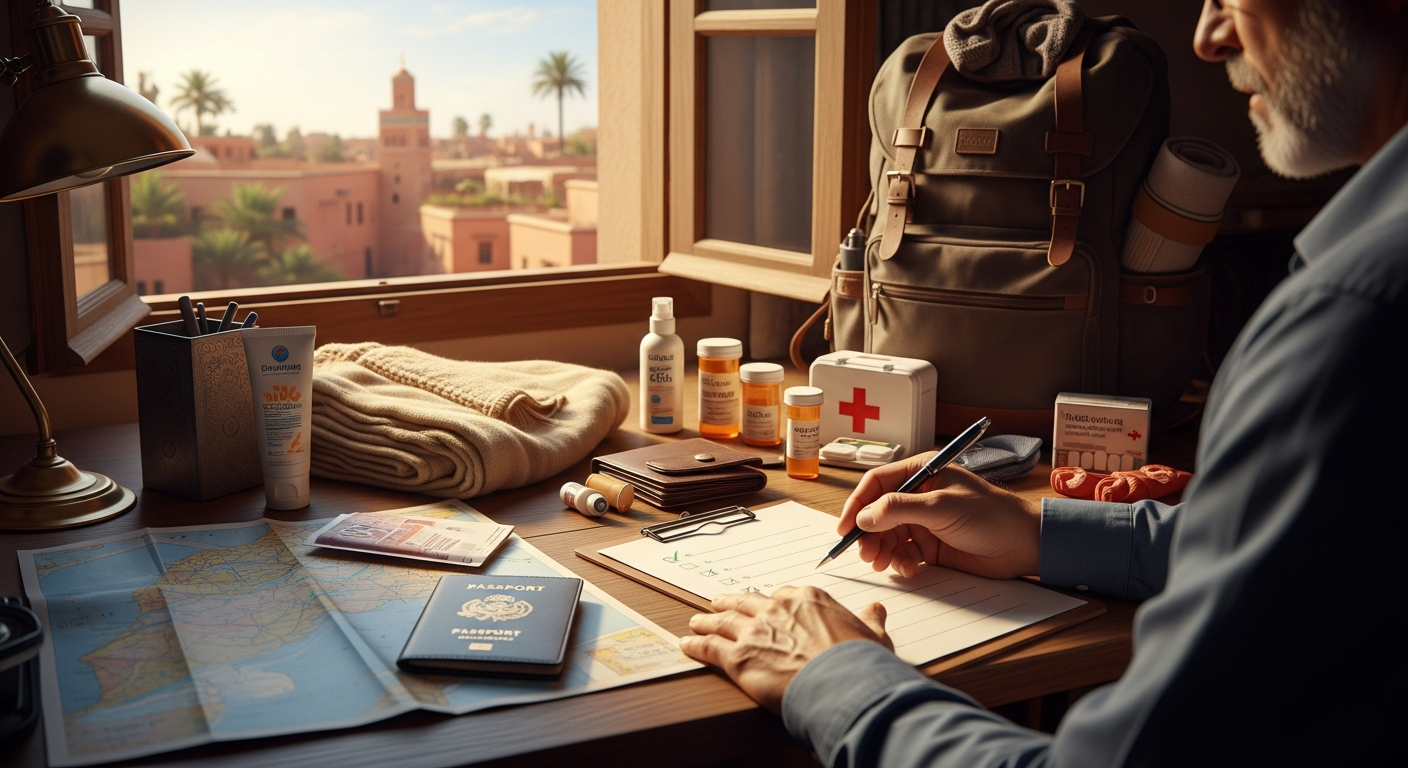
Morocco Travel Checklist: Plan Your Trip Right
Introduction
Planning a trip to Morocco is genuinely exciting. However, arriving unprepared can quickly turn that excitement into stress. From visa requirements to cultural dress codes, the details matter enormously. This Morocco travel checklist before your trip covers everything you need to know. Whether you’re visiting the medinas of Fez or the Sahara dunes near Merzouga, proper preparation makes all the difference. This guide walks you through documents, health precautions, packing essentials, and cultural etiquette. By the end, you’ll feel confident and ready for one of the world’s most captivating destinations. Let’s make sure nothing important gets left behind.
—
Key Takeaways
– ✅ Most nationalities don’t need a visa for Morocco (stays under 90 days)
– ✅ Vaccinations and travel insurance are strongly recommended
– ✅ Moroccan dirhams (MAD) cannot be exported; exchange wisely
– ✅ Modest clothing is essential, especially in rural and religious areas
– ✅ Download offline maps and translation apps before departure
– ✅ Bargaining is culturally expected in souks and markets
—
1. Documents and Entry Requirements
Before anything else, confirm your entry documents are complete. Morocco welcomed over 14.5 million tourists in 2023, reflecting its global popularity. Citizens from the US, EU, UK, Canada, and Australia enter visa-free for up to 90 days. However, your passport must be valid for at least 6 months beyond your travel date. Additionally, carry printed copies of hotel reservations and return tickets. Immigration officers occasionally request proof of onward travel. Furthermore, travel insurance documentation should be accessible, not buried in your luggage. Keep digital backups of all key documents in a secure cloud folder. A small travel document organizer is a smart investment.
| Document | Requirement |
|—|—|
| Passport Validity | Min. 6 months beyond travel |
| Visa (Most Western nationals) | Not required (≤90 days) |
| Proof of Accommodation | Recommended |
| Return/Onward Ticket | Recommended |
| Travel Insurance | Strongly advised |
—
2. Health and Vaccination Checklist
Your health preparation is just as important as your packing list. The CDC and WHO recommend travelers to Morocco receive updated vaccinations for Hepatitis A, Hepatitis B, and Typhoid. Routine vaccinations like MMR and COVID-19 boosters should also be current. Additionally, travelers to rural or desert areas should consider Rabies pre-exposure prophylaxis. Carry prescription medications in original, labeled containers. Morocco’s pharmacies are well-stocked in major cities, but rural areas are limited. Bring oral rehydration salts, as stomach upsets are common among first-time visitors. Tap water is generally unsafe to drink; bottled or filtered water is essential throughout your journey.
> Expert Advice: *”Always consult a travel medicine specialist at least 4–6 weeks before departure to Morocco.”* — Travel Health Clinic Network, 2024
| Vaccination | Priority Level |
|—|—|
| Hepatitis A | High |
| Typhoid | High |
| Hepatitis B | Medium |
| Rabies (rural travel) | Medium |
| Tetanus/Diphtheria | Routine |
—
3. Money and Budget Planning
Understanding Morocco’s financial landscape prevents expensive surprises. The official currency is the Moroccan Dirham (MAD). As of early 2025, 1 USD ≈ 10.0 MAD and 1 EUR ≈ 10.8 MAD. Dirhams are a restricted currency, meaning you cannot import or export them legally. Therefore, exchange money only upon arrival at airports, banks, or licensed exchange bureaus. ATMs are widely available in cities like Marrakech, Casablanca, and Rabat. However, inform your bank of your travel dates before departing. Budget travelers typically spend $40–$60 USD per day, while mid-range travelers spend $80–$130 USD. Carry small bills for tips, taxis, and market purchases.
> *”In Morocco, cash is king — especially outside of major tourist hotels and restaurants.”*
| Budget Level | Daily Spend (USD) |
|—|—|
| Budget | $40–$60 |
| Mid-Range | $80–$130 |
| Luxury | $200+ |
—
4. Clothing and Packing Essentials
Packing correctly for Morocco requires both practicality and cultural awareness. Morocco’s climate varies dramatically; Marrakech summers reach 40°C (104°F), while Atlas Mountain nights drop below 0°C (32°F). Lightweight, breathable fabrics work best for the heat. However, modest clothing is non-negotiable. Women and men should cover shoulders and knees when visiting mosques, souks, or traditional villages. Loose-fitting trousers and long-sleeved shirts are versatile choices. Additionally, a quality scarf or shawl serves multiple purposes: warmth, sun protection, and mosque etiquette. Comfortable walking shoes are essential since Moroccan medina streets are cobblestone and uneven.
Essential Packing Checklist:
– 🧴 High-SPF sunscreen (SPF 50+)
– 👟 Comfortable closed-toe walking shoes
– 🧣 Lightweight scarf/shawl (multipurpose)
– 💊 Personal medication + basic first-aid kit
– 🔌 Universal travel adapter (Type C/E sockets)
– 📱 Unlocked smartphone for local SIM
– 🎒 Daypack for medina exploration
– 💧 Reusable water bottle with filter
—
5. Cultural Etiquette and Local Customs
Respecting Moroccan culture dramatically improves your travel experience. Morocco is a predominantly Muslim country with deep-rooted traditions. During Ramadan (dates shift annually), eating, drinking, or smoking in public during daylight hours is considered disrespectful. Always ask permission before photographing local people, particularly women. When entering a home or traditional riad, remove your shoes. Greetings are important; a handshake is standard between men, while women may greet with cheek kisses among acquaintances. Moreover, bargaining in souks is not only acceptable — it’s expected. Start your counter-offer at roughly 50% of the asking price and negotiate from there.
> *”Moroccans are extraordinarily hospitable. Show genuine respect for their customs, and they’ll welcome you like family.”* — Fatima El-Hassan, Marrakech-based licensed tour guide
—
6. Connectivity, Apps, and Technology
Staying connected in Morocco is easier than many travelers expect. Local SIM cards from Maroc Telecom, Orange Maroc, or Inwi cost approximately $5–$10 USD for a data package with several gigabytes. Coverage is strong in cities but variable in desert and mountain areas. Therefore, downloading offline maps via Google Maps or Maps.me is strongly advised before you leave home. Similarly, a translation app like Google Translate with Arabic and French language packs downloaded offline saves significant time. Morocco’s official languages are Arabic and Tamazight (Berber), but French is widely spoken in urban settings. Free Wi-Fi is available in most riads and hotels.
| App | Purpose |
|—|—|
| Google Maps (offline) | Navigation |
| Google Translate (offline) | Communication |
| XE Currency | Currency conversion |
| WhatsApp | Communication with locals |
| TripAdvisor | Reviews and recommendations |
—
7. Safety and Emergency Contacts
Morocco is generally safe for tourists, but vigilance is always wise. The US State Department rates Morocco as Level 1 (“Exercise Normal Precautions”) as of 2024. Petty theft and scams targeting tourists occur mainly in crowded medinas and busy tourist zones. Keep valuables secured in a money belt under your clothing. Avoid accepting unsolicited “guides” who approach you near major attractions. In case of emergencies, Morocco’s national police number is 19, while the gendarmerie is 177. The tourist police (*Brigade Touristique*) are stationed in major cities. Additionally, register your trip with your home country’s embassy or consulate before departure.
| Emergency Service | Number |
|—|—|
| Police (Urban) | 19 |
| Gendarmerie (Rural) | 177 |
| Ambulance / SAMU | 15 |
| Fire Brigade | 15 |
| Tourist Police | Available in major cities |
—
8. Transportation Planning
Navigating Morocco efficiently requires some advance planning. The national rail network ONCF connects major cities like Casablanca, Rabat, Marrakech, and Fez affordably. First-class train tickets between Marrakech and Casablanca cost approximately $15–$25 USD. Long-distance buses operated by CTM and Supratours serve destinations trains don’t reach. Taxis operate in two tiers: petit taxis (city travel) and grand taxis (intercity). Always agree on a price before entering any taxi. For desert routes, hiring a reputable local agency is strongly recommended. Furthermore, ride-hailing app inDrive is increasingly available in Moroccan cities as a transparent alternative to haggling.
—
Frequently Asked Questions (FAQs)
Q1: Do I need a visa to visit Morocco?
Most Western nationals (US, EU, UK, Canada, Australia) do not need a visa for stays up to 90 days. Always verify your specific country’s requirements before traveling.
Q2: Is Morocco safe for solo female travelers?
Yes, Morocco is manageable for solo female travelers with proper preparation. Modest clothing, staying aware of your surroundings, and using reputable accommodations significantly reduces risks.
Q3: What currency should I bring to Morocco?
Bring USD or EUR and exchange to Moroccan Dirhams (MAD) upon arrival. Dirhams cannot be exported, so exchange only what you’ll spend.
Q4: Can I drink tap water in Morocco?
Tap water is generally not safe to drink. Stick to bottled water or use a portable filter bottle throughout your trip.
Q5: What is the best time to visit Morocco?
Spring (March–May) and autumn (September–November) offer the most comfortable temperatures. Summers are very hot, especially in inland cities.
Q6: Is bargaining expected in Moroccan markets?
Absolutely. Bargaining is a standard cultural practice in souks. Starting at about 50% of the stated price is a common and respectful approach.
—
Conclusion
Morocco rewards those who arrive well-prepared. From confirming your documents and vaccinations to packing modest, practical clothing, every step on this checklist protects your trip. Respect local customs, manage your finances wisely, and embrace the beautiful complexity of Moroccan culture. Travelers who invest time in preparation consistently report richer, more rewarding experiences. As this Morocco travel checklist before your trip demonstrates, the effort you put in before boarding that plane pays off tenfold once you’re wandering through ancient medinas, sipping mint tea in a riad courtyard, or watching the sunrise over the Sahara. Plan carefully, travel respectfully, and Morocco will exceed every expectation.
—
References
– Morocco Ministry of Tourism. *Tourism Statistics 2023*. [tourism.gov.ma](https://www.tourism.gov.ma)
– U.S. Centers for Disease Control and Prevention. *Morocco Traveler Health Information*. [wwwnc.cdc.gov](https://wwwnc.cdc.gov/travel/destinations/traveler/none/morocco)
– U.S. State Department. *Morocco Travel Advisory 2024*. [travel.state.gov](https://travel.state.gov)
– World Health Organization. *International Travel and Health — Morocco*. [who.int](https://www.who.int)
– ONCF Morocco. *Train Routes and Schedules*. [oncf.ma](https://www.oncf.ma)