Travel Morocco Easily: The Ultimate Transport Guide
Introduction
Morocco is one of the most captivating destinations on earth. However, many visitors arrive without a clear transport plan. That confusion quickly turns an exciting trip into an exhausting ordeal. Knowing how to travel around Morocco easily transforms your entire experience. From high-speed trains linking major cities to shared taxis threading through mountain passes, Morocco offers a surprisingly diverse transport network. This guide walks you through every practical option. You will learn costs, routes, insider tips, and what to avoid. Whether you are a first-time visitor or a seasoned traveler, this resource gives you the confidence to move across Morocco like a local — efficiently, affordably, and safely.
—
Key Takeaways
– 🚆 Morocco’s ONCF train network connects major cities affordably and punctually.
– 🚕 Grand taxis are ideal for intercity travel on shorter, fixed routes.
– 🚌 CTM and Supratours buses reach destinations that trains simply cannot.
– 🛵 Petit taxis handle urban travel cheaply within city limits.
– 📱 Apps like inDrive and Careem now operate in major Moroccan cities.
– 💰 Smart route planning cuts transport costs by up to 40%.
—
Understanding Morocco’s Transport Landscape
Morocco’s geography shapes how people travel. The country spans deserts, mountains, Atlantic coasts, and ancient medinas. Consequently, no single transport mode covers everything. The ONCF railway, established in 1963, remains the backbone of intercity travel. In 2023, ONCF carried approximately 42 million passengers, a figure that underscores its dominance. However, trains only serve major corridors. Beyond those corridors, roads and buses take over. Understanding this layered system early saves you significant time, money, and frustration throughout your journey.
—
Traveling by Train: Morocco’s Fastest Intercity Option
The ONCF Network Explained
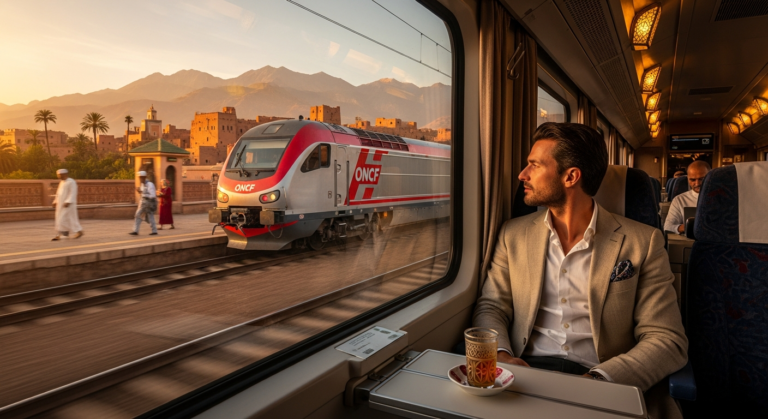
ONCF operates Morocco’s national rail system. The flagship route connects Casablanca to Tangier in approximately 2 hours 10 minutes via the Al Boraq high-speed line, launched in 2018. A standard second-class ticket on this route costs around MAD 290 (~$28 USD). The network also links Casablanca, Rabat, Fès, Marrakech, and Oujda. Trains are air-conditioned, punctual, and comfortable. First-class tickets offer reserved seating with extra legroom. Booking online at the ONCF website saves queue time. However, note that trains do not reach Merzouga, Chefchaouen, or Essaouira — you need alternative transport for those destinations.
Train Route Comparison Table
| Route | Duration | Approx. Cost (2nd Class) |
|—|—|—|
| Casablanca → Tangier (Al Boraq) | 2h 10m | MAD 290 (~$28) |
| Casablanca → Marrakech | 3h 00m | MAD 100 (~$10) |
| Casablanca → Fès | 3h 45m | MAD 110 (~$11) |
| Rabat → Fès | 2h 45m | MAD 85 (~$8) |
| Fès → Oujda | 4h 30m | MAD 115 (~$11) |
> Expert Insight: *”The Al Boraq train is Morocco’s proudest infrastructure achievement. It cut travel time between Casablanca and Tangier by over 60%. For tourists, it is simply the smartest choice on that corridor.”*
> — Mohamed Amine Benali, Transport Analyst, Casablanca (2024)
—
Traveling by Bus: Reaching Every Corner of Morocco
CTM and Supratours Buses
When trains cannot reach your destination, buses step in reliably. CTM (Compagnie de Transport au Maroc) is the premium bus operator. Its fleet is modern, air-conditioned, and punctual. A CTM ticket from Marrakech to Essaouira costs approximately MAD 90 (~$9 USD). Supratours, linked to ONCF, extends the rail network into areas trains miss, including Agadir, Merzouga, and Dakhla. Both operators offer online booking. Journeys can be long — Marrakech to Merzouga takes around 9 hours — so bring snacks, water, and entertainment. Avoid cheap, unlisted operators at bus stations; they often lack safety standards and reliable schedules.
Regional Buses and Shared Transport
Beyond premium operators, regional buses (often called “souk buses”) serve rural routes at lower fares — sometimes as low as MAD 20 (~$2). These buses are slower and less comfortable. Nevertheless, they offer an authentic local experience. They also reach remote Berber villages that no other transport accesses. Schedules are informal and subject to change. Furthermore, luggage storage is basic. If you are flexible on time and curious about rural Moroccan life, these buses are genuinely rewarding. However, for time-sensitive travel or solo female travelers, sticking with CTM or Supratours is strongly advisable for comfort and security reasons.
—
Grand Taxis: The Intercity Workhorse
How Grand Taxis Work
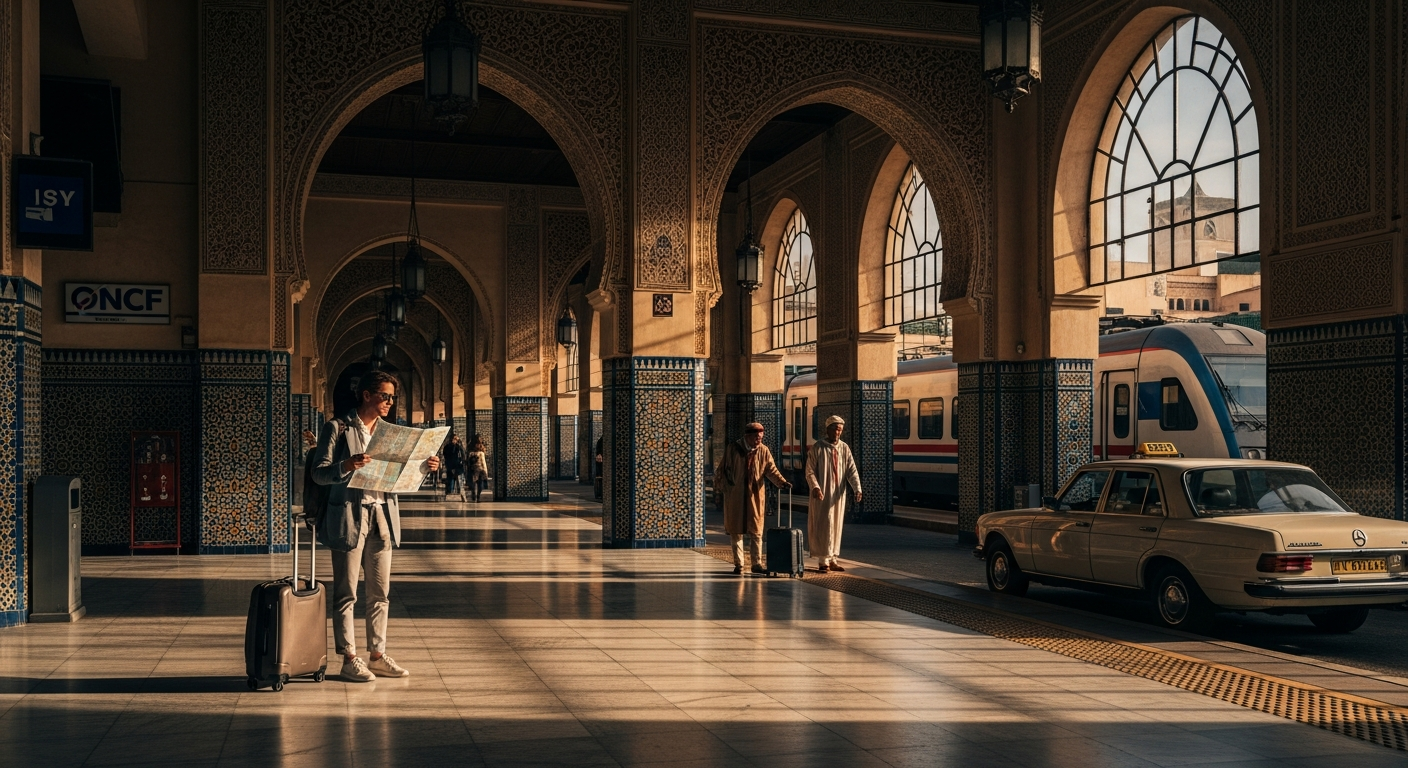
Grand taxis are typically white Mercedes or Peugeot sedans that run fixed intercity routes. They depart when full — usually six passengers. The system is informal but deeply efficient. A shared grand taxi from Fès to Chefchaouen costs approximately MAD 70–85 ($7–8) per person. If you want to depart immediately without waiting, you can pay for the remaining empty seats. This is called “completing the taxi.” Grand taxis are faster than buses on shorter routes. However, they can be cramped, and luggage space is limited. Negotiating your fare before departure is essential — always confirm the price clearly to avoid misunderstandings upon arrival.
> Traveler Testimonial: *”I took a grand taxi from Chefchaouen to Fès for MAD 75. The driver was friendly, the route through the Rif Mountains was stunning, and I arrived in under 3 hours. Far better than I expected.”*
> — Sarah T., solo traveler from the UK (TripAdvisor, 2024)
—
Petit Taxis: Urban Navigation Made Simple
City Travel on a Budget
Petit taxis serve within city limits only — they are color-coded by city. Casablanca taxis are red, Marrakech taxis are beige, Rabat taxis are blue, and Fès taxis are red. Fares are metered. A typical city ride costs MAD 10–30 (~$1–3). Always insist the driver uses the meter — say *”compteur, s’il vous plaît”*. Some drivers attempt to negotiate fixed fares, which usually favors them. During rush hour, petit taxis share passengers heading in the same direction — this is normal practice. Petit taxis cannot cross city boundaries. For trips to the airport, a grand taxi or app-based ride is often necessary and more practical overall.
—
App-Based Rides: The Modern Alternative
Ride-Hailing Apps in Morocco (2025–2026)
Digital ride-hailing has grown significantly in Morocco. Careem (part of Uber) operates in Casablanca and Rabat. inDrive has expanded to Marrakech and Fès. These apps offer price transparency, GPS tracking, and cashless payment — all significant advantages over street hailing. A Careem ride across central Casablanca costs approximately MAD 40–60 (~$4–6). Surge pricing applies during peak hours. Additionally, some local apps like Heetch serve Casablanca. For female solo travelers specifically, app-based rides provide an added layer of safety and accountability. Always verify the driver’s plate number before entering the vehicle, regardless of the platform used.
Transport Method Comparison
| Method | Best For | Cost Range | Comfort | Coverage |
|—|—|—|—|—|
| ONCF Train | Major cities | $8–$28 | ★★★★★ | Limited corridors |
| CTM/Supratours Bus | Nationwide | $5–$20 | ★★★★☆ | Nationwide |
| Grand Taxi | Short intercity | $5–$15 | ★★★☆☆ | Widespread |
| Petit Taxi | City only | $1–$3 | ★★★☆☆ | City limits |
| Ride-Hailing App | Urban centers | $4–$10 | ★★★★☆ | Major cities |
| Car Rental | Flexibility | $25–$60/day | ★★★★★ | Nationwide |
—
Renting a Car: Maximum Freedom, Real Responsibility
When Car Rental Makes Sense
Renting a car in Morocco unlocks destinations no bus or train can reach. The Draa Valley, Ait Benhaddou, and Todra Gorge all reward independent drivers. International car rental agencies like Avis, Hertz, and Europcar operate at major airports. Daily rates start at approximately $25–$35 USD for a small vehicle. A 4WD vehicle is essential for piste roads in the Atlas Mountains or Sahara edge regions. Moroccan driving uses the right-hand side. Road quality varies dramatically — excellent on highways, unpredictable on rural tracks. International driving permits are recommended. Fuel averages around MAD 14.5 per liter (~$1.40) as of early 2026. Always photograph the car before driving away.
—
Practical Tips for Smooth Travel in Morocco
Smart Strategies Every Traveler Should Know
First, always carry small change in dirhams (MAD). Many taxi drivers and bus operators cannot break large notes. Second, travel during early morning hours whenever possible — roads are cooler, less congested, and taxi stands are most active. Third, book CTM and ONCF tickets 48–72 hours in advance during Ramadan or major festivals like Eid. Seat availability drops sharply during these periods. Fourth, carry a physical map alongside your phone — remote areas have unreliable mobile data coverage. Finally, learn three basic transport phrases in Darija (Moroccan Arabic): *”Bshhal had taxi?”* (How much is this taxi?) and *”Fin kayna mahatta?”* (Where is the station?). Locals deeply appreciate the effort.
—
FAQs
Q1: Is it safe to travel around Morocco independently?
Yes. Morocco is generally safe for independent travelers. Use reputable transport operators. Stay aware of your surroundings in busy medinas.
Q2: Do I need to speak Arabic or French to get around Morocco?
Basic French is highly useful. Many transport staff speak limited English. Learning a few Darija phrases helps enormously in rural areas.
Q3: What is the cheapest way to travel between Moroccan cities?
Shared grand taxis on short routes offer the lowest cost. CTM buses are affordable for longer intercity distances without compromising safety.
Q4: Can I use a credit card to buy transport tickets?
ONCF and CTM websites accept cards online. Most physical counters and taxis require cash in Moroccan dirhams. Carry cash always.
Q5: Is public transport accessible for travelers with disabilities?
ONCF trains offer limited accessibility features. Newer CTM coaches are partially accessible. Overall, infrastructure remains inconsistent across the country.
Q6: How far in advance should I book train tickets for peak season?
Book at least 5–7 days ahead during summer (June–August) and major Moroccan holidays. Al Boraq seats sell out particularly fast.
—
Conclusion
Morocco rewards well-prepared travelers. The country’s transport network is more developed than most visitors initially expect. Trains deliver speed and comfort on major corridors. Buses fill the gaps professionally. Grand taxis connect smaller towns efficiently. App-based rides bring modern convenience to urban centers. Car rental unlocks the country’s wild, beautiful edges. The key is matching the right transport mode to each leg of your journey. Plan ahead, carry cash, stay flexible, and learn a few local phrases. Doing so transforms your Moroccan experience from stressful to seamless. Morocco is not difficult to navigate — it simply rewards those who understand its systems. Go prepared, and the country opens up beautifully.
—
References
– ONCF Official Website — Train schedules, fares, and Al Boraq information: [www.oncf.ma](https://www.oncf.ma)
– CTM Official Website — Bus routes, booking, and schedules: [www.ctm.ma](https://www.ctm.ma)
– Supratours Bus Network — ONCF-linked bus coverage: [www.supratours.ma](https://www.supratours.ma)
– Morocco National Tourism Board (ONMT) — Destination travel guidance: [www.visitmorocco.com](https://www.visitmorocco.com)
– World Bank Transport Report, Morocco 2023 — Infrastructure investment data and passenger statistics.
– Careem Morocco — App-based ride service: [www.careem.com](https://www.careem.com)