Casablanca Travel Guide: Everything You Need to Know
Introduction
Planning a trip to Morocco’s largest city can feel overwhelming. Where do you stay? What do you eat? How do you get around safely? This Casablanca travel guide answers every question a modern traveler asks. Casablanca is not a typical postcard destination. It is a dynamic, fast-moving metropolis of over 4 million people. It blends French Art Deco architecture with Islamic tradition and Atlantic coastal energy. Yet many visitors pass through it only briefly. That is a mistake. This guide reveals the city’s true depth — from iconic landmarks to hidden neighborhood gems. You will also find practical cost breakdowns, safety tips, and cultural insights. Whether you are a first-timer or a returning explorer, this guide ensures you travel smarter, not harder.
—
Key Takeaways
– 🕌 The Hassan II Mosque is one of the world’s largest and a must-visit landmark.
– 💰 Daily travel budgets range from $40 (budget) to $200+ (luxury) per person.
– 🚇 The Casablanca Tramway is the most affordable and efficient way to move around.
– 🍽️ Local cuisine ranges from sardine sandwiches at 10 MAD to upscale seafood at fine restaurants.
– 🛡️ Casablanca is generally safe, but petty theft in medina areas requires vigilance.
– ✈️ Mohammed V International Airport connects to 90+ destinations globally.
—
Why Visit Casablanca?
A City Often Misunderstood
Many travelers treat Casablanca as a layover city. That perception misses a great deal. Unlike Marrakech’s medinas or Fes’s medieval charm, Casablanca offers something different — modern urban sophistication layered over deep Moroccan identity. The city hosts Morocco’s largest stock exchange, its busiest port, and a thriving creative arts scene. Furthermore, its coastline along the Atlantic offers dramatic sea views. According to the Moroccan National Tourism Office, Casablanca welcomed approximately 6.3 million visitors in 2024. That number signals a clear trend: travelers are beginning to take this city seriously. The mix of cosmopolitan lifestyle and authentic culture is genuinely rare.
—
Top Attractions in Casablanca
Hassan II Mosque
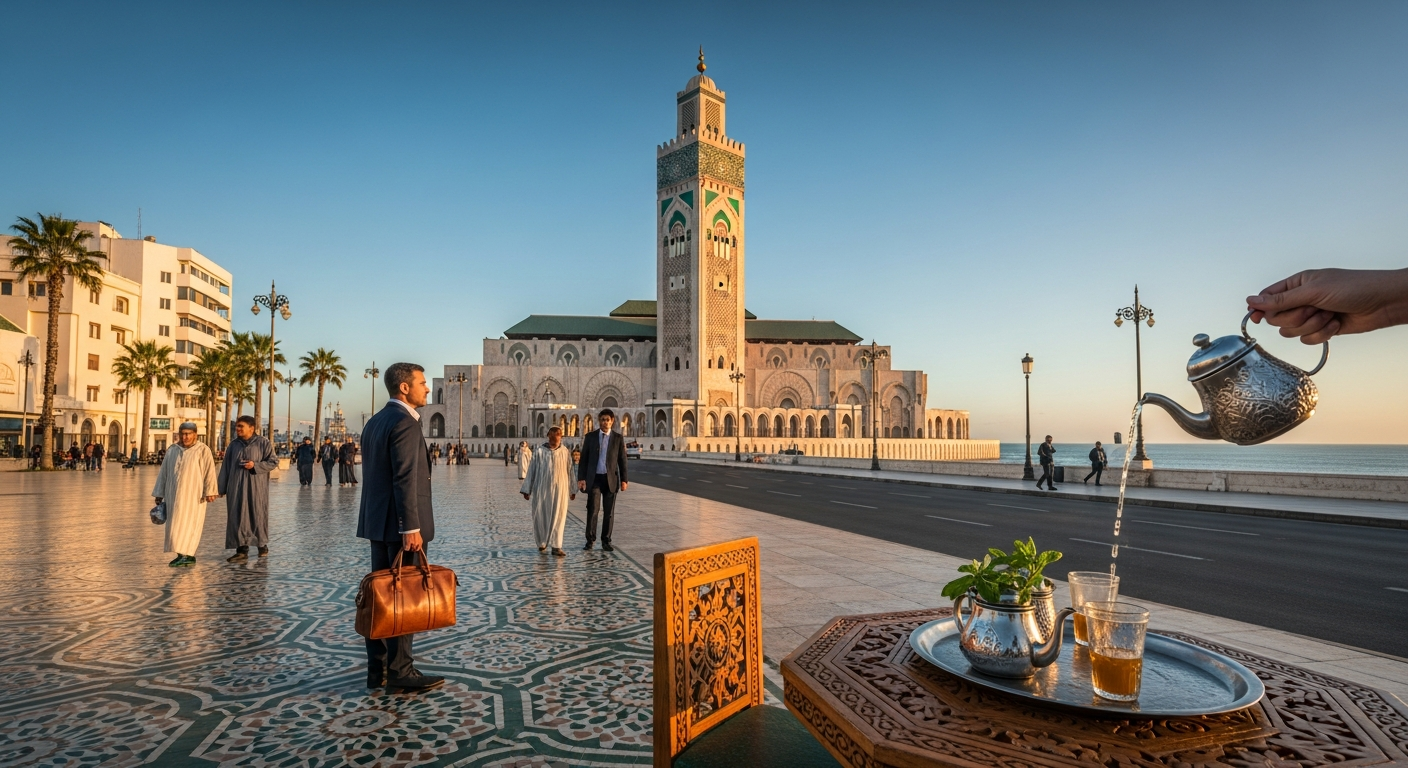
The Hassan II Mosque is unquestionably the city’s crown jewel. Completed in 1993, it stands on a rocky promontory above the Atlantic Ocean. Its minaret reaches 210 meters, making it the tallest religious structure in Africa. The mosque accommodates 105,000 worshippers simultaneously. Non-Muslim visitors can join guided tours for approximately 120 MAD (~$12). Tours run Tuesday through Sunday, typically at 9 AM, 10 AM, and 11 AM. The interior features stunning hand-carved cedar ceilings, Italian marble floors, and retractable roof panels. Arrive early to avoid crowds and photograph the facade in softer morning light. This single site alone justifies a Casablanca stopover.
The Corniche (Boulevard de la Corniche)
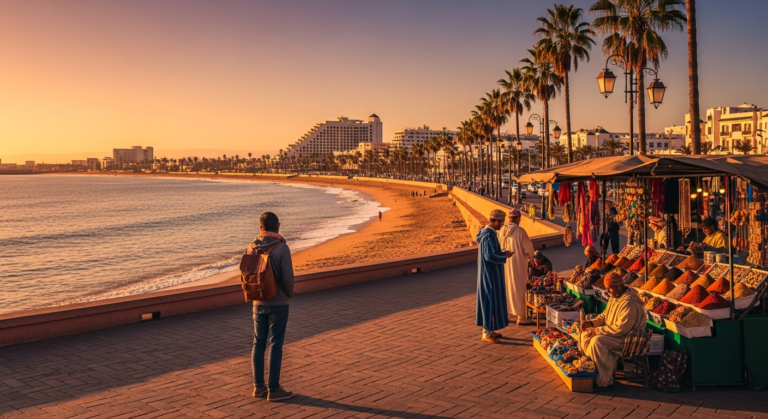
The Corniche stretches nearly 5 kilometers along Casablanca’s Atlantic shoreline. It is the city’s social heartbeat — especially on weekends. Locals jog, families stroll, and tourists photograph the ocean scenery. The boulevard is lined with beach clubs, seafood restaurants, and stylish cafés. La Sqala and Rick’s Café (inspired by the 1942 film *Casablanca*) are popular stops along this stretch. In addition, the outdoor Aïn Diab beach area draws crowds in summer. Entry to beach clubs typically costs between 50–150 MAD. The Corniche is equally vibrant at night, with coastal restaurants offering grilled fish and traditional Moroccan dishes.
The Old Medina and Habous Quarter
Casablanca’s Old Medina feels compact compared to Fes or Marrakech. Nevertheless, it rewards curious walkers. Narrow lanes lead to spice sellers, leather workshops, and fabric merchants. Prices here are negotiable — always bargain. Nearby, the Habous Quarter (New Medina) offers a more organized shopping experience. Built by French colonial planners in the 1930s, it blends Moroccan architecture with European urban planning. You will find quality argan oil, Moroccan ceramics, and handwoven rugs here. A bottle of quality argan oil costs around 80–200 MAD, depending on quality and size. The Habous Pâtisserie stalls also sell exceptional almond pastries worth trying.
Art Deco Architecture Walking Tour
Casablanca holds one of the best-preserved collections of Art Deco buildings outside of Europe. The downtown area around Quartier des Habous and Place Mohammed V features magnificent examples from the 1920s–1940s. Buildings like the former Banque du Maroc and the Cathédrale du Sacré-Cœur (now a cultural center) showcase this legacy. Consequently, architecture enthusiasts rate this experience very highly. A self-guided walking map is available at the city’s tourism office for free. Alternatively, guided architectural tours cost around 200 MAD per person. The best time for photography is early morning, before traffic and crowds dominate the streets.
—
Casablanca Food Guide
What and Where to Eat
Casablanca’s food scene spans every budget and cuisine style. Therefore, no traveler should go hungry or overspend. Street food is abundant and generally safe at established stalls. A classic harira soup bowl costs just 5–10 MAD at local cafés. Brochettes (grilled skewered meat) run around 20–30 MAD per serving. For a full sit-down experience, La Maison du Gourmet in the Gauthier district serves traditional Moroccan dishes averaging 150–300 MAD per person. Seafood dominates coastal menus — fresh-grilled sea bass and dorade are specialties. Moreover, Casablanca’s French influence means excellent boulangeries and patisseries operate citywide. A fresh croissant and café au lait costs under 20 MAD at most corner bakeries.
Top Dishes to Try
| Dish | Description | Average Cost |
|—|—|—|
| Harira | Tomato-based lentil and herb soup | 5–10 MAD |
| Tagine | Slow-cooked meat and vegetable stew | 60–120 MAD |
| Couscous Royale | Friday special with seven vegetables | 80–150 MAD |
| Brochettes | Grilled lamb or beef skewers | 20–35 MAD |
| Pastilla | Sweet-savory pigeon or seafood pie | 50–90 MAD |
| Msemen | Flaky Moroccan flatbread with honey | 5–15 MAD |
—
Getting Around Casablanca
Transport Options Compared
Navigating Casablanca efficiently requires knowing your options. The Casablanca Tramway (T1 and T2 lines) covers major areas including the city center, Ain Chock, and the port. A single tram ticket costs 6 MAD (~$0.60). Additionally, Petit Taxis (red small cabs) are metered and ideal for short urban trips. Expect to pay 15–40 MAD within the city. For airport transfers, Grand Taxis charge a flat rate of approximately 250 MAD from Mohammed V Airport to the city center. Alternatively, the ONCF train connects the airport to Casa-Voyageurs station in 35 minutes for just 45 MAD. Ride-hailing apps like InDriver also operate in the city.
| Transport Type | Cost | Best For |
|—|—|—|
| Tramway | 6 MAD/trip | Long urban routes |
| Petit Taxi | 15–40 MAD | Short city distances |
| Grand Taxi | 250 MAD (airport) | Airport transfers |
| ONCF Train | 45 MAD | Airport to city center |
| InDriver | Variable | Flexible ride-hailing |
—
Where to Stay in Casablanca
Accommodation for Every Budget
Casablanca offers accommodation options across all price points. Budget travelers will find clean hostels and guesthouses in the Maarif district from 150–250 MAD/night (~$15–25). Mid-range travelers should consider the Hotel Kenzi Tower or Novotel Casa City Center, ranging from 700–1,200 MAD/night. For luxury, the Hyatt Regency Casablanca and Four Seasons Hotel Casablanca start at 3,000 MAD/night and deliver world-class service. The Gauthier neighborhood is ideal for boutique hotel stays — quieter and centrally located. Moreover, booking 30+ days in advance typically saves 15–25% on room rates. Breakfast is often included in mid-range and luxury properties.
> Expert Tip: *”Stay in Gauthier or Maarif. These neighborhoods offer safety, proximity to restaurants, and easy tram access. Tourists who stay near the old medina often report higher rates of persistent hassling.”* — Maria Santos, travel writer and Morocco specialist, 2024.
—
Safety and Cultural Tips
Traveling Smart in Casablanca
Casablanca is safer than many global cities of similar size. However, standard precautions still apply. Petty theft, particularly mobile phone snatching, occurs in busy medina streets. Therefore, keep valuables in front pockets or secure bags. Women traveling solo report feeling generally comfortable, especially in commercial and hotel zones. However, conservative dress (covered shoulders and knees) is advisable in older quarters. Photographing people always requires permission — Moroccan culture values personal privacy strongly. Currency exchange is best done at licensed bureaux de change for better rates than hotels. The current exchange rate hovers around 1 USD = 10.1 MAD (as of early 2025). Tap water is technically treated but stick to bottled water to avoid stomach issues.
—
Casablanca Travel Budget Breakdown
| Budget Level | Accommodation | Food | Transport | Daily Total |
|—|—|—|—|—|
| Budget | 200 MAD | 100 MAD | 30 MAD | ~$33 |
| Mid-Range | 900 MAD | 300 MAD | 60 MAD | ~$126 |
| Luxury | 3,000+ MAD | 800 MAD | 200 MAD | ~$400+ |
—
Best Time to Visit Casablanca
Seasonal Overview
Casablanca enjoys a Mediterranean-influenced Atlantic climate. Summers (June–September) are warm and sunny, with temperatures reaching 28–32°C. Winters are mild, rarely dropping below 10°C, making the city a year-round destination. Nevertheless, spring (March–May) and autumn (September–November) offer the most comfortable conditions for sightseeing. Rainfall is modest, concentrated between November and February. The city does not experience extreme heat like inland Moroccan cities. Tourism peaks during July–August when Moroccan diaspora returns from Europe. Consequently, accommodation prices rise by 20–30% during these months. Shoulder seasons deliver better value with fewer crowds and pleasant weather.
—
FAQs
Q: Do I need a visa to visit Casablanca?
A: Citizens of over 60 countries, including the US, UK, EU nations, and Canada, can enter Morocco visa-free for up to 90 days.
Q: Is English widely spoken in Casablanca?
A: English is spoken in hotels, tourist areas, and among younger professionals. However, French and Arabic remain dominant. Learning basic French phrases helps significantly.
Q: What currency is used in Casablanca?
A: The Moroccan Dirham (MAD) is the only accepted currency. ATMs are widely available. Most upscale hotels and restaurants accept credit cards.
Q: Is alcohol available in Casablanca?
A: Yes. Unlike some Moroccan cities, Casablanca has licensed bars, restaurants, and hotel venues serving alcohol. It is not available in traditional cafés.
Q: How many days do I need in Casablanca?
A: Two to three days is sufficient to cover the main attractions. Extend to five days if you want to explore neighborhood culture, day trips, and food scenes deeply.
Q: Can I do day trips from Casablanca?
A: Absolutely. Rabat (45 min by train), El Jadida (1 hr), and Mohammedia (30 min) are all excellent and easily accessible day trip destinations.
—
Conclusion
Casablanca rewards travelers who look beyond its surface. It is not the romantic Hollywood fantasy from the 1942 film. Instead, it is a vibrant, complex, and genuinely fascinating city. From the architectural wonder of the Hassan II Mosque to the buzzing Corniche seafood restaurants, the city delivers real cultural substance. Budget travelers and luxury seekers alike will find their comfort zone here. Plan your visit during spring or autumn for ideal conditions. Prioritize the Habous Quarter for authentic shopping and the Corniche for atmosphere. Stay in Gauthier for safety and convenience. Most importantly, slow down and engage with the city. The most memorable Casablanca experiences come from a mint tea shared in a neighborhood café — not from rushing between sights.
—
References
– Moroccan National Tourism Office (ONMT), 2024 Annual Tourism Report — [www.visitmorocco.com](https://www.visitmorocco.com)
– ONCF (Office National des Chemins de Fer) — Official train schedules and fares: [www.oncf.ma](https://www.oncf.ma)
– Casablanca City Hall Urban Planning Documents, Habous Quarter History — [www.casablanca.ma](https://www.casablanca.ma)
– World Travel & Tourism Council (WTTC), Morocco Travel Data 2024 — [www.wttc.org](https://www.wttc.org)
– Lonely Planet Morocco Travel Guide, 2024 Edition — [www.lonelyplanet.com](https://www.lonelyplanet.com/morocco)