Hidden Gems in Morocco: 9 Places Tourists Miss
Introduction
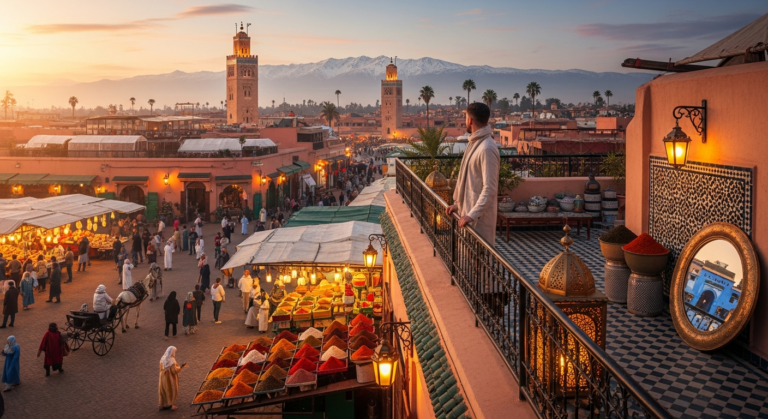
Morocco draws millions of visitors each year, yet most follow the same worn path — Marrakech, Fes, and Essaouira. Beyond those famous names, an entirely different country waits. The best hidden gems in Morocco reveal ancient caravan towns, untouched coastlines, and high-altitude Berber villages that rarely appear in mainstream guides. If you want authentic culture, dramatic scenery, and affordable travel without the tourist crowds, this guide is built for you. You will discover nine remarkable destinations, practical travel tips, cost estimates, and expert insights. By the end, you will know exactly where to go — and why most travelers never find these places.
—
Key Takeaways
– 🗺️ Morocco’s most rewarding destinations are often far from the major tourist circuits.
– 💰 Hidden gem destinations typically cost 30–50% less than Marrakech or Fes.
– 🏔️ The Atlas and Anti-Atlas mountains contain villages accessible only by piste road.
– 🌊 Morocco’s northern coast hides uncrowded beaches that rival the Mediterranean.
– 🕌 Many lesser-known medinas preserve authentic crafts and traditions with no tourist inflation.
– 📅 The best time to visit most hidden gems is March–May or September–November.
—
Why Tourists Keep Missing Morocco’s Best Places
Most visitors rely on curated tour packages. Those packages, naturally, prioritize infrastructure and profit margins. As a result, genuinely extraordinary places remain invisible. According to Morocco’s Ministry of Tourism, over 13.2 million tourists visited the country in 2024. Yet fewer than 8% of those tourists ventured beyond the four major imperial cities. That statistic is striking. It means extraordinary landscapes, living history, and transformative experiences remain undiscovered by the overwhelming majority. Meanwhile, travelers who do step off the beaten path consistently report it as their most memorable journey. The hidden gems below are not secrets — they simply require deliberate planning.
—
The 9 Best Hidden Gems in Morocco
1. Aït Benhaddou — Beyond the Postcard View
Most travelers photograph Aït Benhaddou’s ksar from the riverbank and leave. However, very few climb through the full kasbah to the hilltop granary. From there, the panoramic view of the Draa Valley is genuinely stunning. The ksar is a UNESCO World Heritage Site. Local guides charge approximately 150–200 MAD ($15–$20) for a two-hour walking tour. The village beyond the tourist road contains working potters and weavers. Spending a night here — rather than rushing through on a day trip — changes the entire experience. Guesthouses average 300–500 MAD per night. As local guide Hassan Amraoui notes: *”Most tourists see five percent of this place. The real story is in the upper granary and the families who still live here.”*
—
2. Moulay Idriss Zerhoun — Morocco’s Holiest Town
Perched dramatically above the plains near Meknès, Moulay Idriss was closed to non-Muslims until 2005. Even today, very few international tourists include it in their itinerary. The town contains the mausoleum of Moulay Idriss I, founder of Morocco’s first Islamic dynasty. The white-painted streets spiral upward in concentric tiers. There is almost no commercial tourism infrastructure — which is precisely its appeal. Small family dars offer rooms for 200–350 MAD per night. The weekly market on Saturdays attracts Moroccan families, not tour buses. Travelers consistently describe the atmosphere as profoundly peaceful. It sits only 30 kilometers from Meknès, making it an effortless detour with an outsized reward.
—
3. Tafraoute — The Pink Valley of the Anti-Atlas
Tafraoute sits deep in the Anti-Atlas, surrounded by enormous rose-colored granite boulders. The town itself is small, clean, and genuinely welcoming. Every February, almond blossoms transform the valley into a soft white carpet. The famous Painted Rocks — created by Belgian artist Jean Vérame in 1984 — add a surreal contrast against the landscape. Tafraoute is approximately 170 kilometers from Agadir, reachable by CTM bus or rented car. Budget guesthouses cost 250–400 MAD per night. The local argan cooperative allows visitors to observe traditional oil production firsthand. Furthermore, the surrounding trails offer exceptional trekking without the crowds found in the High Atlas. This is, arguably, the most visually distinctive destination in southern Morocco.
—
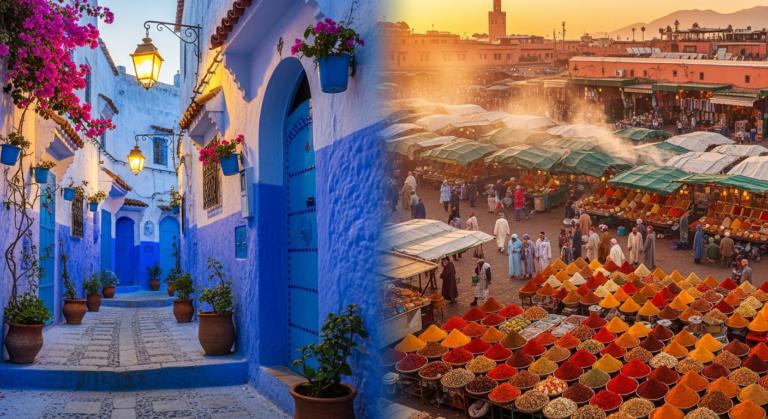
4. Chefchaouen’s Forgotten Surroundings
Everyone photographs Chefchaouen’s blue streets. However, the surrounding Rif Mountains remain almost entirely unexplored. The village of Ain Tissimane, 45 minutes by dirt road, has no guesthouses and no Wi-Fi — only cedar forests and Berber shepherds. The Talassemtane National Park, bordering the town, contains one of the world’s few naturally occurring fir forests. Guided hiking through the park costs roughly 300–500 MAD per day. A three-day trek to the village of Bou Ahmed requires permits and a local guide. This experience transforms a clichéd destination into something profoundly real. As travel writer Layla Bennis observes: *”Chefchaouen is the gateway, not the destination. The mountains behind it are the real discovery.”*
—
5. Sidi Ifni — The Forgotten Atlantic Town
Sidi Ifni is a former Spanish colonial enclave on Morocco’s southern Atlantic coast. The town retains remarkable Art Deco architecture from the 1930s. Its wide, deserted beach stretches for kilometers. The seafood market operates each morning, selling fresh catch for almost nothing. A full grilled fish lunch at a local restaurant costs approximately 60–80 MAD. The town has an unhurried, melancholic charm that is genuinely rare. Surf schools have recently emerged, charging 300–400 MAD per session. Additionally, the coastal road south toward Mirleft passes through dramatic cliff scenery. Hotel rooms average 350–600 MAD per night. Sidi Ifni remains largely unknown to European tourists despite being only 160 kilometers south of Agadir.
—
6. Merzouga’s Silent Dunes at Dawn
Merzouga draws visitors, but most arrive, do a camel ride, and leave. The real experience happens at 4:30 AM, before the tourist groups wake up. Walking to the top of Erg Chebbi’s highest dune in total silence — with stars still visible — is transformative. The dune field reaches heights of 150 meters. Moreover, the surrounding area hosts several Gnawa musicians whose music predates recorded history. Homestays in the nearby village of Khamlia cost approximately 250–350 MAD per night and include traditional music performances. The Gnawa community here has been documented by ethnomusicologists from the University of Fes. Most organized tours never visit Khamlia — it requires a 15-minute drive off the main road.
—
7. Draa Valley — Morocco’s Ancient Trade Route
The Draa Valley stretches 200 kilometers from Ouarzazate to Mhamid. Once the primary caravan route connecting sub-Saharan Africa to Mediterranean markets, it remains hauntingly beautiful. Ancient kasbahs appear every few kilometers, many uninhabited. Date palms line the river in an unbroken green ribbon. The market town of Agdz is a particularly underrated stopping point. A local family-run riad here charges approximately 400–600 MAD per night. Furthermore, a guided camel trek from Mhamid into the small dunes of Erg Lihoudi costs roughly 800–1,200 MAD per day. Unlike Merzouga, Erg Lihoudi sees a fraction of the visitors. Travelers who take this route describe it as Morocco’s most cinematic landscape.
—
8. Cascades d’Ouzoud — More Than a Waterfall
Ouzoud Falls, at 110 meters high, is Morocco’s tallest waterfall. However, most visitors spend only two hours here. The full experience requires staying overnight in the valley. By late afternoon, the tourist buses depart and the falls become serene. Barbary macaques descend from the cliffs at dusk. Local guides offer three-hour canyon treks for 150–250 MAD. The trek descends into a hidden gorge with Neolithic cave paintings. Guesthouses in the valley charge 350–500 MAD per night. The area sits 150 kilometers northeast of Marrakech, making it easily accessible yet consistently overlooked for overnight stays. As one repeat visitor noted: *”I came for the photos. I stayed for the silence.”*
—
9. Taroudant — Marrakech Without the Crowds
Taroudant is often called “little Marrakech” — but that comparison sells it short. The city has intact 16th-century ramparts, a thriving souk, and exceptional riads at a fraction of Marrakech prices. A high-quality riad costs 600–900 MAD per night here versus 2,000–4,000 MAD in Marrakech. The medina’s artisan quarter produces traditional leather goods, silver jewelry, and hand-woven textiles. It is genuinely less commercialized. The weekly Thursday souk at Bab el Khemis is where local farmers, traders, and craftspeople transact daily business. Situated in the Souss Valley, the town is surrounded by orange and argan orchards. Taroudant rewards slow travel: staying three to five days reveals a rhythm of Moroccan life that tourist-heavy cities no longer offer.
—
Comparison Table: Hidden Gems at a Glance
| Destination | Region | Avg. Nightly Cost (MAD) | Best Season | Crowd Level |
|—|—|—|—|—|
| Moulay Idriss | Meknès-Tafilalet | 200–350 | Spring/Autumn | Very Low |
| Tafraoute | Anti-Atlas | 250–400 | Feb–April | Low |
| Sidi Ifni | Souss-Massa | 350–600 | Year-round | Low–Moderate |
| Taroudant | Souss Valley | 600–900 | Oct–April | Moderate |
| Draa Valley | Draa-Tafilalet | 400–600 | Oct–March | Low |
| Cascades d’Ouzoud | Béni Mellal | 350–500 | Spring/Autumn | Moderate |
| Khamlia (Merzouga) | Sahara | 250–350 | Oct–April | Very Low |
—
Expert Advice on Traveling These Routes
Planning these destinations requires more deliberate preparation than standard Morocco tourism.
> *”The greatest mistake independent travelers make in Morocco is under-estimating travel times between remote destinations. Always build buffer days into your itinerary.”*
> — Karim Tazi, Moroccan Heritage Tourism Specialist, 2024
Key practical advice includes:
– Rent a 4×4 for Anti-Atlas and Draa Valley routes. Piste roads are not suitable for standard vehicles.
– Carry cash — ATMs are absent in many small towns. Budget 500–1,000 MAD in emergency cash.
– Learn basic Tachelhit or Tamazight greetings — even three words dramatically improve interactions in Berber villages.
– Book riads directly — local family-run guesthouses rarely appear on major booking platforms but offer significantly better value.
—
FAQs
Q1: What is the best hidden gem in Morocco for first-time travelers?
Taroudant is ideal — it is accessible, safe, affordable, and culturally rich without overwhelming first-time visitors.
Q2: Are hidden gem destinations in Morocco safe?
Yes. Morocco consistently ranks as one of North Africa’s safest destinations for international tourists. Standard precautions apply everywhere.
Q3: How much budget do I need for a week visiting Morocco’s hidden destinations?
A comfortable independent traveler can manage $40–$65 per day, including accommodation, food, and local transport.
Q4: Is a guide necessary for places like Tafraoute or the Draa Valley?
A guide is not legally required but is strongly recommended for mountain treks and remote desert routes for safety and cultural insight.
Q5: When is the worst time to visit Morocco’s southern hidden gems?
July and August bring extreme heat — temperatures regularly exceed 42°C (107°F) in the Sahara and Draa Valley. Avoid these months.
Q6: Can I reach these places without a car?
Most can be reached by CTM buses or shared taxis (grand taxis). However, a rental car offers significantly more flexibility and access to piste roads.
—
Conclusion
Morocco’s popular cities are magnificent — but they tell only one part of the story. The country’s real depth lies in its Anti-Atlas valleys, forgotten Atlantic towns, ancient caravan routes, and high mountain villages where life has changed little in centuries. The best hidden gems in Morocco reward curiosity, patience, and deliberate planning. They offer authentic experiences at a fraction of the cost of mainstream destinations. Whether you are drawn to the rose-pink boulders of Tafraoute, the silent dunes of Khamlia, or the Art Deco melancholy of Sidi Ifni, each of these places will stay with you long after the journey ends. Start with one. Then return for the rest.
—
References
– Morocco Ministry of Tourism. (2024). *Annual Tourism Statistics Report*. [tourism.gov.ma](https://www.tourism.gov.ma)
– UNESCO World Heritage Centre. (2024). *Ksar of Aït-Ben-Haddou*. [whc.unesco.org](https://whc.unesco.org/en/list/444)
– Lonely Planet. (2025). *Morocco Travel Guide — Off the Beaten Track*. [lonelyplanet.com](https://www.lonelyplanet.com/morocco)
– Rough Guides. (2025). *Morocco: Hidden Destinations*. [roughguides.com](https://www.roughguides.com/morocco)
– World Travel & Tourism Council. (2024). *Morocco Economic Impact Report*. [wttc.org](https://wttc.org)