Best Photography Spots in Morocco: A Pro Shooter’s Guide
Introduction
Morocco is one of the most visually compelling countries on Earth. From its ancient medinas to sweeping desert dunes, it offers endless subjects for photographers of every level. Whether you are a travel blogger, a fine art photographer, or simply a passionate hobbyist, discovering the best photography spots in Morocco can transform your portfolio in ways few destinations can match. Yet many visitors waste precious shooting time in tourist-heavy zones without a real plan. This guide cuts through the noise. You will learn where to go, what time to arrive, and how to capture Morocco’s soul — from the blue streets of Chefchaouen to the surreal silence of the Sahara Desert.
—
Key Takeaways
– 📷 Chefchaouen and Fes Medina are Morocco’s most iconic photo locations.
– 🌅 Golden hour (6:00–7:30 AM) dramatically elevates light quality at every site.
– 🐪 Erg Chebbi dunes near Merzouga offer world-class landscape and portrait opportunities.
– 🏙️ Aït Benhaddou is a UNESCO World Heritage Site with cinematic desert architecture.
– 🎨 Marrakech’s Jemaa el-Fna square is best photographed from elevated café terraces.
– 💰 Hiring a local guide costs roughly $30–$60/day and opens doors cameras alone cannot.
—
Why Morocco Is a Photographer’s Dream Destination
Morocco sits at a cultural crossroads between Africa, Arabia, and Europe. This blend produces an extraordinary visual diversity. Ancient kasbahs stand beside Berber villages. Colorful spice markets overflow next to silent desert plateaus. According to the Moroccan National Tourism Office, over 13.2 million tourists visited Morocco in 2023. Among them, photography tourism has been rising at roughly 18% year-over-year. Notably, Morocco ranked among the top 10 most Instagrammed countries in 2024. Its combination of dramatic landscapes, vibrant colors, and photogenic human subjects makes it near impossible to take a bad frame here.
—
Top Photography Spots in Morocco
1. Chefchaouen — The Blue Pearl
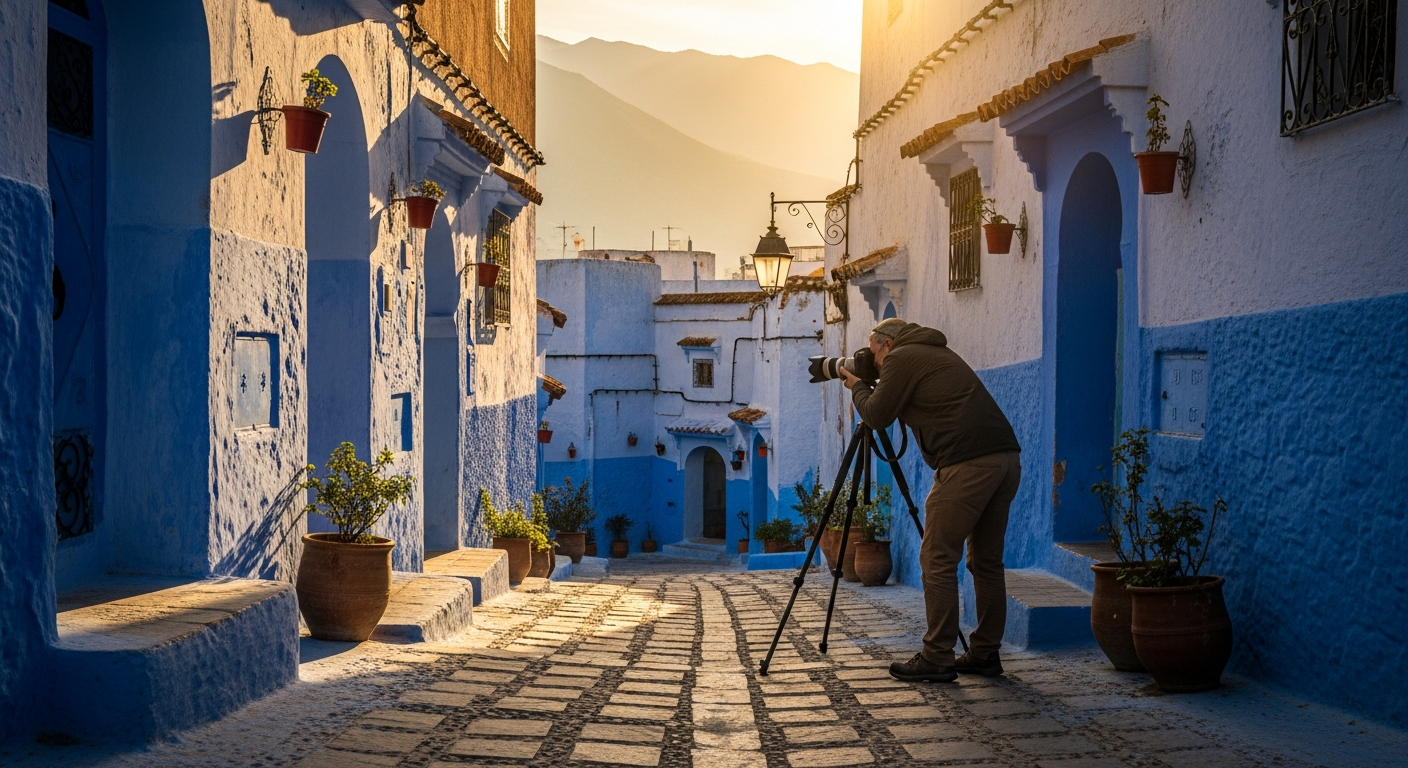
Chefchaouen, nestled in the Rif Mountains, is arguably Morocco’s most photographed town. Every alley is washed in shades of blue and white, creating a dreamlike canvas. The best light arrives between 6:00 and 8:00 AM, before the cruise-day visitors flood the streets. Focus particularly on Rue Sidi Salem and the Plaza Uta el-Hammam. Bring a 35mm or 50mm prime lens for intimate street shots. A wide-angle lens works brilliantly for leading-line compositions down narrow alleys. Local photographer Youssef El Kadiri advises: *”Come in April or October — the soft morning mist gives the blue walls a painterly quality that summer simply cannot offer.”*
—
2. Fes el-Bali — The Ancient Medina
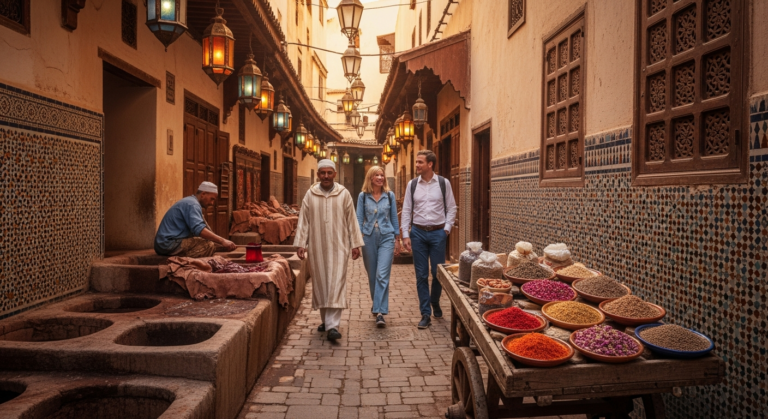
Fes el-Bali is a UNESCO-listed medina and the world’s largest car-free urban area. Its labyrinthine streets reward patient photographers. The Chouara Tannery is among Africa’s most striking visual subjects. Visiting leather workshops above the tannery grants elevated, sweeping views of the dyeing pits. The circular vats filled with saffron, poppy red, and mint green pigments are visually extraordinary. Arrive between 10:00 AM and 12:00 PM for optimal top-down light. Admission to a leather workshop terrace is usually included when you purchase leather goods. Entry to the medina itself is free, making it one of Morocco’s most accessible photography destinations.
| Location | Best Time | Lens Recommendation | Entry Cost |
|—|—|—|—|
| Chefchaouen | 6–8 AM | 35mm / 50mm Prime | Free |
| Fes Tannery | 10 AM–12 PM | 24–70mm Zoom | Free (with purchase) |
| Erg Chebbi Dunes | 5:30–7 AM | 16–35mm Wide | ~$15 camel trek |
| Aït Benhaddou | 7–9 AM | 24mm Wide / Telephoto | Free |
| Jemaa el-Fna | Sunset–10 PM | 50mm / 85mm | Free |
—
3. Erg Chebbi — Sahara’s Golden Canvas
Erg Chebbi, near Merzouga in southeastern Morocco, is the country’s most dramatic desert landscape. These orange-red dunes rise up to 150 meters high. The pre-dawn hours — roughly 5:30 to 6:30 AM — deliver the most spectacular light gradients. Long shadows stripe across the dunes as the sun crests the horizon. A wide-angle lens captures sweeping dune patterns effectively. Meanwhile, a telephoto lens isolates camel caravans against abstract sand textures beautifully. Budget travelers can access the dunes from around €12 per person. Private photography-focused jeep tours cost approximately $80–$120 per half-day and are worth the investment.
—
4. Aït Benhaddou — Cinematic Kasbah Architecture
Aït Benhaddou is one of the most recognizable architectural landscapes in the world. This fortified mud-brick ksar has appeared in films including *Gladiator*, *Lawrence of Arabia*, and the HBO series *Game of Thrones*. Photographically, it is best captured from across the dry riverbed at sunrise. The warm terracotta towers glow amber-orange against a cool blue sky. Use a graduated neutral density filter to balance the bright sky with the shadowed foreground. Visiting in January or February provides dramatic snow-capped Atlas Mountain backdrops. Around 250,000 tourists visit annually. Arriving before 8:00 AM ensures nearly empty compositions free of crowds.
—
5. Marrakech — Sensory Overload in the Best Possible Way
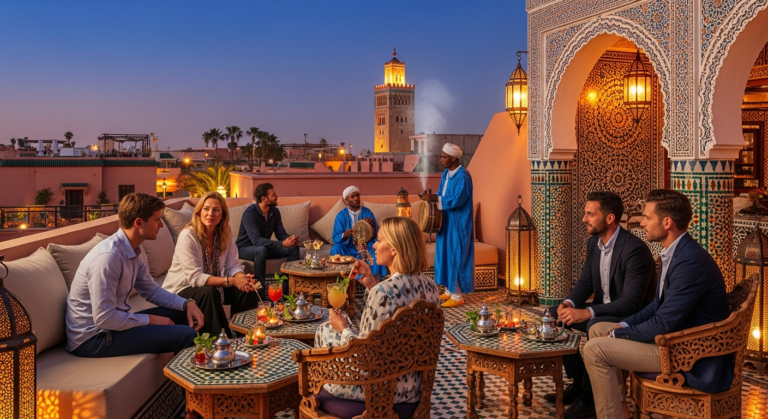
Marrakech is Morocco’s busiest city and perhaps its most complex photography environment. The Jemaa el-Fna square comes alive at sunset with snake charmers, storytellers, and food stalls. Shooting from rooftop terraces offers clean editorial perspectives above the chaos. The Bahia Palace gardens provide elegant architectural compositions with geometric tile work. Meanwhile, the Mellah district and dyers’ souk offer raw street photography opportunities. Always ask before photographing people — Moroccan street etiquette matters. A small tip of 5–10 Moroccan Dirhams (approximately $0.50–$1.00) shows respect. Marrakech rewards photographers who slow down and observe before raising the camera.
—
6. Essaouira — Atlantic Coast Atmosphere
Essaouira sits on Morocco’s Atlantic coast and offers a completely different visual palette from the inland cities. Its ramparts, whitewashed walls, and vivid blue fishing boats create striking coastal compositions. The Skala de la Ville fortification at sunrise provides sweeping Atlantic vistas. Strong winds — Essaouira averages 300 windy days per year — animate flags and fishing nets dramatically. This motion adds powerful energy to long-exposure and street photography alike. The blue-hulled wooden fishing boats in the harbor are particularly photogenic. Travel photographer Sarah Okonkwo notes: *”Essaouira has a melancholy Atlantic light that is completely unique in North Africa. It suits moody, editorial photography perfectly.”*
—
7. Dades Valley — Gorges and Desert Roads
The Dades Valley and its dramatic gorges cut through the High Atlas foothills. The Route of a Thousand Kasbahs passes through this valley and provides extraordinary road photography. Hairpin bends ascending the gorge walls are among Morocco’s most-photographed road scenes. The valley is particularly breathtaking during spring, when almond and rose blossoms fill the landscape. Morocco’s Dades Gorge rose festival occurs each May, offering vivid cultural and botanical photo opportunities. Renting a car costs approximately $35–$50/day. Shooting from elevated positions along the gorge road at golden hour produces near-cinematic landscape results.
—
Essential Photography Tips for Morocco
> Expert Insight: *”In Morocco, light changes fast and culture runs deep. Observe first, shoot second. The best photographs here come from connection, not speed.”* — Hamza Berrichi, Moroccan Documentary Photographer.
| Tip | Why It Matters |
|—|—|
| Shoot at golden hour | Harsh midday sun bleaches color and creates unflattering shadows |
| Hire a local fixer/guide | Navigates restricted areas and builds community trust |
| Use a mirrorless camera | Less conspicuous in crowded medinas |
| Carry small tip money | Essential for portrait or cultural scene permissions |
| Protect gear from sand | Desert locations require weather-sealed bodies |
| Learn basic Darija phrases | A few Arabic words build rapport and open doors |
—
FAQs
Q1: Do I need a permit to photograph in Morocco’s medinas?
No formal permit is needed for personal or travel photography. Commercial shoots may require municipal permissions and can cost $100–$500 depending on location.
Q2: Is it safe to carry expensive camera gear in Morocco?
Generally yes, but use anti-theft backpacks in crowded medinas. Pickpocketing exists in tourist-heavy areas. Keep your camera strap secure at all times.
Q3: What is the best month to photograph Morocco?
March through May and September through November offer the best light, moderate temperatures, and manageable crowd levels. Avoid peak July and August heat.
Q4: Can I photograph people freely in Morocco?
Always ask for permission first. Some locals decline or request payment. Respecting boundaries builds trust and often results in more authentic, willing subjects.
Q5: What camera gear should I pack for Morocco?
Pack a versatile zoom (24–70mm), a wide-angle (16–35mm), a fast prime for low light, circular polarizer, and a quality dust-proof bag for desert locations.
—
Conclusion
Morocco rewards photographers who arrive prepared and leave their assumptions behind. From the electric blue of Chefchaouen to the flame-colored dunes of Erg Chebbi, every region offers a distinct and powerful visual language. The key is timing — arriving at golden hour consistently produces results no filter can replicate. Beyond technique, building genuine connections with Moroccan people elevates street and portrait photography from competent to compelling. Budget carefully: a well-planned 10-day Morocco photography trip costs between $1,200 and $2,500 depending on accommodation and transport choices. Above all, slow down. Morocco’s greatest photographs are discovered, not hunted.
—
References
– Moroccan National Tourism Office — [www.visitmorocco.com](https://www.visitmorocco.com)
– UNESCO World Heritage Centre — Aït Benhaddou listing at [whc.unesco.org](https://whc.unesco.org)
– National Geographic Travel — Morocco destination guide at [nationalgeographic.com](https://www.nationalgeographic.com/travel)
– Lonely Planet Morocco (2024 Edition) — comprehensive regional photography notes.
– Instagram Global Travel Trends Report 2024 — platform photography destination rankings.