Best Surfing Beaches in Morocco: A Complete Guide
Introduction
Morocco has quietly become one of the world’s most compelling surf destinations. Stretching along both the Atlantic Ocean and the Mediterranean Sea, its coastline offers waves for every skill level. Whether you are a seasoned pro or a complete beginner, the best surfing beaches in Morocco promise an unforgettable experience. This guide reveals where to surf, when to go, what it costs, and what locals and experts recommend. By the end, you will have everything needed to plan the perfect Moroccan surf trip.
—
🔑 Key Takeaways
– Taghazout remains Morocco’s surf capital, ideal for intermediate to advanced surfers.
– Essaouira offers consistent wind and waves, perfect for beginners and kiteboarders.
– Anchor Point produces world-class right-hand point breaks, attracting international pros.
– The best surf season runs October through April, with peak swells in December–February.
– Budget surfers can enjoy Morocco for as little as $30–$50/day, including accommodation.
– Morocco’s surf scene blends Atlantic power, Berber culture, and affordable luxury.
—
Why Morocco Is a World-Class Surf Destination
Morocco’s geographic position gives it a rare advantage. It sits directly in the path of powerful North Atlantic swells. The coastline stretches over 3,500 kilometers, offering enormous diversity. Warm water temperatures averaging 18–22°C (64–72°F) in peak season make surfing comfortable. Furthermore, Morocco is easily accessible from Europe, with budget flights from London, Paris, and Madrid costing as little as €40–€90. The combination of consistent waves, affordable living costs, and rich cultural immersion makes Morocco a top-tier global surf destination. As surf coach Daniel Farro noted in 2024: *”Morocco delivers world-class waves at one-third of the cost of Portugal or Bali.”*
—
Top Surfing Beaches in Morocco
1. Taghazout — Morocco’s Surf Capital
Taghazout sits approximately 18 km north of Agadir. It is widely considered the heartbeat of Moroccan surf culture. The village transformed from a quiet fishing hamlet into an international surf hub over the past two decades. Today, it hosts over 30 surf schools and camps. The most famous break, Anchor Point, produces long right-hand rides of up to 300 meters. Average surf camp packages here cost $350–$600 per week, including accommodation, meals, and coaching. Surf season peaks from November to March, with consistent 1.5–3m swells. Notably, the Taghazout Bay resort complex has elevated accommodation options since its completion in 2022.
2. Anchor Point — Morocco’s Premier Wave
Anchor Point is not simply a beach; it is a legendary surf break. Located just north of Taghazout, it draws professional surfers from around the world. The wave is a powerful right-hand point break that works best at mid to high tide. Swell heights regularly reach 2–4 meters during winter months. The break is best suited for intermediate to advanced surfers due to its speed and power. Every year, international surf competitions are held here. According to Surf Atlas data from 2025, Anchor Point ranks among the top 15 right-hand point breaks globally. Beginners should watch from the shore and progress at nearby softer breaks first.
3. Essaouira — The Wind Capital of Africa
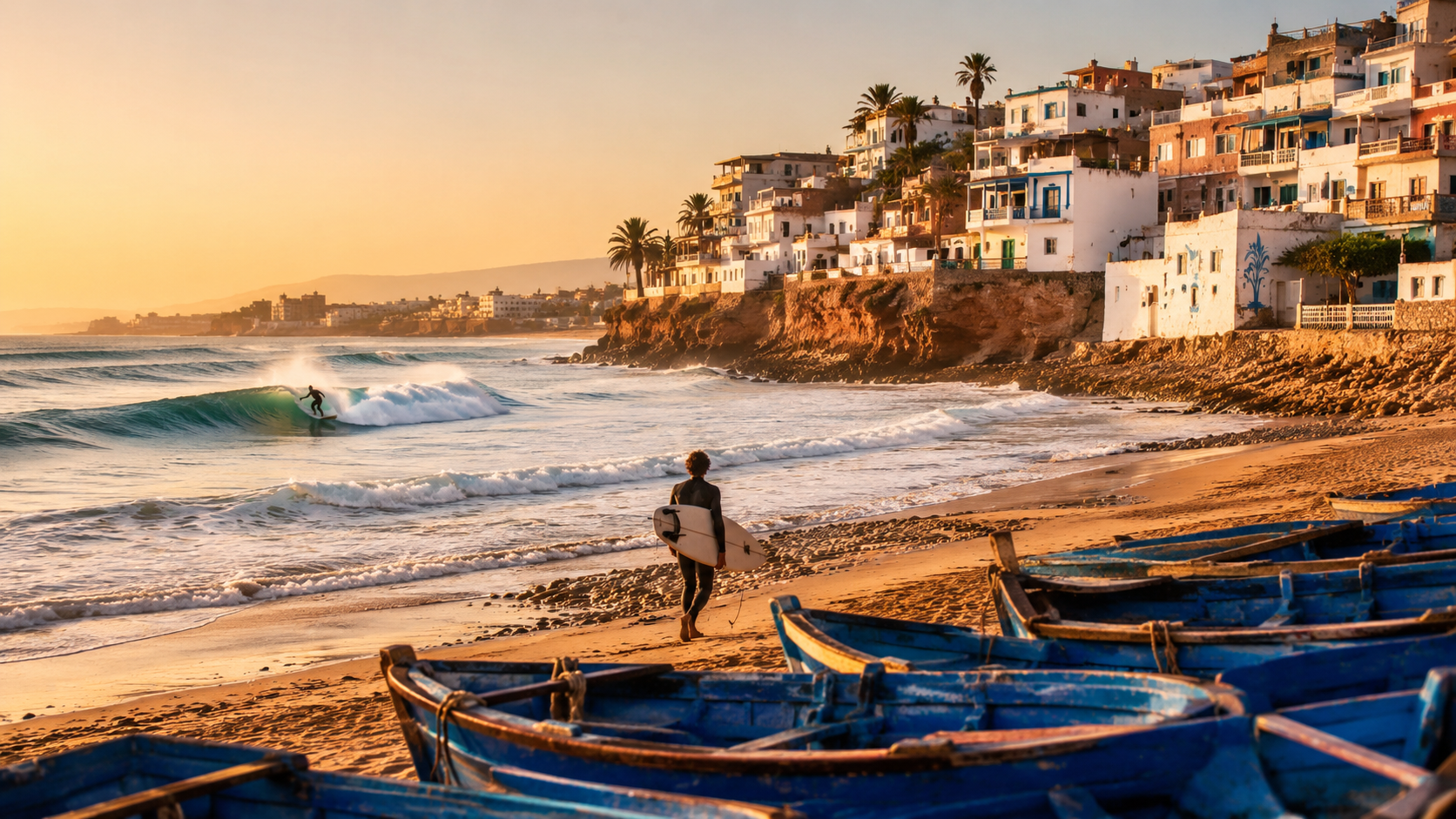
Essaouira offers a dramatically different experience. Located 170 km north of Agadir, this UNESCO-listed medina city is famous for its relentless trade winds. These winds create ideal conditions for windsurfing and kiteboarding year-round. However, early mornings often bring clean, glassy surf before the wind picks up. Wave heights average 1–2.5 meters, making them accessible for beginners and intermediates. Essaouira’s surf school fees typically range from €25–€40 per session. Additionally, the city’s vibrant arts scene, blue fishing boats, and fortified ramparts provide a culturally rich backdrop. Visitors frequently describe it as “surfing inside a living museum.”
4. Imsouane — The Longest Wave in Morocco
Imsouane is arguably Morocco’s most underrated gem. Situated 70 km north of Agadir, this small fishing village hosts one of the longest rideable waves on the African continent. The Bay of Imsouane produces a gentle, rolling right-hand wave that can carry a surfer for up to 400 meters on a good day. This makes it exceptional for beginners and longboarders. The atmosphere is calm, unhurried, and deeply authentic. Budget accommodation costs as little as $15–$25 per night. Since 2023, the village has seen increasing visitor numbers, yet it retains its unhurried charm. Surf guide Hassan Aït Brahim describes it as *”the wave that teaches patience and flow.”*
5. Safi — Morocco’s Secret Big Wave Spot
Safi remains off the radar for most surf tourists, but insiders know it well. Located 280 km north of Agadir, Safi is home to Safi Right, a powerful and fast wave that breaks over a reef. On large swells, wave faces can exceed 5–6 meters, attracting experienced big wave surfers. The town itself is an industrial port, offering a rawer, more authentic Moroccan experience. Accommodation and food are considerably cheaper here than in Taghazout. A local surf guesthouse costs approximately $20–$35 per night. Consequently, Safi appeals to the adventurous surfer seeking uncrowded, powerful waves far from the tourist trail.
6. Dakhla — The Kite and Wave Surfing Paradise
Dakhla is a remote but spectacular destination in southern Morocco, near the Western Sahara border. The Dakhla lagoon stretches over 40 km and offers flat, shallow water — ideal for kiteboarding. However, the nearby Atlantic coast delivers raw, powerful ocean waves for advanced surfers. Average wind speeds exceed 20 knots for over 250 days per year. The Dakhla Attitude Surf & Kite Camp reports an annual visitor increase of 18% since 2022. A full kite and surf package for one week averages $700–$1,000. Dakhla’s otherworldly desert-meets-ocean landscape is unlike anywhere else in Morocco. It has rapidly grown into one of Africa’s premier action sports destinations.
—
Morocco Surf Beaches: Quick Comparison Table
| Beach | Best For | Wave Type | Skill Level | Peak Season | Avg. Daily Cost |
|—|—|—|—|—|—|
| Taghazout | Surfing, culture | Right-hand point | Intermediate–Advanced | Nov–Mar | $40–$70 |
| Anchor Point | Pros, competitions | Right-hand point | Advanced | Dec–Feb | $40–$70 |
| Essaouira | Wind/kite, beginners | Beach break | Beginner–Intermediate | Year-round | $35–$60 |
| Imsouane | Longboard, beginners | Gentle right | Beginner | Oct–Apr | $20–$40 |
| Safi | Big waves, adventure | Reef break | Advanced | Nov–Mar | $25–$45 |
| Dakhla | Kite, lagoon | Ocean & lagoon | All levels | Mar–Sep | $60–$100 |
—
Best Time to Surf in Morocco
Timing your visit strategically makes a significant difference. The Atlantic swell season runs from October to April, delivering the most consistent and powerful waves. December and January typically produce the largest swells, averaging 2–4 meters. Water temperatures drop to around 16–18°C, so a 3mm wetsuit is recommended. Conversely, summer months (June–August) offer calmer seas, ideal for beginners and families. Wind conditions are strongest from May to August, particularly around Essaouira and Dakhla. Furthermore, spring months offer warmer temperatures alongside moderate swells. As a general rule, November to February represents the sweet spot for experienced surfers seeking peak performance.
—
Expert Tips for Surfing in Morocco
> *”Always respect local surf etiquette in Morocco. The lineups can be competitive, especially at Anchor Point. Smile, be patient, and earn your waves.”* — Carlos Morales, Professional Surf Instructor, Taghazout
Here are additional practical tips:
– 🏄 Rent before you buy: Quality boards rent for $10–$15/day locally.
– 🧴 Sun protection is essential: UV levels are high year-round.
– 💧 Stay hydrated: Heat and paddling together cause rapid dehydration.
– 🌊 Check surf reports: [Magicseaweed](https://magicseaweed.com) and Windguru are reliable free tools.
– 🛂 Visa: Most nationalities enjoy 90-day visa-free entry to Morocco.
– 🕌 Respect Ramadan: Surf camps may adjust schedules during this period.
—
Cost Breakdown for a Surf Trip to Morocco
| Expense | Budget Traveler | Mid-Range | Premium |
|—|—|—|—|
| Accommodation (per night) | $15–$25 | $35–$60 | $80–$200 |
| Surf lessons (per day) | $20–$30 | $35–$50 | $60–$100 |
| Food (per day) | $8–$15 | $15–$30 | $30–$60 |
| Board rental (per day) | $10–$15 | $15–$20 | Included in packages |
| Total Daily Estimate | $53–$85 | $100–$160 | $170–$360 |
—
FAQs
Q1: Is Morocco good for beginner surfers?
Absolutely. Beaches like Imsouane and Essaouira offer gentle, forgiving waves with excellent surf schools nearby. Beginners can progress quickly with professional coaching available from as little as $20 per session.
Q2: Do I need a wetsuit to surf in Morocco?
Yes, particularly between October and April. A 3mm wetsuit is sufficient for most of the season. Summer months may only require boardshorts or a shorty wetsuit in warmer southern regions.
Q3: Which Moroccan beach is best for experienced surfers?
Anchor Point near Taghazout is the top choice. Safi and Dakhla are also excellent for advanced and big wave surfers seeking more remote, powerful conditions.
Q4: Is Morocco safe for solo surf travelers?
Morocco is generally safe for tourists. Standard precautions apply. Taghazout and Essaouira are especially traveler-friendly, with well-established surf communities and infrastructure.
Q5: Can I surf in Morocco year-round?
Yes. While peak swell season runs October–April, summer months offer smaller, cleaner waves suitable for beginners. Dakhla and Essaouira are particularly active year-round due to persistent wind conditions.
Q6: How do I get to Taghazout from Agadir airport?
Agadir Al Massira Airport is approximately 30 km from Taghazout. Taxis cost roughly $10–$15, and many surf camps offer airport pickup services. Grand taxis from Agadir city center cost around $5–$7.
—
Conclusion
Morocco stands among the world’s most rewarding surf destinations. Its diverse coastline delivers world-class waves, from the legendary Anchor Point to the gentle rolling swells of Imsouane. Whether you are chasing big winter barrels or leisurely longboard sessions, Morocco accommodates every style and budget. The country’s affordability, accessibility, and cultural richness set it apart from more commercial surf destinations. For 2025 and beyond, Morocco continues to attract a growing global surf community. Plan your visit between November and February for optimal conditions. Combine surf sessions with exploration of medinas, desert landscapes, and Berber hospitality. Morocco does not simply offer great waves — it offers a complete, transformative adventure.
—
References
1. Surf Atlas (2025). *Global Point Break Rankings* — surfatlas.com
2. World Surf League (2024). *African Surf Destinations Report* — worldsurfleague.com
3. Lonely Planet Morocco (2024 Edition). *Coastal Surfing Guide* — lonelyplanet.com
4. Windguru Morocco Data (2025). *Wind and Swell Statistics* — windguru.cz
5. UNESCO World Heritage (2023). *Essaouira Medina Listing* — whc.unesco.org
6. Dakhla Attitude Camp (2024). *Annual Visitor Report* — dakhlaattitude.com