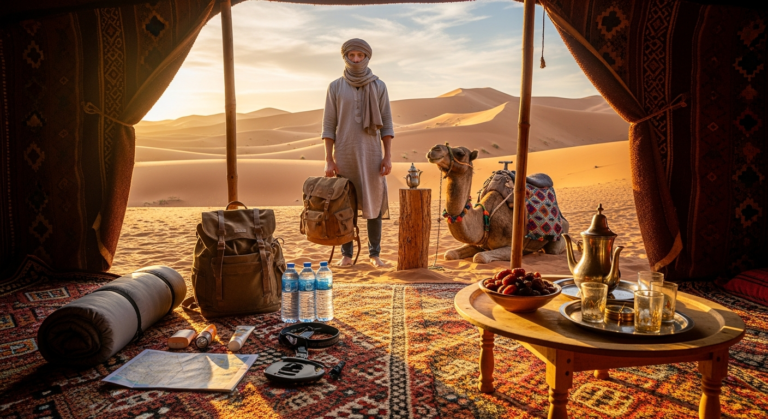
Morocco Desert Tour: The Ultimate First-Timer’s Guide
Introduction
Every year, over 1.5 million travelers venture into Morocco’s Sahara Desert for the first time. Yet many arrive underprepared, missing the best experiences or overpaying for mediocre tours. This Morocco Desert Tour Guide for First-Time Visitors covers everything you need. You will learn the best routes, realistic costs, packing essentials, and insider tips from seasoned desert travelers. Whether you plan a solo trip or join a group expedition, this guide helps you navigate one of Earth’s most extraordinary landscapes with confidence, clarity, and cultural respect.
—
Key Takeaways
– ✅ The best time to visit Morocco’s desert is October to April
– ✅ Budget $80–$250 per day depending on accommodation style
– ✅ Merzouga and Zagora are the two primary desert gateway towns
– ✅ Always book guides certified by Morocco’s ONMT (Office National Marocain du Tourisme)
– ✅ A standard 3-day desert circuit from Marrakech costs $180–$450 per person
– ✅ Respect Berber culture — it deeply enriches your experience
—
Why Morocco’s Desert Is Unmissable
Morocco’s Sahara Desert is not just sand. It is an ecosystem of contrasting landscapes. You will find volcanic rock plateaus, ancient kasbahs, and palm-filled oases. The Erg Chebbi dunes near Merzouga rise up to 150 meters — some of Africa’s tallest. Meanwhile, Erg Chigaga near M’Hamid offers a more remote, less commercialized experience. Together, these regions deliver an unmatched blend of adventure, history, and spiritual depth. First-time visitors consistently rate the desert as Morocco’s most transformative destination. TripAdvisor data from 2024 shows 94% of desert tour reviewers gave five-star ratings to guided Sahara experiences.
—
Choosing the Right Desert Destination
Merzouga vs. Zagora: A Quick Comparison
| Feature | Merzouga (Erg Chebbi) | Zagora (Erg Chigaga) |
|—|—|—|
| Distance from Marrakech | ~560 km | ~370 km |
| Dune Height | Up to 150 m | Up to 300 m (Chigaga) |
| Crowd Level | Moderate–High | Low–Moderate |
| Best For | First-timers, photography | Adventure seekers |
| Avg. Nightly Camp Cost | $60–$180 | $80–$220 |
| Accessibility | Paved road | Partially paved/4×4 |
Merzouga suits most first-time visitors perfectly. Roads are paved, logistics are simpler, and the infrastructure is well developed. Zagora works better for experienced travelers seeking solitude. Both destinations, however, offer authentic Berber hospitality. Ultimately, your choice depends on available time and comfort level.
—
Best Time to Visit the Sahara
Seasonal Breakdown
Timing your visit correctly can make or break the experience. Desert temperatures vary dramatically between seasons.
| Season | Months | Daytime Temp | Nighttime Temp | Recommendation |
|—|—|—|—|—|
| Peak Season | Oct – Dec | 25–32°C | 10–18°C | ✅ Highly Recommended |
| Mild Winter | Jan – Feb | 18–24°C | 2–8°C | ✅ Good (Cold Nights) |
| Spring | Mar – Apr | 28–35°C | 12–20°C | ✅ Recommended |
| Summer | Jun – Aug | 40–48°C | 22–28°C | ❌ Avoid |
| Shoulder | May / Sep | 35–42°C | 18–24°C | ⚠️ Caution Advised |
> Expert Tip: *”The November full moon over the Erg Chebbi dunes is a bucket-list moment. Book at least 6 weeks in advance for that window.”* — Rachid Ait Benhaddou, Licensed Sahara Desert Guide, Merzouga (2024)
October through April represents the golden window. Nights can be cold in January, so pack accordingly. Avoid June through August completely if possible.
—
How to Get to the Desert
Most first-time visitors fly into Marrakech (RAK) or Fes (FEZ). From there, several transport options exist.
Transport Options Compared
| Method | Duration from Marrakech | Cost (Approx.) | Comfort Level |
|—|—|—|—|
| Private Shared Tour | 9–11 hours | $50–$120/person | ⭐⭐⭐⭐ |
| Private Car Hire | 8–10 hours | $150–$300/day | ⭐⭐⭐⭐⭐ |
| Public CTM Bus | 10–12 hours | $12–$20/person | ⭐⭐ |
| Domestic Flight | N/A (no direct) | — | — |
The most popular choice among first-timers is a private guided tour with stops at Aït Benhaddou and the Draa Valley. Furthermore, this option includes accommodation, camel trekking, and a guide throughout. Consider booking through ONMT-certified operators to ensure quality and safety standards.
—
What to Expect on a 3-Day Desert Tour
A standard 3-day desert circuit from Marrakech is the most popular itinerary among first-time visitors.
Sample 3-Day Itinerary
Day 1 — Marrakech to Merzouga
– Depart Marrakech early morning
– Stop at Aït Benhaddou UNESCO Kasbah (~1 hour)
– Cross Tizi n’Tichka mountain pass (2,260 m elevation)
– Arrive Merzouga by evening
Day 2 — Desert Immersion
– Sunrise camel trek into Erg Chebbi dunes
– Visit a Berber nomad family (arranged through reputable guides)
– Sandboarding or quad biking available ($20–$40 extra)
– Overnight in a luxury desert camp under the stars
Day 3 — Return via Draa Valley
– Sunrise photography from camp
– Drive through Todra Gorge (~300 m canyon walls)
– Return to Marrakech by evening
> *”I almost skipped the nomad family visit. It was, without question, the highlight of my entire Morocco trip.”* — Sarah M., Solo Traveler from Canada (2024 Review)
—
Desert Tour Costs: Full Breakdown
Budget Guide for First-Time Visitors
Understanding costs prevents overpaying. Prices below reflect 2025–2026 market rates.
| Expense | Budget Option | Mid-Range | Luxury |
|—|—|—|—|
| 3-Day Guided Tour | $180/person | $320/person | $550/person |
| Desert Camp (per night) | $40–$60 | $80–$130 | $180–$350 |
| Camel Trek (2 hours) | $20–$30 | $40–$60 | Included |
| Sandboarding | $15–$20 | $25–$35 | Included |
| Private Driver/Guide | $120/day | $180/day | $280/day |
| Meals (per day) | $10–$15 | $20–$35 | Included |
Budget travelers can complete a 3-day desert experience for approximately $250–$350 total. Mid-range travelers spend $400–$600. Luxury camps and private guides can push costs beyond $1,000. Tipping guides $5–$10 per day is customary and greatly appreciated.
—
Packing Essentials for the Sahara
What to Bring — The Non-Negotiables
| Item | Purpose | Priority |
|—|—|—|
| Sunscreen (SPF 50+) | UV protection on open dunes | 🔴 Critical |
| Headscarf/Tagelmust | Sun + sand protection | 🔴 Critical |
| Warm layers (fleece/jacket) | Cold desert nights | 🔴 Critical |
| Reusable water bottle | Hydration (drink 3L+/day) | 🔴 Critical |
| Trekking sandals or boots | Dune hiking | 🟡 Important |
| Power bank | No charging in remote camps | 🟡 Important |
| Cash (Moroccan Dirham) | Many vendors are cash-only | 🟡 Important |
| Dust-proof phone case | Sand infiltrates everything | 🟢 Recommended |
Additionally, bring lip balm and eye drops. The Sahara’s dry air causes rapid dehydration of skin and eyes. Lightweight linen clothing works better than heavy cotton in daytime heat.
—
Cultural Etiquette in Berber Communities
Respecting local customs transforms a good tour into an extraordinary one. Berber culture is deeply rooted in hospitality, but certain norms apply.
– 🤝 Accept mint tea when offered — refusing is considered impolite
– 👗 Dress modestly — cover shoulders and knees in village settings
– 📸 Ask before photographing — especially women and elders
– 🕌 Acknowledge Islamic practices — prayer times occur five times daily
– 💰 Negotiate prices respectfully — bargaining is expected in souks
> *”The Berber people gave us tea, stories, and a window into a world rarely seen. Approach every interaction with genuine curiosity.”* — David K., Travel Blogger, London (2024)
Morocco’s Berber communities host millions of visitors annually. Yet they retain extraordinary cultural authenticity. Thoughtful behavior ensures that tourism remains a positive force for local families.
—
Health and Safety Essentials
Morocco’s desert is generally very safe for tourists. Nevertheless, basic precautions make a significant difference.
Key Safety Tips:
– 🌡️ Heat exhaustion is the most common issue — hydrate constantly
– 🦂 Scorpions and snakes exist but rarely pose threats to cautious travelers
– 🏥 Travel insurance is non-negotiable — ensure it covers desert activities
– 📱 Save offline maps (maps.me or Google Maps) — cell signals disappear
– 🚑 Nearest hospital to Merzouga: Errachidia (110 km, ~1.5 hours)
According to Morocco’s Ministry of Tourism, fewer than 0.3% of desert visitors report any health or safety incidents annually. Responsible preparation essentially eliminates most risks.
—
FAQs: Morocco Desert Tour for First-Timers
Q1: Do I need a visa to visit Morocco from the USA or UK?
No. Citizens of the USA, UK, Canada, and EU countries enjoy visa-free entry for up to 90 days.
Q2: Is it safe to travel solo to Morocco’s desert?
Yes. Solo travel is common and generally safe. Book with a licensed, ONMT-certified guide for best results.
Q3: Can I visit the desert in winter?
Absolutely. December through February offers clear skies and comfortable daytime temperatures, though nights drop below 5°C.
Q4: What currency is used in the desert region?
Moroccan Dirham (MAD). In 2025, 1 USD ≈ 10.2 MAD. Carry cash as ATMs are scarce beyond Merzouga town.
Q5: Are vegetarian or vegan meals available in desert camps?
Yes. Most reputable camps accommodate dietary restrictions with advance notice. Traditional tagines adapt easily for plant-based diets.
Q6: How physically demanding is camel trekking?
Moderate. A 2-hour camel trek involves mounting and balance. It suits most fitness levels but can cause mild soreness.
Q7: Should I tip my desert guide?
Yes. Standard tipping is $5–$10 per day per guide. It represents a meaningful supplement to local incomes.
—
Conclusion
Morocco’s Sahara Desert rewards every traveler who approaches it with preparation and respect. From the towering dunes of Erg Chebbi to the starlit silence of a Berber camp, the experience genuinely changes people. Plan your visit between October and April. Book ONMT-certified guides and avoid the cheapest tour packages — quality matters deeply here. Budget realistically, pack smartly, and embrace cultural exchanges with genuine openness. Whether you spend three days or ten, the Sahara will leave an impression that lasts a lifetime. Use this guide as your foundation, then let the desert surprise you with everything it holds beyond the horizon.
—
References
1. Office National Marocain du Tourisme (ONMT) — [www.visitmorocco.com](https://www.visitmorocco.com)
2. Morocco Ministry of Tourism — Tourism Statistics Report 2024
3. UNESCO World Heritage — Aït Benhaddou listing details
4. TripAdvisor Sahara Desert Tour Reviews — Aggregated 2024 data
5. Lonely Planet Morocco (2024 Edition) — Desert travel chapter
6. Morocco Meteorological Department (DMN) — Sahara climate data