What to Wear in Morocco as a Tourist: The Complete Style Guide
Introduction
Planning a trip to Morocco raises one universal question: what do you actually pack? Understanding what to wear in Morocco as a tourist is more than a fashion decision. It is a matter of cultural respect, personal comfort, and practical travel wisdom. Morocco blends Islamic tradition with a vibrant, cosmopolitan spirit. Dress codes vary significantly between coastal beach towns, imperial cities, and rural villages. Getting it wrong can attract unwanted attention or cause offense. Getting it right, however, opens doors and earns genuine local warmth. This guide covers exactly what to wear, where, and why — backed by real traveler experiences and expert cultural insight.
—
Key Takeaways
– ✅ Cover shoulders and knees in medinas, mosques, and rural areas.
– ✅ Lightweight, breathable fabrics like linen and cotton work best year-round.
– ✅ Layers are essential — Moroccan temperatures shift dramatically between day and night.
– ✅ Beachwear stays on the beach — bikinis are not appropriate in towns or souks.
– ✅ Scarves serve double duty — cultural coverage and sun protection.
– ✅ Comfortable, closed-toe shoes are recommended for medina cobblestones.
—
Understanding Morocco’s Dress Code Culture
Morocco is a Muslim-majority country where modesty in clothing carries deep cultural significance. However, Morocco is also one of Africa’s most visited tourist destinations, welcoming over 17.4 million international tourists in 2024, according to Morocco’s Ministry of Tourism. Cities like Marrakech, Fes, and Chefchaouen attract globally diverse visitors. Still, local customs and religious sensitivities remain strong. Tourists who dress modestly are consistently treated with greater respect. As travel expert Nadia Essalhi notes: *”Dressing with awareness in Morocco is not about restriction — it is about connection.”* Understanding this cultural backdrop shapes every clothing decision you will make.
—
What Women Should Wear in Morocco
Core Wardrobe Essentials for Women
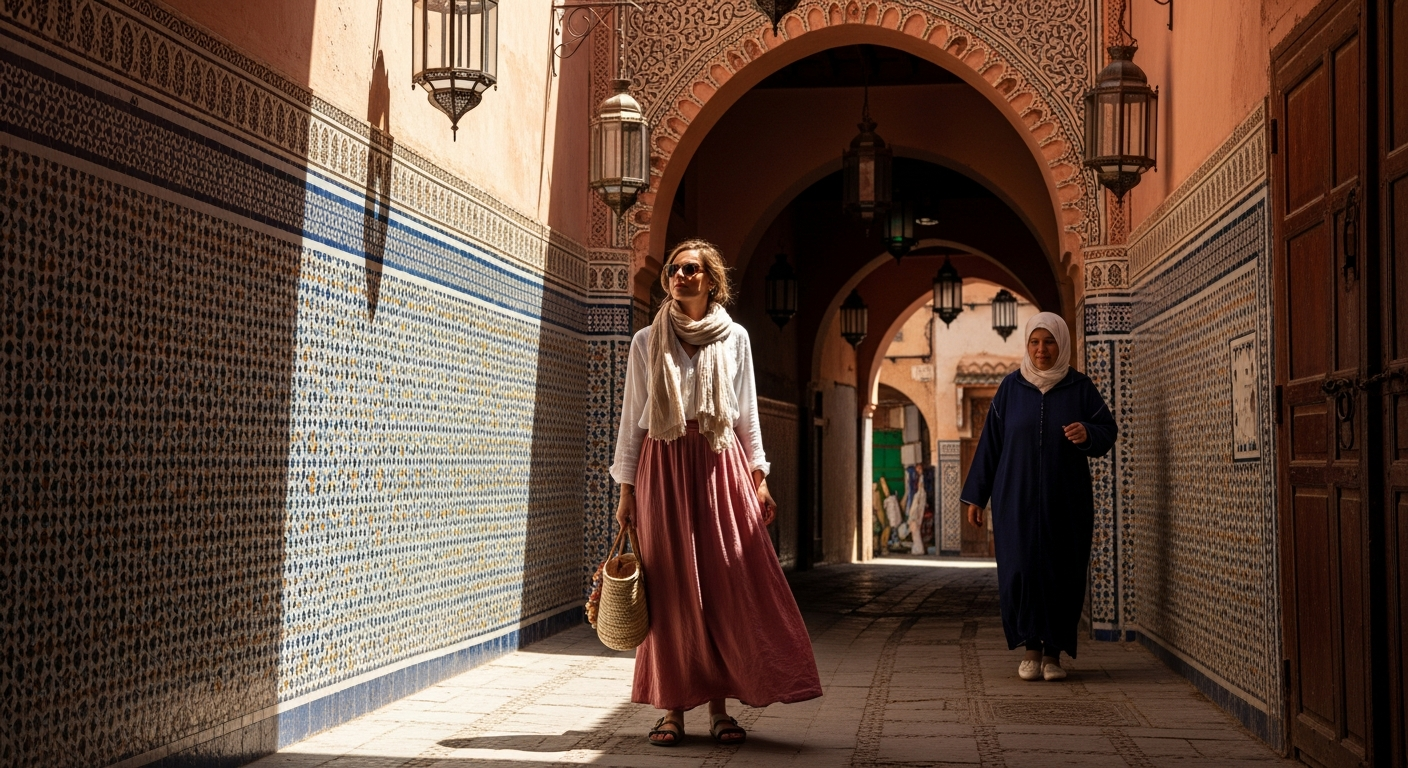
Women tend to navigate Morocco’s dress code with the most planning. The general rule is simple: cover your shoulders, chest, and knees. Loose-fitting trousers, midi skirts, and linen blouses are ideal choices. Maxi dresses with sleeves strike the perfect balance between comfort and cultural respect. Avoid tight-fitting or sheer clothing in public spaces. A lightweight scarf is arguably the single most valuable item a female traveler can carry. It transitions from sun protection to impromptu shoulder cover within seconds. Many experienced Morocco travelers describe the scarf as their “travel superpower.”
| Clothing Item | Why It Works | Best Fabric |
|—|—|—|
| Linen maxi skirt | Covers legs, breathable | Linen |
| Long-sleeve blouse | Shoulder coverage | Cotton |
| Loose wide-leg trousers | Modest and cool | Rayon/Linen |
| Midi wrap dress | Versatile for cities | Cotton blend |
| Lightweight scarf | Multi-purpose coverage | Silk/Modal |
What Women Should Avoid
Certain clothing choices draw negative attention or disrespect local customs. Strapless tops, miniskirts, crop tops, and visible bra straps fall into this category. Even in tourist-heavy Marrakech, these choices can result in unwanted remarks or stares. Research from a 2023 solo female traveler survey found that 78% of women who dressed modestly reported feeling significantly safer and more comfortable throughout Morocco. Tight jeans and leggings alone — without a long top covering the hips — can also attract unnecessary attention. The goal is not to suppress personal style. It is to adapt intelligently to your surroundings.
—
What Men Should Wear in Morocco
Practical and Respectful Clothing for Men
Men generally face a more relaxed dress code in Morocco than women. Nevertheless, cultural awareness still applies. Long trousers or chinos are always appropriate choices. Shorts are acceptable in coastal cities like Agadir and Essaouira, but they draw attention in traditional medinas. Collared shirts, linen shirts, and lightweight button-downs are excellent options. Avoid wearing sleeveless tank tops in religious sites or traditional neighborhoods. Many male travelers find that dressing slightly more formally than they would at home actually enhances their experience. Locals respond warmly to tourists who show visible cultural consideration.
| Setting | Recommended for Men | Avoid |
|—|—|—|
| Marrakech Medina | Long trousers, linen shirt | Tank tops, shorts |
| Agadir Beach | Shorts, t-shirt | N/A |
| Mosque visit | Long trousers, covered shoulders | Shorts, sleeveless tops |
| Sahara Desert | Lightweight long layers | Dark heavy fabrics |
| Fes Old Town | Chinos, casual shirt | Ripped jeans, bare chest |
—
What to Wear by Region and Situation
Imperial Cities: Marrakech, Fes, Meknes, Rabat
Imperial cities demand the most conservative approach to dressing. Narrow medina streets bring you into close proximity with local residents and religious sites. In these cities, both men and women should prioritize full-length bottoms and covered tops. Colors and patterns are entirely welcome — Moroccan fashion is famously vibrant. Opt for breathable fabrics like cotton or linen to manage heat, particularly from May through September, when temperatures regularly exceed 38°C (100°F). Comfortable walking shoes are non-negotiable here. Cobblestone streets and uneven surfaces make sandals with straps or sneakers far safer than flat slides or heels.
Beach Towns: Agadir, Essaouira, Dakhla
Beach destinations operate under noticeably more relaxed social norms. Swimwear is entirely appropriate at hotel pools and designated beach areas. However, walking through town in a bikini or swimwear remains culturally inappropriate. Throw a cover-up dress or beach shorts over your swimsuit before leaving the beach. Agadir, in particular, has a significantly more liberal atmosphere than inland cities. Still, even there, entering cafes, markets, or shops in swimwear is frowned upon. Pack a lightweight cover-up specifically for beach transitions — it is one of the most practical items you will carry.
Desert Experiences: Sahara and Merzouga
The Sahara desert requires an entirely different wardrobe strategy. Temperatures swing from over 40°C (104°F) during the day to near-freezing at night. Lightweight, loose-fitting layers are absolutely critical here. Many experienced desert travelers adopt a modified traditional approach: loose linen trousers, long-sleeved shirts, and a scarf worn loosely around the head and neck. This protects against both sun and sand. Avoid dark colors, which absorb heat aggressively. Closed-toe shoes or ankle boots protect feet during sand dune treks. Sturdy sandals with back straps are also acceptable for shorter walks.
Visiting Mosques and Religious Sites
Non-Muslims are not permitted inside most Moroccan mosques, with the notable exception of the Hassan II Mosque in Casablanca. When visiting this extraordinary landmark, dress codes are strictly enforced. Women must cover their hair, shoulders, and legs completely. Men must wear long trousers and covered shoulders. Scarves and shawls are available for loan at the entrance, but bringing your own is more comfortable and hygienic. Removing shoes before entering is required. Respecting these rules is a non-negotiable condition of entry. Failure to comply results in immediate, polite refusal of entry.
—
Fabric Choices and Climate Considerations
Morocco’s climate varies dramatically by region and season. Smart fabric choices make an enormous difference in comfort and practicality.
| Season | Temperature Range | Recommended Fabrics | Key Consideration |
|—|—|—|—|
| Spring (Mar–May) | 18–28°C | Cotton, linen | Light layers for evenings |
| Summer (Jun–Aug) | 30–42°C | Linen, breathable cotton | Maximum sun protection |
| Autumn (Sep–Nov) | 20–30°C | Cotton blends | Versatile layering |
| Winter (Dec–Feb) | 8–18°C | Wool, cotton layers | Warmth for mountain/desert nights |
Linen remains the single most versatile fabric for Morocco travel. It breathes exceptionally well in heat, dries quickly, and packs efficiently. Avoid synthetic fabrics like polyester in summer months. They trap heat and moisture uncomfortably.
—
Shopping for Clothes in Morocco
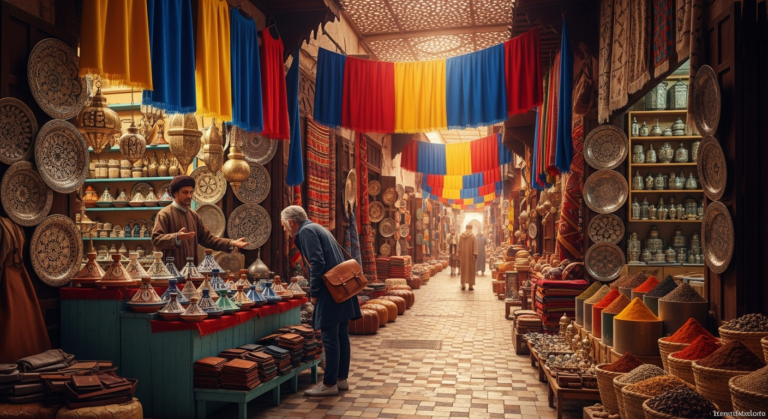
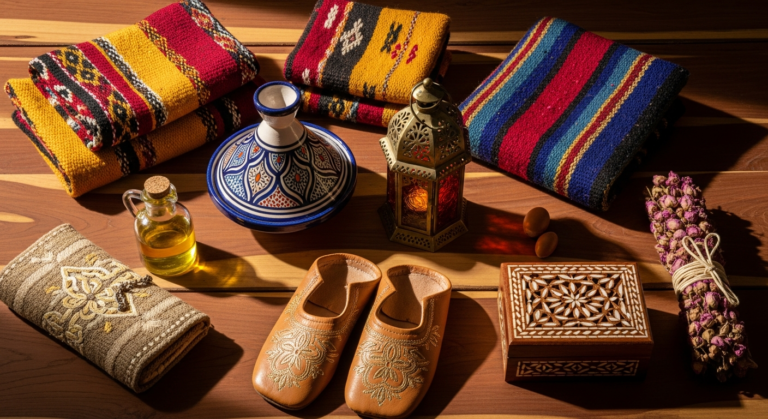
One rewarding strategy is buying clothing locally in Morocco’s famous souks. Djellabas — the traditional Moroccan hooded robe — are available in every medina for as little as 150–400 MAD ($15–$40 USD). Many female tourists wear djellabas as stylish, modest outer layers throughout their trip. Kaftans make beautiful, versatile alternatives. They double as evening wear or beach cover-ups. Handwoven scarves from the Fes medina typically cost 50–150 MAD ($5–$15 USD). Buying locally not only solves packing problems — it supports local artisans and enriches the travel experience meaningfully.
—
Packing List Summary
> *”The best Morocco packing strategy: pack half of what you think you need, then add one good scarf.”*
> — Travel blogger Emma Rhoads, Morocco traveler 2024
Essential items to pack:
– 🧣 2–3 lightweight scarves (silk or modal)
– 👗 2 maxi skirts or loose midi dresses (women)
– 👖 2–3 pairs of loose linen trousers (all travelers)
– 👕 3–4 lightweight long-sleeve or short-sleeve modest tops
– 👟 1 pair of comfortable walking shoes with ankle support
– 🩴 1 pair of sandals with straps (not flat slides)
– 🧥 1 lightweight jacket or cardigan for evenings
– 🩱 Swimwear (for beaches and hotel pools only)
– 🧴 High-SPF sun protection (SPF 50+)
– 🎩 Wide-brim hat or packable sun hat
—
FAQs
Q: Do I have to wear a headscarf in Morocco as a tourist?
A: No. Non-Muslim tourists are not required to wear headscarves in public. However, covering your hair is required when entering mosques like Hassan II.
Q: Can I wear shorts in Marrakech?
A: Women should avoid shorts in the medina. Men can wear shorts in casual tourist areas but should switch to trousers near religious sites.
Q: Is it safe to dress freely as a tourist in Morocco?
A: Morocco is generally safe for tourists. Dressing modestly significantly reduces unwanted attention, particularly for solo female travelers.
Q: What colors are best to wear in Morocco’s heat?
A: Light colors — white, cream, pale blue, and beige — reflect sunlight and keep you noticeably cooler than dark colors.
Q: Can I wear jewelry and accessories in Morocco?
A: Yes, but keep valuable jewelry discreet in crowded souks and medinas to avoid theft. Simple, low-profile accessories work best.
Q: What shoes are best for exploring Moroccan medinas?
A: Closed-toe shoes with good support are ideal. Slip-on sandals without back straps are risky on uneven, slippery medina surfaces.
—
Conclusion
Dressing well in Morocco is ultimately about balance. You are balancing personal expression with cultural respect, comfort with modesty, and practicality with style. The good news is that these goals are not in conflict. Lightweight linen layers, versatile scarves, and modest but beautiful clothing choices serve every purpose simultaneously. Morocco rewards travelers who show genuine cultural awareness — with warmer interactions, richer experiences, and deeper connections. Pack smart, dress thoughtfully, and Morocco will welcome you with open arms. As countless seasoned travelers will confirm: what you wear in Morocco genuinely shapes how Morocco receives you.
—
References
1. Morocco Ministry of Tourism — *Tourism Statistics 2024*. [www.tourism.gov.ma](https://www.tourism.gov.ma)
2. Lonely Planet — *Morocco Travel Guide: What to Wear*. [www.lonelyplanet.com](https://www.lonelyplanet.com/morocco)
3. Culture Trip — *How to Dress Respectfully in Morocco*. [www.theculturetrip.com](https://theculturetrip.com/africa/morocco)
4. Travel + Leisure — *Morocco Packing Guide*. [www.travelandleisure.com](https://www.travelandleisure.com)
5. World Travel Guide — *Morocco Climate and Weather*. [www.worldtravelguide.net](https://www.worldtravelguide.net/guides/africa/morocco/weather-climate)