Desert Camp Morocco: The Ultimate Prep Guide
Introduction
Every year, thousands of travelers dream of sleeping under the Sahara stars. Yet, many arrive underprepared and overwhelmed. Knowing how to prepare for a desert camp in Morocco can transform a stressful adventure into an unforgettable experience. From packing the right gear to understanding Berber hospitality customs, preparation is everything. This guide will walk you through every critical step. You will learn what to pack, what to expect, how to stay safe, and how to budget wisely. Whether you are a first-timer or a seasoned traveler, this guide adds real, actionable value. By the end, you will feel confident and fully ready to embrace one of the world’s most extraordinary natural environments — the Moroccan Sahara.
—
Key Takeaways
– 🎒 Pack light but smart — desert conditions demand specific gear choices.
– 🌡️ Temperatures swing dramatically; prepare for both extreme heat and cold nights.
– 💧 Hydration is non-negotiable — carry at least 3–4 liters of water daily.
– 🌍 Respect local Berber customs to enhance your cultural experience.
– 💰 Budget between $80–$200 USD per night for quality desert camp experiences.
– 🧭 Always book through verified operators and confirm safety protocols in advance.
—
Understanding the Moroccan Desert Environment
Morocco’s Sahara Desert is not a single uniform landscape. The Erg Chebbi dunes near Merzouga and the Erg Chigaga dunes near M’Hamid are the two primary camping zones. Erg Chebbi dunes rise up to 150 meters high. Daytime temperatures in summer exceed 45°C (113°F). However, nights drop sharply, sometimes reaching 5°C (41°F) in winter months. Furthermore, sandstorms can occur with minimal warning. Understanding this environment is your first line of defense. Most organized desert camps operate between October and April. This period offers the most comfortable climate. Always check seasonal weather forecasts before booking your trip.
—
When to Go: Best Seasons for Desert Camping
| Season | Months | Avg. Day Temp | Avg. Night Temp | Recommendation |
|——–|——–|————–|—————-|—————-|
| Peak Season | Oct–Nov | 25–30°C | 10–15°C | ✅ Ideal |
| Winter | Dec–Feb | 18–22°C | 2–8°C | ⚠️ Cold nights |
| Spring | Mar–Apr | 28–35°C | 12–18°C | ✅ Good |
| Summer | Jun–Aug | 42–48°C | 22–28°C | ❌ Not recommended |
> Expert Tip: *”The weeks surrounding the winter solstice offer the clearest night skies for stargazing — a truly otherworldly experience,”* says travel writer and Morocco specialist Hamid Oulhaj.
Timing your trip strategically matters enormously. October through November offers a near-perfect balance. Days are warm but manageable. Nights are cool enough for comfortable sleeping. Additionally, tourist crowds are smaller compared to the Christmas holiday rush. Booking at least 8–10 weeks in advance during peak season is strongly advisable.
—
Essential Gear Checklist for Desert Camping
Clothing and Personal Items
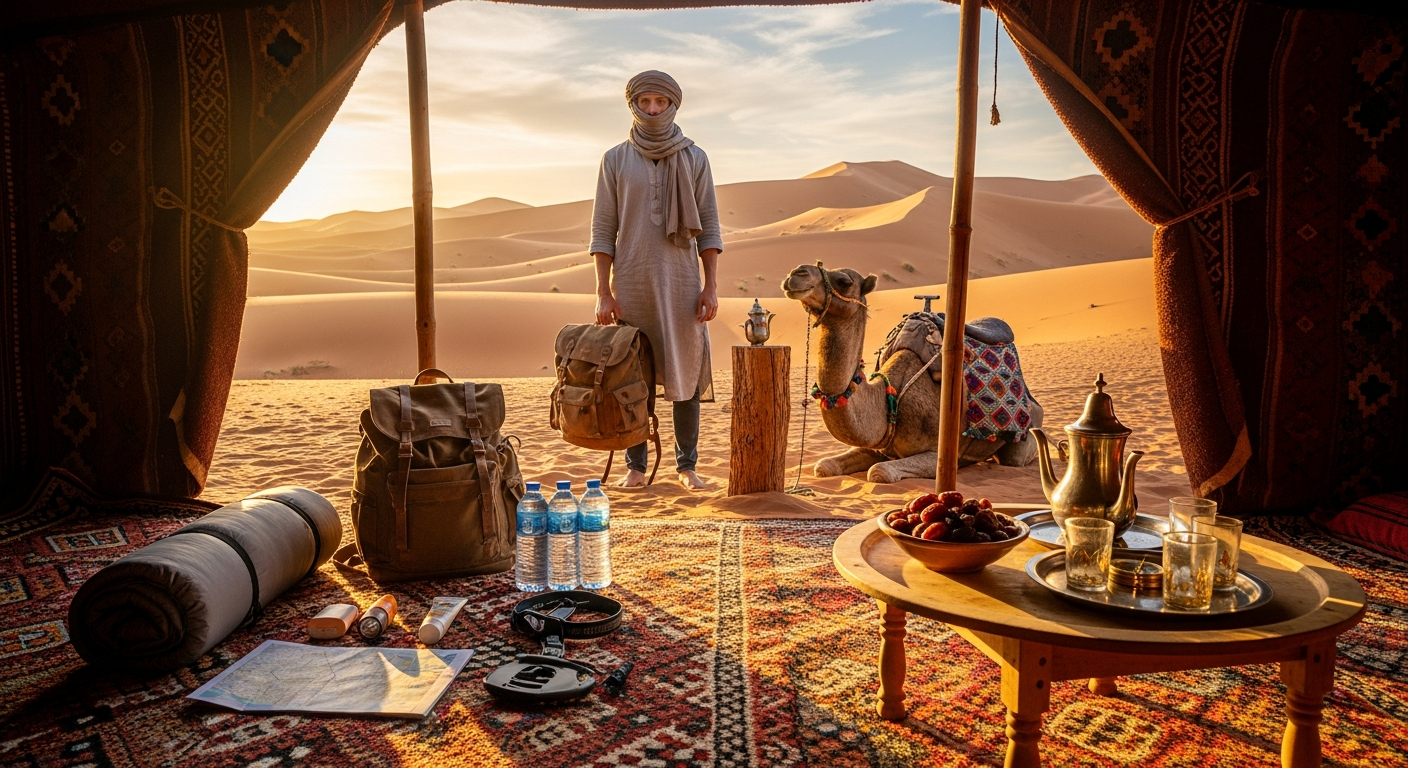
Choosing the right clothing is critical for desert survival and comfort. Layer your clothing strategically. Lightweight, breathable fabrics like linen and moisture-wicking synthetics work best during the day. Moreover, a quality tagelmust (traditional Tuareg scarf) serves dual purposes — sun protection and sand defense. Pack at least two warm fleece layers or a lightweight down jacket for night temperatures. Bring sturdy, closed-toe hiking sandals or breathable trail shoes. Additionally, UV-blocking sunglasses are essential. Never underestimate sun exposure at high altitude desert elevations.
Essential Gear Table
| Item | Purpose | Recommended Quantity |
|——|———|———————|
| Tagelmust/Scarf | Sand & sun protection | 1–2 |
| Fleece jacket | Cold nights | 1 |
| Sleeping bag (rated -5°C) | Thermal insulation | 1 |
| Headlamp + batteries | Navigation at night | 1 |
| Sunscreen (SPF 50+) | UV protection | 2 bottles |
| Lip balm with SPF | Lip protection | 1 |
| Water purification tablets | Emergency hydration | 1 pack |
| Electrolyte sachets | Hydration balance | 6–10 sachets |
| Blister plasters | Foot care | 10+ |
| Small first aid kit | Medical emergencies | 1 |
—
Hydration and Nutrition Strategy
Staying Hydrated in the Sahara
Dehydration is the single greatest risk in desert camping. The dry Saharan air accelerates moisture loss even without visible sweating. Adults should consume 3–4 liters of water daily minimum. Furthermore, electrolyte sachets are highly recommended to prevent hyponatremia (salt depletion). Most reputable Moroccan desert camps provide bottled water. However, always carry your own emergency supply. Avoid alcohol the day before and during your desert experience. Alcohol dramatically accelerates dehydration in dry environments.
Food and Energy Management
Desert camping demands consistent energy intake. Traditional Moroccan camp meals typically include tagine, couscous, fresh bread, and mint tea. These high-carbohydrate meals are actually ideal for sustained energy. Nevertheless, carry personal energy bars, nuts, and dried fruit as backup snacks. Meals at reputable camps are generally included in the booking price. A standard full-board desert camp charges approximately $120–$180 USD per night. Always confirm meal inclusion details before booking.
—
Choosing the Right Desert Camp Operator
Not all desert camps are created equal. Standards vary significantly across Morocco’s desert tourism sector. Look for operators who are certified by Morocco’s Ministry of Tourism. Additionally, camps with verified reviews on platforms like TripAdvisor or Google Reviews are more reliable. Key questions to ask before booking include:
– ✅ Are camels and guides trained and insured?
– ✅ What is the emergency evacuation protocol?
– ✅ Is there a satellite phone or emergency communication device on-site?
– ✅ Are the camp tents rated for cold-weather conditions?
> *”A reputable camp should have a documented emergency plan — never compromise on safety to save $20,”* advises adventure travel consultant Fatima Benali.
Desert Camp Price Comparison
| Camp Type | Price Range (Per Night) | Facilities |
|———–|————————|————|
| Budget tent camp | $40–$70 | Basic bedding, shared facilities |
| Mid-range luxury camp | $90–$140 | Private tent, en-suite bathroom |
| Premium glamping | $160–$250 | King bed, gourmet meals, spa access |
—
Health and Safety Preparation
Medical Precautions
Consult a travel health specialist at least 6 weeks before departure. Morocco requires no mandatory vaccinations for most nationalities. However, Hepatitis A, Typhoid, and routine vaccination updates are strongly recommended. Travel insurance covering desert activities is non-negotiable. Standard travel policies often exclude high-risk environments. Confirm that your policy specifically covers desert excursions and emergency helicopter evacuation. Costs for emergency evacuation in remote Saharan areas can exceed $15,000 USD without proper coverage.
Handling Sandstorms
Sandstorms in the Moroccan Sahara are called *”chergui.”* These dry, dusty winds can arrive within minutes. Immediately cover your face with a scarf when a sandstorm begins. Turn your back to the wind direction. Crouch low to minimize sand exposure. Never attempt to walk or drive through a severe sandstorm. Your camp guide will direct you to shelter. Trust your guide’s local expertise in these situations completely. Preparation and calm response are your best tools.
—
Cultural Etiquette and Berber Customs
Respecting local Berber traditions significantly enriches your desert experience. Most desert camps are operated by Berber families with centuries of Saharan heritage. Simple gestures of respect create profound connections. Always greet your guide with *”Salam Alaikum”* (Peace be upon you). Accept mint tea when offered — refusal is considered impolite. Avoid pointing the sole of your shoe toward others while seated. Furthermore, modest dress is expected, especially in conservative rural communities. Photography of local people requires explicit permission. These small acts of cultural awareness foster genuine mutual respect and memorable experiences.
—
Getting to the Desert: Logistics Overview
Transportation Options
| Route | Method | Duration | Approx. Cost |
|——-|——–|———-|————-|
| Marrakech → Merzouga | Shared shuttle bus | 9–10 hours | $20–$35 USD |
| Fez → Merzouga | Private transfer | 7–8 hours | $120–$180 USD |
| Marrakech → Merzouga | Domestic flight + transfer | 3–4 hours total | $150–$250 USD |
| Ouarzazate → Merzouga | Rental car (4WD) | 4–5 hours | Variable |
Most travelers enter the desert from Merzouga, a small village directly bordering the Erg Chebbi dunes. Pre-arranged transfers through your camp operator are the most efficient option. Confirm pickup times and GPS coordinates in advance. Mobile signal is extremely limited beyond Merzouga town boundaries. Download offline maps via apps like Maps.me or Google Maps Offline before departing from major cities.
—
FAQs
Q1: What is the best time to visit a desert camp in Morocco?
October to November and March to April offer the ideal balance of comfortable temperatures and clear skies.
Q2: How much does a Morocco desert camp cost?
Prices range from $40 to $250 USD per night depending on camp type and included amenities.
Q3: Is it safe to camp in the Moroccan desert?
Yes, with a reputable operator, proper gear, and travel insurance, desert camping in Morocco is considered safe.
Q4: What should I pack for cold desert nights?
A sleeping bag rated to -5°C, a fleece jacket, thermal leggings, and warm socks are essential.
Q5: Can I visit without knowing Arabic or Berber languages?
Yes. Most camp guides speak French, English, and Spanish fluently. Language is not a barrier.
Q6: How do I stay hydrated in the desert?
Drink 3–4 liters of water daily, supplement with electrolyte sachets, and avoid alcohol.
—
Conclusion
Preparing for a desert camp in Morocco is both a practical and deeply personal journey. The Sahara rewards those who arrive informed, respectful, and genuinely curious. By packing strategically, choosing a certified operator, respecting Berber culture, and prioritizing safety, you create the conditions for a transformational experience. The golden dunes, star-filled skies, and the sound of silence at dawn — these moments are priceless. Plan early, prepare thoroughly, and arrive with an open heart. Morocco’s desert is ready to welcome you.
—
References
– Morocco Ministry of Tourism Official Portal — [www.visitmorocco.com](https://www.visitmorocco.com)
– World Health Organization Travel Health Advisory — [www.who.int/travel](https://www.who.int/travel)
– TripAdvisor Desert Camp Reviews Morocco — [www.tripadvisor.com](https://www.tripadvisor.com)
– Lonely Planet Morocco Travel Guide (2025 Edition) — [www.lonelyplanet.com/morocco](https://www.lonelyplanet.com/morocco)
– Centers for Disease Control and Prevention (CDC) — Traveler Health — [wwwnc.cdc.gov/travel](https://wwwnc.cdc.gov/travel)