Tangier Travel Guide: Top Experiences in 2026
Introduction
Planning a trip to Morocco’s northern gateway can feel overwhelming. Tangier is a city that defies easy categorization. It blends African, European, and Arab influences into something entirely unique. Yet many travelers arrive unsure where to begin. This guide covers the top things to do in Tangier, helping you move beyond tourist clichés. You will discover historic landmarks, cultural treasures, hidden neighborhoods, and authentic culinary experiences. Whether you have two days or two weeks, this curated resource will help you make the most of every hour. Expect practical costs, insider tips, and expert perspectives throughout. By the end, you will have a clear, confident plan for exploring one of North Africa’s most fascinating cities.
—
Key Takeaways
– 🕌 Tangier’s Medina and Kasbah are essential cultural starting points for any visit.
– 🌊 The city sits at the crossroads of the Atlantic Ocean and the Mediterranean Sea.
– 🎨 Tangier has a deep artistic legacy, attracting writers and painters for over a century.
– 🍵 Local food and mint tea rituals are central to the authentic Tangier experience.
– 🚗 Day trips to the Hercules Caves and Cap Spartel add significant value to any itinerary.
– 💰 Daily travel budgets in Tangier range from approximately $35 to $120 USD per person.
—
Why Tangier Stands Apart from Other Moroccan Cities
Tangier occupies a genuinely rare geographic position. It sits where the Atlantic Ocean meets the Mediterranean Sea. Europe is visible on clear days — Spain lies just 14 kilometers across the Strait of Gibraltar. This proximity shaped everything: the architecture, the cuisine, the people, and the pace of life. Unlike Marrakech or Fes, Tangier carries a cosmopolitan edge. It has historically attracted diplomats, artists, and intellectuals. Writers like Paul Bowles, William S. Burroughs, and Jack Kerouac all spent significant time here. Today, Tangier is undergoing a major urban transformation, with new infrastructure investments exceeding $3.5 billion since 2019.
—
Exploring the Medina and Grand Socco
The Old Medina: A Labyrinth of Living History
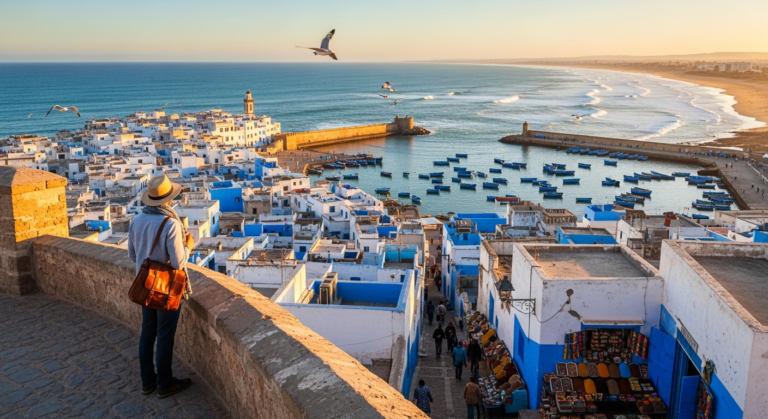
The Medina remains Tangier’s most essential experience. Its narrow streets twist unpredictably between centuries-old buildings. Colors explode from every storefront — saffron yellow, cobalt blue, terracotta red. Vendors sell everything from freshly baked bread to hand-stitched leather goods. Entry to the Medina is completely free. However, budget approximately 50–200 MAD ($5–$20) for souvenirs and small purchases. Early mornings between 8 and 10 a.m. offer the most authentic atmosphere with far fewer crowds. A local guide costs roughly 150–300 MAD ($15–$30) for a two-hour walk. The Medina is also home to several small mosques and ancient fountains that reflect the city’s deep Islamic architectural tradition.
Grand Socco: The Heartbeat of the City
Grand Socco, officially called Place du 9 Avril 1947, is Tangier’s main public square. It connects the modern city to the ancient Medina. On any given morning, you will find farmers selling fresh produce alongside street performers. The square has significant historical weight — King Mohammed V delivered a famous independence speech here in 1947. Today, the surrounding cafés serve traditional mint tea for as little as 5–10 MAD ($0.50–$1). The adjacent Mendoubia Gardens offer a quiet, shaded retreat. The gardens feature a remarkable 800-year-old dragon tree — a truly unforgettable natural landmark worth pausing to photograph carefully.
—
The Kasbah Museum and Palace
Inside the Sultan’s Former Palace
The Kasbah Museum sits within a restored 17th-century sultan’s palace. It is one of Tangier’s most rewarding cultural destinations. Admission costs 20 MAD ($2) for international visitors. Inside, exhibits trace Morocco’s history from prehistoric times through the Islamic period. Roman mosaics recovered from the nearby site of Volubilis are particularly impressive. The palace’s central courtyard features intricate zellige tilework and carved cedarwood ceilings. Guided tours are available in English, French, and Arabic. Many expert curators here emphasize the museum’s underappreciated depth.
> *”The Kasbah Museum deserves far more international attention than it currently receives,”* says Dr. Fatima Laroui, a Moroccan cultural heritage researcher. *”It tells a complete story of northern Morocco that no other institution can match.”*
—
Cap Spartel and the Hercules Caves
Where Two Oceans Meet
Cap Spartel lies approximately 14 kilometers west of the city center. It marks the precise point where the Atlantic Ocean meets the Mediterranean Sea. This dramatic coastal headland features a 19th-century lighthouse that still operates today. The surrounding Rmilat Forest is protected parkland offering excellent walking trails. Entrance to the lighthouse area is free. A taxi from central Tangier costs roughly 80–120 MAD ($8–$12) each way. Sunset visits deliver particularly spectacular views across both bodies of water simultaneously. Photographers and nature enthusiasts consistently rank Cap Spartel as one of Morocco’s most visually compelling coastal destinations.
The Legendary Hercules Caves
Located just below Cap Spartel, the Hercules Caves are steeped in mythology. According to ancient legend, Hercules rested here before performing his legendary Twelve Labors. The caves feature a naturally shaped sea-facing opening that eerily resembles the map of Africa. Admission costs 10 MAD ($1) per person. The caves extend approximately 100 meters into the cliff face. Archaeological evidence confirms human habitation dating back 5,000 years. Several rooms contain ancient millstones used by Berber communities to grind grain. The site combines myth, geology, and history into a single extraordinary visit. Plan at least 45 minutes to explore thoroughly.
—
The American Legation Museum
A Hidden Gem of Diplomatic History
The American Legation Museum holds a remarkable distinction. It is the only U.S. National Historic Landmark located outside the United States. Morocco was the first nation to recognize American independence in 1777. This building served as the first American diplomatic post anywhere in the world. The museum houses an impressive collection of paintings, maps, and documents. Admission is free, though donations are warmly encouraged. It occupies a beautifully restored 19th-century Moroccan palace in the heart of the Medina. The collection includes rare letters signed by George Washington and Sultan Moulay Slimane. Historians and diplomacy enthusiasts consistently describe visits here as deeply moving and intellectually rewarding.
—
Tangier’s Food Scene: What and Where to Eat
Essential Dishes to Try
Tangier’s cuisine reflects its unique crossroads identity. Andalusian, Berber, Arab, and Mediterranean influences all appear on local menus. The following table summarizes must-try dishes with average local costs:
| Dish | Description | Average Cost (MAD) |
|—|—|—|
| Harira | Rich tomato and lentil soup | 15–25 MAD |
| Pastilla | Flaky pastry with pigeon or chicken | 35–60 MAD |
| Grilled Sardines | Fresh-caught, charcoal-grilled | 40–70 MAD |
| Couscous Royale | Friday tradition, slow-cooked lamb | 60–100 MAD |
| Mint Tea | Sweet, layered Moroccan tea ritual | 5–15 MAD |
Where Locals Actually Eat
Port-side restaurants near the fishing harbor offer the freshest seafood. Locals recommend Restaurant Saveur de Poisson near the Medina stairs. Expect a full grilled fish meal for 80–150 MAD ($8–$15). Avoid heavily tourist-facing restaurants near the Grand Socco, as prices are inflated by 40–60%. The Rue de la Liberté and Avenue Mohamed VI host mid-range restaurants popular with Tangerois residents themselves. Breakfast at any local café — coffee, msemen flatbread, argan oil honey — costs as little as 20–30 MAD ($2–$3) and is thoroughly worth experiencing.
—
Tangier Beach and the Modern Corniche
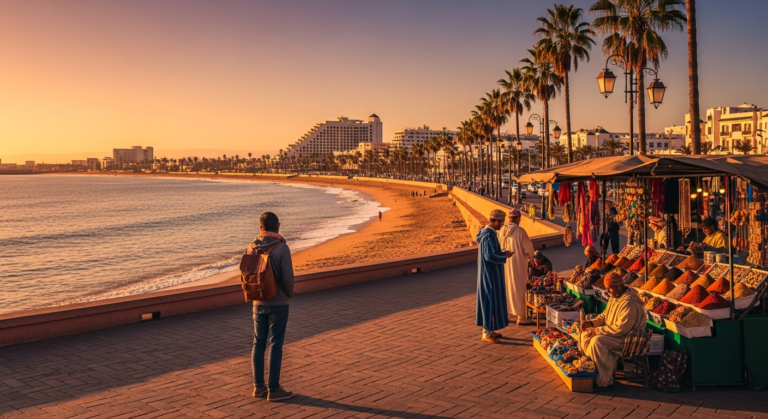
Tangier Beach stretches approximately 4 kilometers along the bay. It has undergone significant renovation since 2021. The new Corniche promenade connects the beach to modern hotels and restaurants. Swimming is generally safe between June and September. Beach access is free. Sunbed rentals cost approximately 30–50 MAD ($3–$5) per day. The beach is particularly lively on weekend evenings, when local families gather. Water sports rentals, including jet skis and paddleboards, are available from roughly 150–300 MAD ($15–$30) per hour. The beach provides a surprisingly pleasant contrast to the intense sensory experience of the Medina and deserves at least one dedicated afternoon visit.
—
Practical Travel Information
| Category | Details |
|—|—|
| Best Time to Visit | April–June or September–October |
| Currency | Moroccan Dirham (MAD); 1 USD ≈ 10 MAD |
| Language | Arabic, Darija, French, Spanish |
| Average Hotel Cost | 300–800 MAD/night ($30–$80) |
| Transport from Airport | Taxi: 80–150 MAD; approx. 15 minutes |
| Safety Rating | Generally safe; standard urban precautions apply |
| Tipping Culture | 10–15% in restaurants; small tip for guides |
—
FAQs
Q: How many days do I need in Tangier?
A: Two to three days is sufficient to cover the main highlights comfortably. Add a fourth day for day trips to Cap Spartel or Chefchaouen.
Q: Is Tangier safe for solo travelers?
A: Yes, Tangier is generally safe. Exercise standard urban precautions, particularly in crowded markets. Avoid isolated areas after dark.
Q: What is the best way to get from Tangier to Chefchaouen?
A: Shared taxis (grand taxis) or CTM buses connect Tangier to Chefchaouen in approximately 2.5–3 hours. Bus tickets cost around 60–80 MAD ($6–$8).
Q: Can I visit Tangier as a day trip from Spain?
A: Yes. High-speed ferries from Tarifa, Spain reach Tangier in approximately 35 minutes. Ferry tickets cost €35–€50 each way.
Q: Do I need to bargain in the souks?
A: Yes, bargaining is expected and respected in the Medina markets. Start at roughly 50–60% of the initial asking price and negotiate respectfully.
Q: Is alcohol available in Tangier?
A: Yes. Tangier is more liberal than many Moroccan cities. Licensed bars, hotels, and some restaurants serve alcohol legally.
—
Conclusion
Tangier rewards curious, open-minded travelers more than almost any city in the region. It is not merely a transit point or a quick ferry stop from Spain. It is a layered, complex, and deeply fascinating destination with centuries of history behind every doorway. From the labyrinthine Medina to the mythological Hercules Caves, from diplomatic landmarks to fresh sardines at the harbor — each experience adds a distinct dimension to your understanding of this city. Plan thoughtfully, allocate at least three full days, and engage with local culture rather than observing it from a distance. Tangier in 2026 is more accessible, more dynamic, and more rewarding than ever before. Go beyond the surface, and the city will genuinely surprise you.
—
References
– Moroccan National Tourist Office (ONMT). Official tourism data and visitor statistics, 2025. [www.visitmorocco.com](https://www.visitmorocco.com)
– The American Legation Museum, Tangier. Institutional history and collection overview. [www.legation.org](https://www.legation.org)
– World Travel & Tourism Council (WTTC). Morocco Travel & Tourism Economic Impact Report, 2025. [www.wttc.org](https://www.wttc.org)
– Lonely Planet Morocco. 14th Edition, 2024–2025. Recommended regional travel reference.
– UNESCO World Heritage Tentative Lists. Northern Morocco Cultural Sites Assessment, 2024. [www.whc.unesco.org](https://whc.unesco.org)